



Muted Oil Wall Art
Muted oil wall art brings together restrained palettes and painterly brushwork from the early to mid-twentieth century to anchor a room with quiet character.
Muted Oil Wall Art
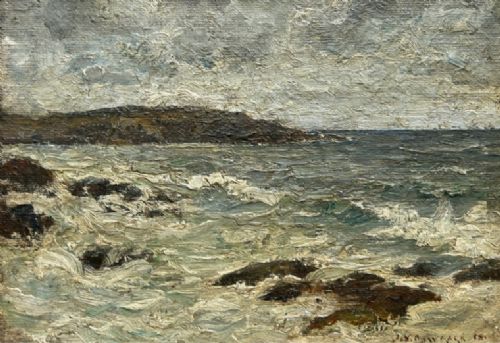
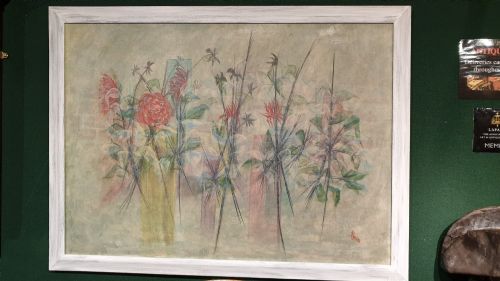
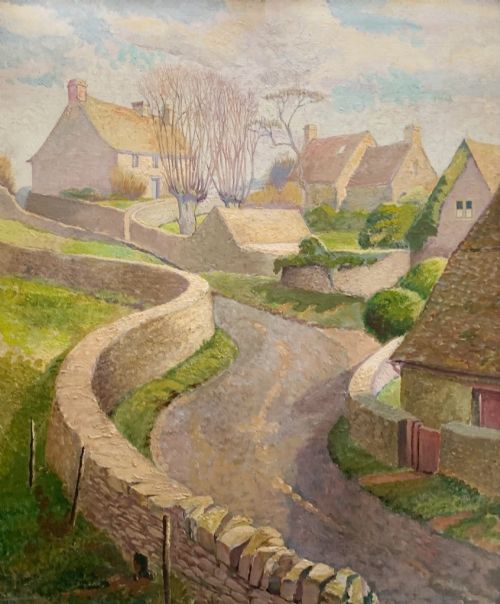
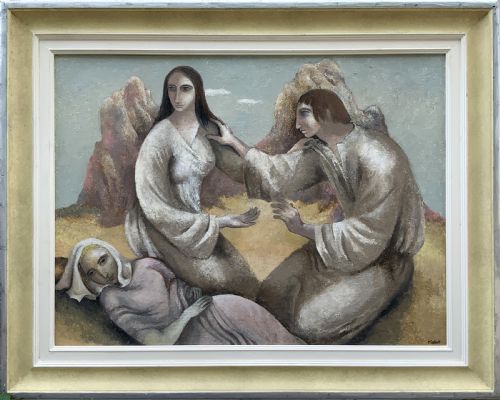
These pieces comprise landscape paintings, maritime scenes, portraits, and still lifes created primarily during the first half of the twentieth century. When searching for muted oil wall art, buyers encounter works executed in subdued tones that reflect British Impressionism, Post-Impressionism, and Modern British movements.
The selection ranges from regional English village views and coastal harbours to industrial cityscapes and quiet domestic interiors. Most examples date from the 1900s through the 1960s, capturing shifts toward modernism while retaining traditional painterly qualities.
Makers represented include regional British painters alongside continental European and international artists who utilised restrained colour harmonies. These works function directly as decorative wall art while carrying the historical weight of early twentieth-century fine art.
Materials and methods
Artists painted primarily with oil pigments applied to canvas, wooden board, or panel supports. The application spans smooth brushwork to textured impasto layers that lend physical depth to coastal seascapes and park scenes.
Support materials range from traditional stretched canvas to sturdy wooden boards that preserved the pigments over decades. Framing often consists of period wood mouldings chosen to complement the subdued palette of the composition.
Listings span the 1900s to the 1960s, featuring oil on canvas and board across British landscape and European modernist styles.
Judging quality in these paintings
Quality rests in the handling of light and the subtlety of the tonal harmonies rather than mere subject matter. Stronger works demonstrate confident brush control and atmospheric depth that draw the viewer into the landscape or interior.
The relationship between the pigment density and the support substrate dictates the long-term stability and visual impact of the painting. Finer examples maintain surface integrity and coherent composition across both large canvases and intimate board studies.
Kenneth Cozens·Gyrth Russell·Ernest Higgins Rigg·Herbert Royle·Arthur Winter Shaw·William Hatherell·Ruth Prowse·Fred Stead·Frank Shenton·Kershaw Schofield·William Greaves·Owen Bowen·Augustus William Ennes
The Muted Oil Wall Art Glossary
- Impasto
- Paint applied thickly to a canvas or board so that it stands out from the surface. This technique allows the physical marks of the brush or palette knife to catch the light and create texture.
- Board
- A rigid wooden or composite panel used as a painting support instead of stretched fabric. Artists frequently utilised boards for smaller plein air studies.
- Post-Impressionism
- An art movement developing from the rejection of impressionist limitations that emphasises symbolic motifs and distinct colour relationships. Works in this style often employ simplified forms and subdued palettes.
- Provenance
- The documented history of ownership of a painting. Clear records help establish the authenticity and origin of works by listed artists.
Muted Oil Wall Art: Frequently Asked Questions
How do I date a muted oil painting?
Dating relies on stylistic markers, framing materials, and the physical characteristics of the canvas or board. Records of the artist's working life often provide a secure timeframe.
Changes in subject matter, such as industrial cityscapes versus pastoral views, also help place the work within specific decades like the 1920s or 1950s.
What is the difference between canvas and board?
Canvas is woven fabric stretched over a wooden frame, offering slight give and a textured surface. Board is a rigid flat support made of wood or composite material.
Painters often chose boards for portable outdoor sketching, resulting in robust works that survived extensive travel.
How should I hang and light these paintings?
Oil paintings benefit from stable indoor environments away from direct sunlight and excessive moisture. Natural indirect light or dedicated picture lights reveal the subtle tones without generating damaging heat.
Ensure the wall fixings match the weight of the frame and the support to secure the piece safely.
What defines the British Impressionist style?
British Impressionism adapts continental techniques to local atmospheric conditions, focusing on natural light and everyday scenes. The palette tends toward earthy greens, greys, and muted blues rather than vivid primaries.
Brushstrokes remain visible yet controlled, capturing the transient qualities of weather and time of day.