


Muted Blue Watercolour Art
Muted blue watercolour art brings subdued coastal light and quiet rural tones directly into interior spaces.
Muted Blue Watercolour Art
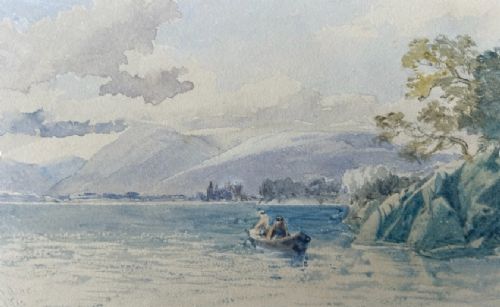
Muted blue watercolour art encompasses framed paintings on paper originating primarily from the nineteenth and early twentieth centuries, capturing landscapes, coastal scenes, and town views.
The selections encountered here frequently span Victorian, Edwardian, and early British Impressionist movements, showing soft washes of pigment that define skies, seas, and rivers.
Works range from intimate depictions of Yorkshire harbours and Norfolk broads to broader studies of Scottish landscapes and London riversides.
Factors of distinction
Atmospheric depth separates accomplished watercolours from simpler studies, relying on the artist's handling of pigment transparency to suggest light and moisture.
Compositional balance and brushwork precision dictate the strength of a piece, particularly in how effectively marine activity or pastoral stillness is rendered on paper.
Several artists captured quiet moments of geese, donkeys, and seagulls sharing space with everyday nineteenth-century life.
Thomas Miles Richardson Jnr·Carlo Ferranti·Percy Lancaster·Albert Ludovici Jnr·Fred Lawson·Arthur Reginald Smith·Sir Thomas Newenham Dean·Tom Clough·James Watson·Frederick William Hattersley·John Mitchell·A G Hayward·Charles Harmony Harrison·Kate E Booth·Ernest F Hill·Stephen John Batchelder·A Winter Shaw·Hirst Walker·Fred Mayor·William Lee Hankey·George Faulkner Wetherbee·William Collins·Carleton Grant·Rowland Henry Hill·GM de L Aubiniere
The Muted Blue Watercolour Art Glossary
- Watercolour pigment
- Finely ground colour particles mixed with a water-soluble binder. This medium allows artists to create translucent washes.
- Monogram
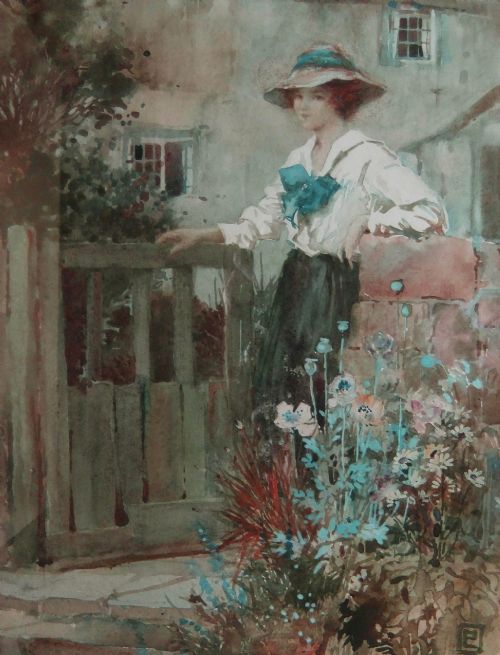
- A motif made by overlapping or combining letters to form a single symbol. Artists frequently used these initials to sign works discreetly.
- Genre painting
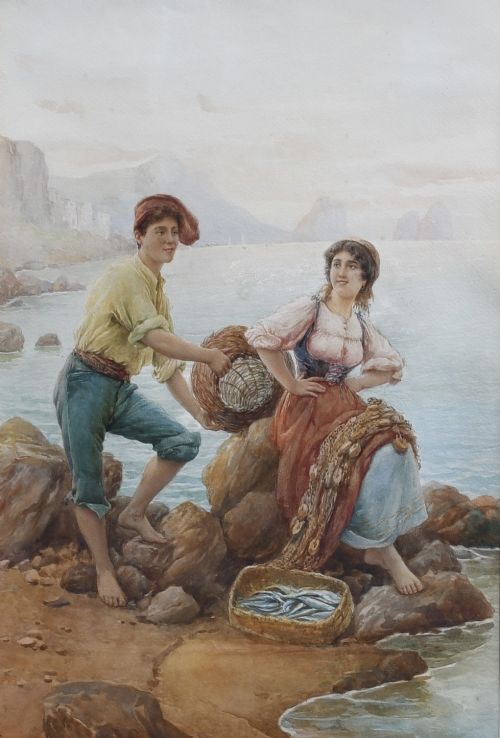
- Artwork depicting scenes from everyday life. These subjects often include fisherfolk, cottage gates, and street scenes.
- Pastoral style
- Artistic work portraying rural life and idealized country settings. Such pieces emphasise calm rivers, meadows, and rustic cottages.
Muted Blue Watercolour Art: Frequently Asked Questions
What periods do these watercolours date from?
The works span the nineteenth century through the early decades of the twentieth century, including Victorian and Edwardian examples.
Dates typically centre around the Victorian era up to the nineteen-thirties, reflecting British and European schools of painting.
How should I frame and hang these watercolours?
Watercolours require framing behind glass to protect the absorbent paper from humidity and handling.
Keep them away from direct sunlight to prevent the watercolour pigments from fading over time.
What subjects appear in these paintings?
Common subjects include coastal harbours, fishing boats, rivers, and quiet rural cottages.
Artists also recorded town landscapes and genre scenes featuring figures by the water's edge.
How do I identify different regional schools?
Regional styles often emerge through the specific landscapes depicted, such as Yorkshire coastlines or Norfolk broads.
Artists associated with particular groups or locations applied distinctive brushwork characteristic of British Impressionism.