






Muted Blue Landscape Artwork
When you search for muted blue landscape artwork, you encounter historical painted scenes rendered in restrained atmospheric tones.
Muted Blue Landscape Artwork
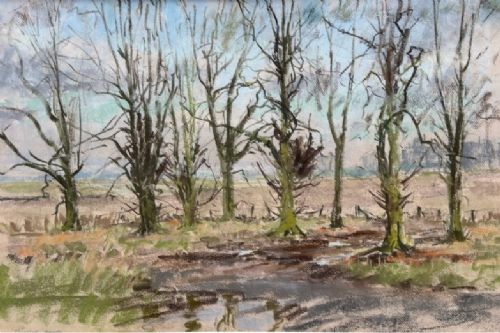
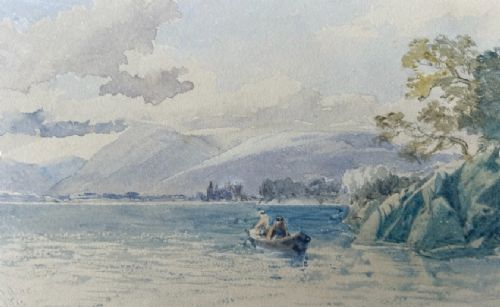
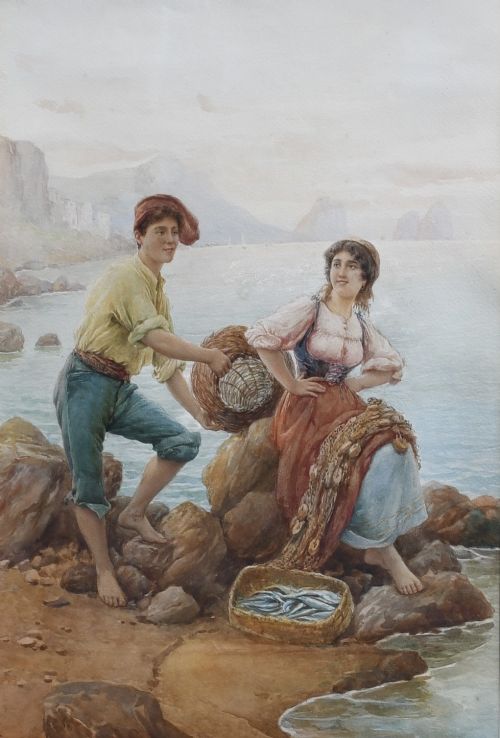
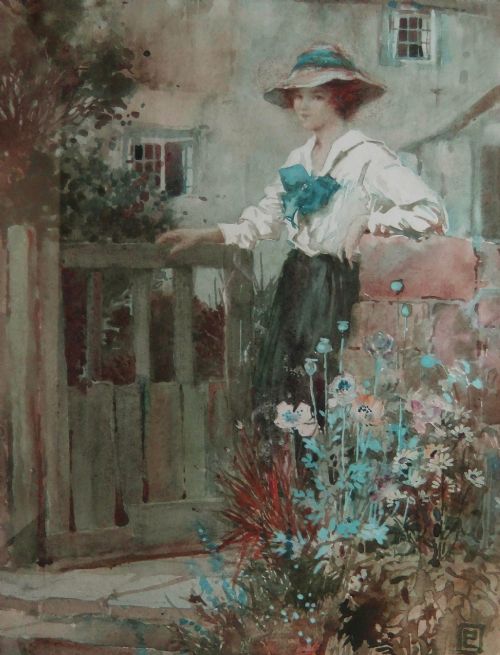
Muted blue landscape artwork encompasses historical paintings that capture water, coastlines, and skies using subdued blue pigments. These pieces emerge from the nineteenth century through the mid twentieth century, reflecting periods such as the Victorian era, Edwardian period, and British Impressionism.
The selections on this page lean heavily towards works on paper and canvas depicting British and European rural, coastal, and urban views. Watercolours and oil paintings predominate, often signed by listed artists associated with regional schools like the Staithes group or early twentieth century British practices.
Materials and technique
Artists typically applied watercolour pigment or oil paint to paper, canvas, or wood panels, sometimes incorporating ink or pastel details. Watercolours rely on washes across textured paper to capture soft atmospheric water and sky conditions, while oils utilise heavier pigment applications on stretched canvas.
Framed works frequently include protective glass over paper pieces, preserving delicate watercolour pigments and ink lines from environmental moisture and light degradation over time.
Muted Blue Landscape Artwork Retail Price Guide 2026
Typical asking prices for muted blue landscape artwork among the pieces listed under this phrase on Sellingantiques today, from the lower quarter to the upper quarter. They describe what is for sale here now, not the wider market.
Several artists clearly painted with cold fingers, recording North Sea fishing boats and Yorkshire snowfalls with admirable dedication.
Judging quality
Quality rests upon the artist's ability to handle light, tone, and spatial depth within a restricted palette. Stronger examples demonstrate confident brushwork and subtle tonal gradations that give water and air a convincing weight.
The distinction between standard decorative work and finer gallery pieces lies in the precision of the composition and the preservation of the original pigment intensity across paper or canvas surfaces.
Thomas Miles Richardson Jnr·Sir Thomas Newenham Dean·Charles Harmony Harrison·Lamorna Birch·William Collins
The Muted Blue Landscape Artwork Glossary
- Watercolour
- A paint consisting of colour suspended in a water-soluble vehicle, typically applied to paper surfaces to create translucent washes.
- Impressionism
- An art style developed in the nineteenth century focusing on accurate depiction of light in its changing qualities rather than minute detail.
- Pastel
- A dry art medium in the form of a stick, consisting of powdered pigment and a binder, used on paper to achieve soft colour transitions.
- Provenance
- The chronological record of ownership and exhibition history establishing the authenticity and origin of a painting.
Muted Blue Landscape Artwork: Frequently Asked Questions
What subjects do these muted blue landscapes show?
These works primarily depict coastal scenes, harbours, rivers, and rural countryside across Britain and Europe. Many capture specific locations from Scotland to Cornwall under overcast or evening skies.
Subjects also include town landscapes, architectural landmarks, and pastoral settings where water and sky dominate the composition.
How should I display watercolour paintings safely?
Watercolours require framing behind glass with a mat to prevent the paper surface from touching the glazing directly. This barrier protects the delicate pigments from humidity and condensation.
Position these pieces away from direct sunlight to prevent fading of the subtle blue washes and ink details over the years.
How can I identify the period of a painting?
Dating relies on signatures, monograms, inscribed dates, and stylistic markers associated with specific artistic movements like Victorian pastoralism or British Impressionism. Framing materials and paper types also offer clues to the era of production.
Many listings include recorded biographical dates of the artists, which narrow down the window in which the artwork was created.
What is the difference between oil and watercolour?
Oil paintings utilise pigments bound in drying oils applied to canvas or wood panels, resulting in a heavier texture and opaque finish. Watercolours use water-soluble mediums on paper, producing a luminous and translucent effect.
Oils generally require less protective framing behind glass compared to paper-based watercolours and pastels.