



Victorian Pastoral Watercolour Art
Victorian pastoral watercolour art captures nineteenth-century rural idylls through pigment and paper, offering a window into traditional agrarian life for collectors.
Victorian Pastoral Watercolour Art
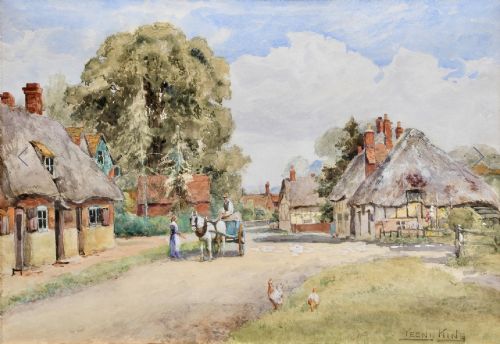
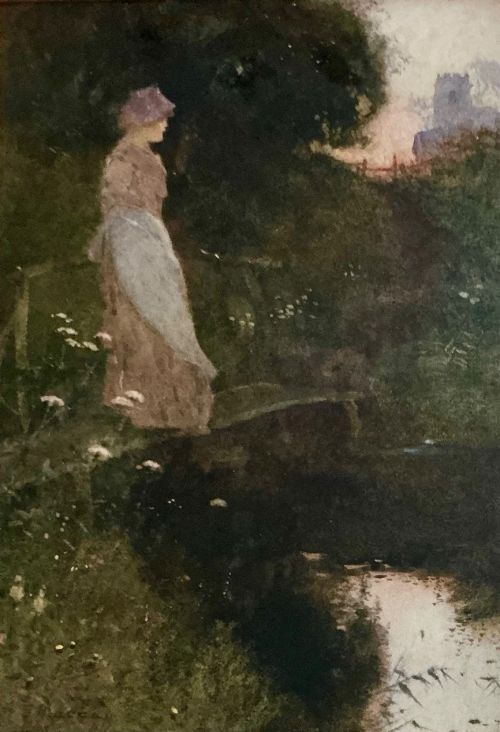
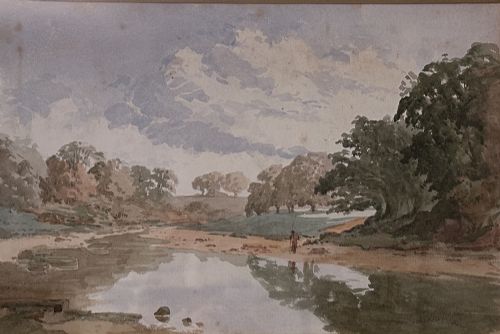
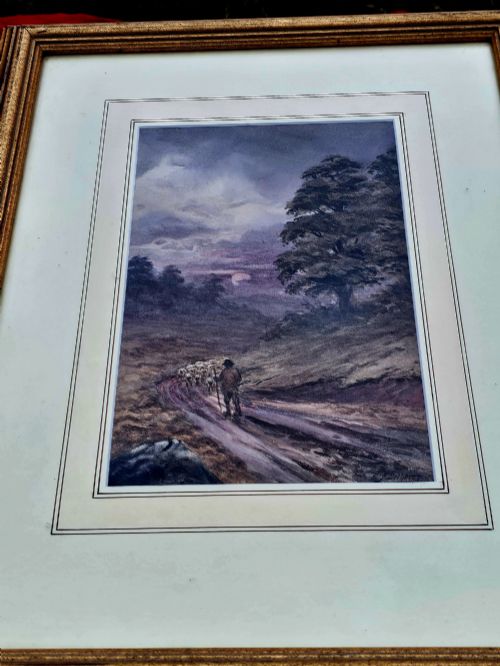
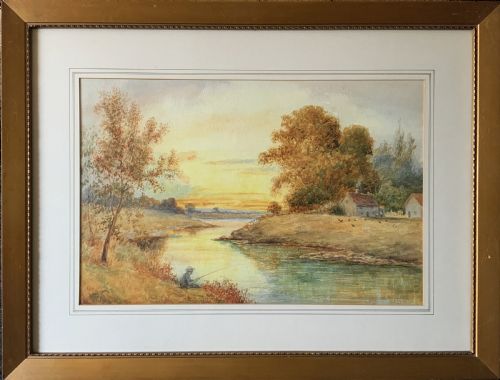
When you search for victorian pastoral watercolour art, you encounter framed paintings on paper depicting rural scenes, farm animals, riverbanks, and thatched cottages. These works capture the nineteenth-century fascination with the countryside, often executed during the Victorian and Edwardian periods.
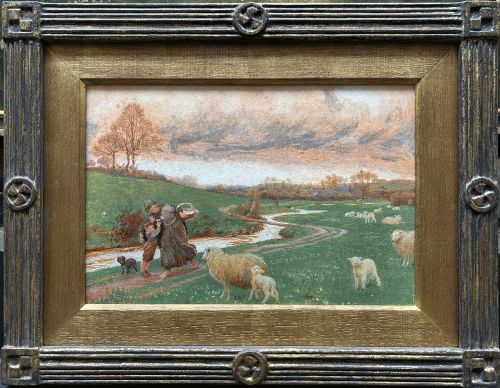
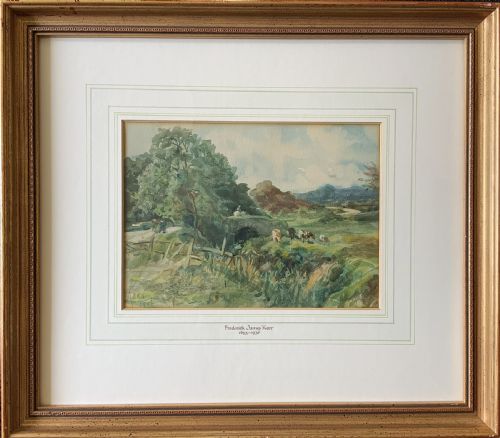
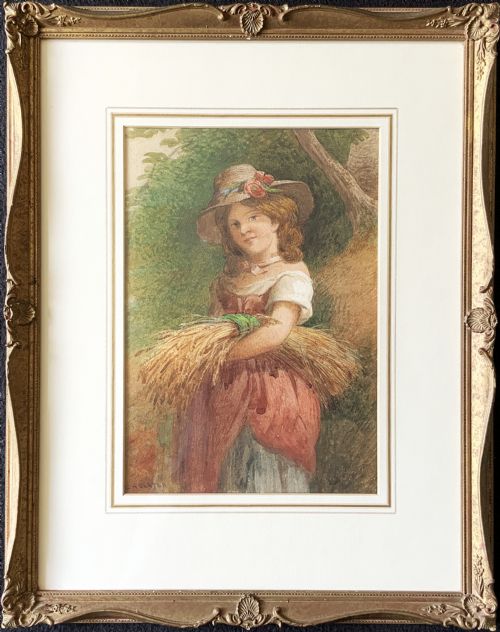
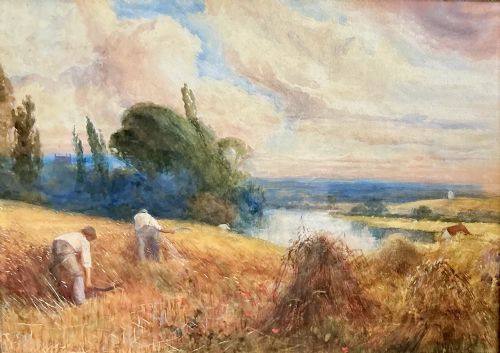
The pieces on this page lean heavily towards landscapes featuring cattle, sheep, and figures engaged in rustic daily tasks like harvesting or tending livestock. You are most likely to meet original works bearing signatures from British watercolourists active between the mid-nineteenth and early twentieth centuries.
Subjects range from quiet Welsh valleys and Thameside villages to detailed studies of farmyard animals and pastoral gatherings. Most examples arrive preserved behind glass within traditional wooden or gilt frames that suit the domestic interiors of their era.
Materials and Technique
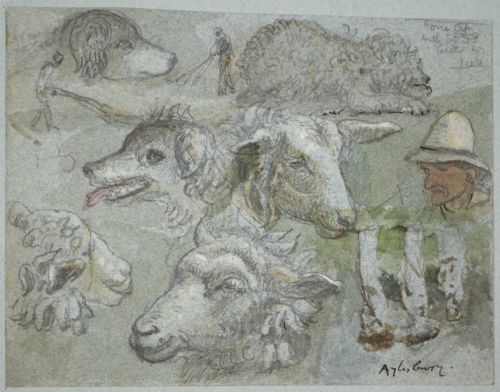
Artists painted these scenes using watercolour pigment suspended in water-soluble binders, applied delicately to sheets of heavy paper. Many works incorporate pencil underdrawings to map out landscapes, cottages, and livestock before the application of washes.
Finished watercolours were traditionally mounted behind glass to protect the fugitive pigments from light damage and moisture. Frames constructed from wood, frequently enhanced with gold leaf or gilt finishes, completed the presentation of these framed paintings.
Victorian Pastoral Watercolour Art Retail Price Guide 2026
Typical asking prices for victorian pastoral watercolour art among the pieces listed under this phrase on Sellingantiques today, from the lower quarter to the upper quarter. They describe what is for sale here now, not the wider market.
Several watercolours permanently preserve the inquisitive expressions of farm animals stealing fruit or inspecting bird nests.
Evaluating Quality
Quality in these watercolours rests upon the precision of the brushwork and the artist's command of light and atmosphere across the rural landscape. Superior examples display subtle tonal gradations in the sky and water, while lesser pieces rely on stiff, formulaic application.
The handling of natural anatomy in figures and animals distinguishes accomplished painters from ordinary amateurs. A strong composition successfully balances the rustic elements, such as cottages or livestock, without crowding the paper.
James Smetham·EJ Letheren·Th.Thibault·Frederick Walker·Frederick James Kerr·Charles Henry Slater·Frederick Hines·Philip Richard Morris·Cornelius Pearson·Henry John Kinnaird·James William Booth·Thomas Hunn·James Orrock·James Hardy Junior·Robert Thorne Waite·Helena Maguire·Alfred Grey·Harold Lawes·Bernard Walter Evans·Edmund George Warren·William Stephen Coleman·Harry Sylvester Stannard·Henry Charles Fox·Will Anderson·Robert Hollands Walker
The Victorian Pastoral Watercolour Art Glossary
- Watercolour pigment
- Finely ground colour particles mixed with a binder for painting on paper. This medium allows for transparent washes that create luminous skies and river scenes.
- Gilt wood
- Wood coated with a thin layer of gold leaf or metallic paint. This traditional framing material adds warmth and highlights the pastoral subject matter.
- Pre-Raphaelite Movement
- An artistic association focused on detailed observation of nature and bright pigments. Works influenced by this style show intense botanical accuracy in rural settings.
- Framed artwork
- A piece of visual art enclosed within a protective border and glass. This finishing preserves delicate paper works from environmental degradation.
Victorian Pastoral Watercolour Art: Frequently Asked Questions
What subjects appear in these watercolours?
These works typically depict rural landscapes, riversides, farm animals, and cottages engaged in traditional agricultural life.
Scenes frequently include figures harvesting crops, herding sheep, or children fishing near country villages.
How should I frame and hang them?
Keep these watercolours away from direct sunlight to prevent the pigments from fading over time.
Ensure they remain protected behind glass within their original wooden or gilt frames to maintain stability.
How do I identify the period?
Look closely at the artist signature, framing style, and paper characteristics recorded in the listing details.
Many works carry specific dates or reflect the distinct artistic movements of the nineteenth and early twentieth centuries.
Were these painted outdoors?
Artists often sketched pastoral scenes directly in the countryside before completing the final paintings in studios.
Watercolour materials provided the portability necessary for capturing shifting light across fields and river estuaries.