
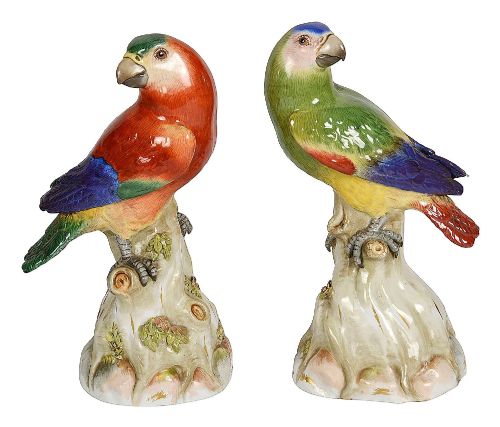
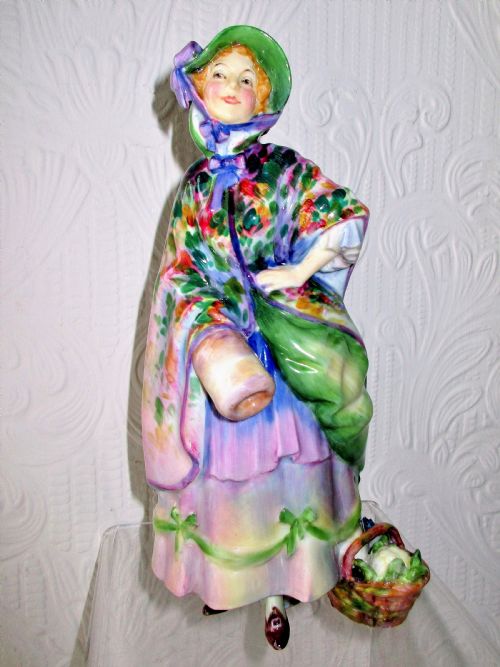


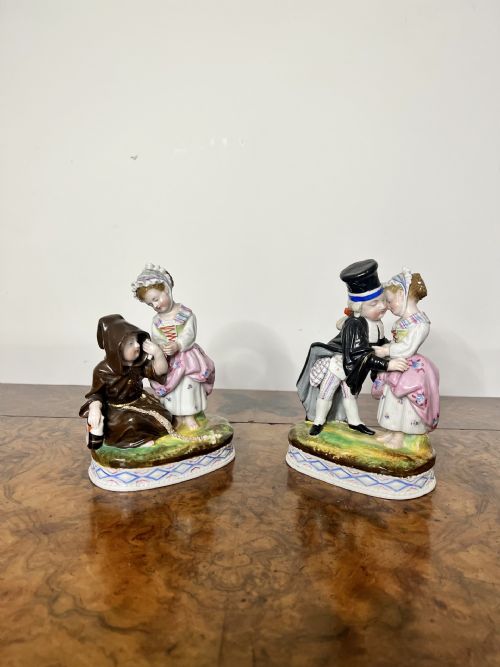
Multicoloured Porcelain Figurine
These multicoloured porcelain figurine examples bring lively character and historical craft into a room, offering rich detail and vibrant enamel decoration.
Multicoloured Porcelain Figurine
A multicoloured porcelain figurine captures human, animal or allegorical subjects in three dimensions, shaped from fine ceramic bodies and painted in varied hues. Collectors searching this phrase encounter pieces ranging from eighteenth-century German groups to twentieth-century English character studies.
The selection on this page leans heavily towards nineteenth-century Continental workshops alongside twentieth-century English pottery productions. Buyers meet everything from paired birds and musicians to individual figures engaged in domestic or pastoral scenes.
How they were made
The foundation of each piece is ceramic paste, usually porcelain or bone china, shaped in moulds or modelled by hand before initial firing. Artisans then applied colourful glazes and overglaze enamels, sometimes incorporating gold leaf highlights.
A subsequent kiln firing fused the glassy surface decorations permanently to the ceramic body. Certain works also utilised bisque porcelain, leaving the fired surface unglazed for a matte, marble-like texture.
Listings span from the eighteenth century through the Edwardian era and into the mid-twentieth century, utilising porcelain, earthenware, enamel and gold leaf.
What varies in quality
The fidelity of the modelling and the crispness of the hand-painted enamel work dictate the visual success of each piece. Superior examples display subtle facial expressions and carefully delineated fingers and drapery.
Quality also rests on the preservation of the original hand-applied palette and any gilt detailing across decades of handling. Finer specimens maintain sharp definition in the moulded elements beneath the glaze.
Meissen·Royal Doulton·Triebner Ens And Eckert·Samson Porcelain·Wedgwood And Co Ltd·Jacob Petit·Gotthelf Greiner·Minton
The Multicoloured Porcelain Figurine Glossary
- Overglaze enamel
- Colours painted onto the already fired and glazed ceramic surface before a lower-temperature fixing in the kiln. This technique permitted a wider and brighter palette.
- Bisque porcelain
- Unglazed white ceramic material fired only once to achieve a smooth, matte finish resembling marble. It gained popularity for neoclassical and Victorian figures.
- Bone china
- A type of porcelain containing bone ash that produces a strong, slightly translucent body. English potteries frequently utilised this material for twentieth-century figures.
- Figural perfume bottle
- A small container for scent fashioned in the shape of a person or animal, combining utility with sculptural display. Examples often feature hinged metal mounts.
Multicoloured Porcelain Figurine: Frequently Asked Questions
How do I clean old porcelain figures?
Dust gently with a soft, dry brush to prevent accumulation in delicate crevices and painted folds.
Avoid immersing pieces in water, particularly older examples with delicate overglaze enamels or gilt highlights that might lift.
Are these figures painted by hand?
Most antique and vintage examples feature hand-painted enamel details applied over the initial glaze layer by skilled ceramic artists.
Close inspection often reveals subtle brushstrokes and individual variations between pieces sharing the same model number.
What is the difference between porcelain and earthenware?
Porcelain is fired at higher temperatures until the ceramic body vitrifies, making it dense, hard and sometimes translucent. Earthenware is more porous and opaque, requiring a complete glaze layer to achieve impermeability.
How can I tell the age of a figure?
Makers marks stamped or painted on the underside provide the most reliable clue to a piece's origin and production period. Stylistic cues such as costume details and modelling techniques also help narrow down the decade.