


Mountain Landscape Canvas Art
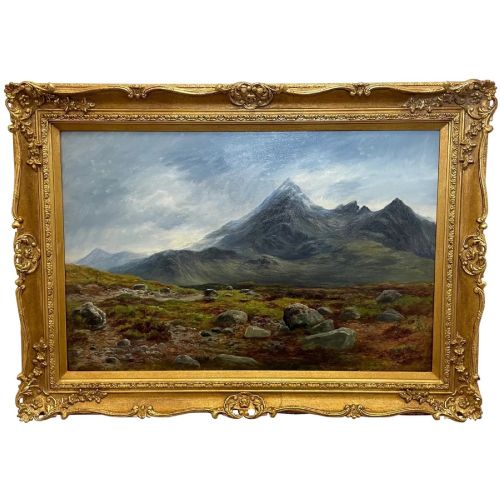
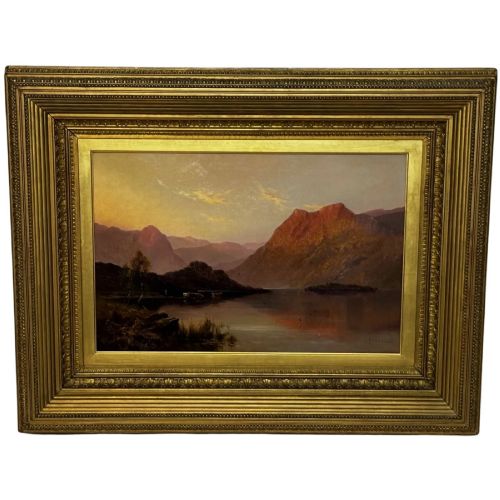
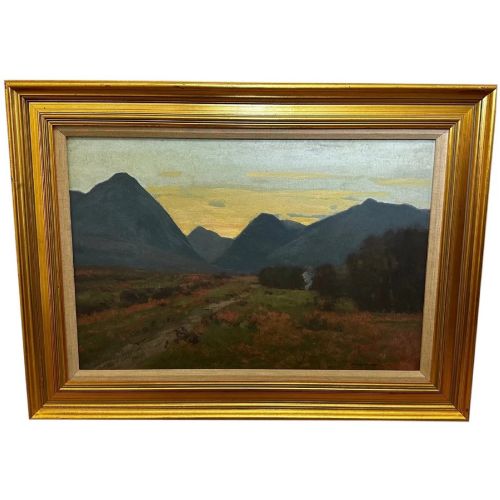
Mountain landscape canvas art captures rugged terrain and lofty peaks, offering buyers dramatic vistas of Scotland, Wales, and the Alps painted in oil.
Mountain Landscape Canvas Art
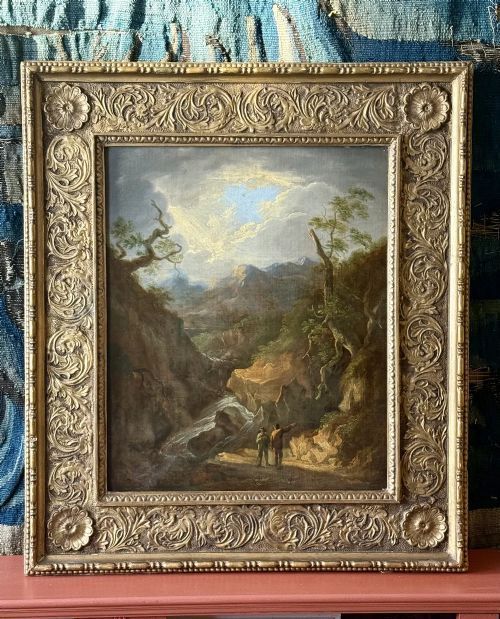
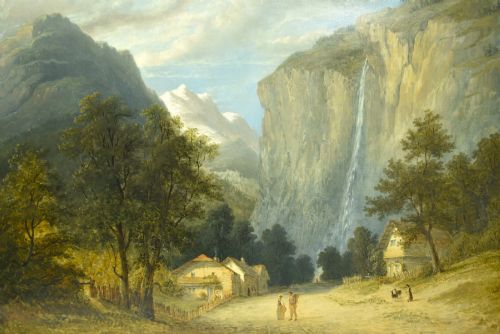
Mountain landscape canvas art spans the nineteenth and early twentieth centuries, capturing dramatic vistas of Scottish, Welsh, and Alpine terrain. These works record regional topography, from the Isle of Arran and Snowdonia to Swiss waterfalls and Bavarian castles.
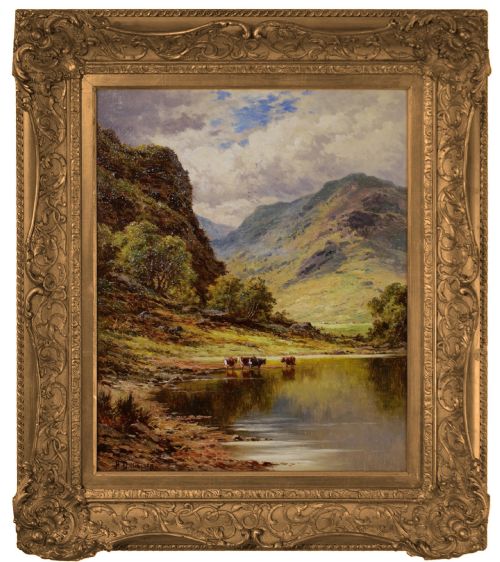
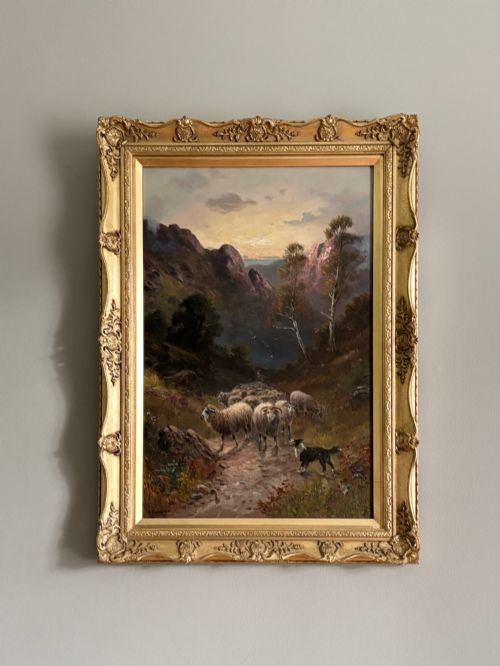
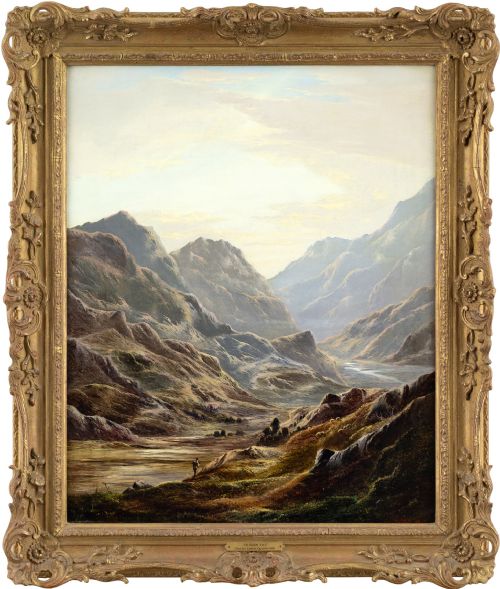
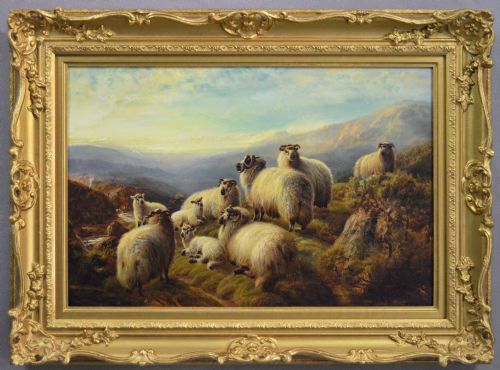
The most common examples on this page are nineteenth-century and Victorian oil paintings on canvas, often presented in period giltwood and gesso frames. Painters of the period recorded cattle grazing by highland lochs, shepherds with sheep, and steep mountain passes.
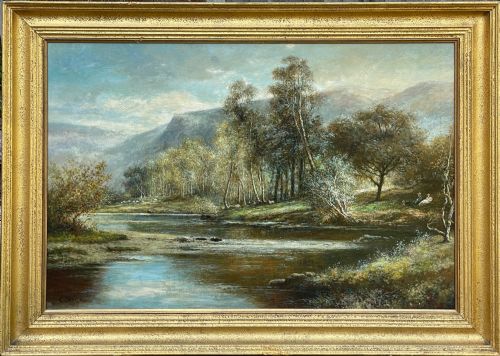
The selection includes named British and Continental artists working in romantic and impressionistic styles. These paintings range from intimate river valleys to large-scale portrayals of snow-capped peaks and moody highland weather.
Materials and technique
Artists built these scenes using oil paint applied to woven canvas stretched over wooden frames. The medium allowed for layered brushwork, blending rich pigments to capture the changing light on rock faces, water, and sky.
Many of these works retain their original giltwood and gesso frames, which utilise moulded plaster details finished in gold leaf. The combination of oil paint and textured frames defines the physical structure of these nineteenth-century paintings.
Regional topography dominates the selection, recording mountain ranges, highland cattle, sheep, and alpine lakes across Britain and Europe.
What separates the finest examples
Quality in these mountain scenes rests upon the handling of light, atmospheric depth, and the convincing rendering of geological forms. Stronger works convey the weight of crags and the moisture of highland air through confident brushwork.
The preservation of the original canvas and the integrity of the period gilt frame influence the overall character of the piece. Works by established named artists command attention for their distinct command of palette and composition.
William Beattie-Brown·Alfred Fontville de Breanski·George Houston·Benjamin Barker·Henry H. Parker·Douglas Cameron·Charles Leslie·Robert Watson·John Grenville Fennell·William Henry Mander·Sidney Richard Percy·Thomas Spinks·Frank Hider·Giulio Cecchini·Karl Herrle·Stephen Enoch Hogley·William Miller Frazer·George Melvin Rennie·John Douglas Perrett
The Mountain Landscape Canvas Art Glossary
- Oil on Canvas
- Pigments mixed with drying oil applied to a woven fabric support. This combination provides durability and allows for subtle blending of tones.
- Giltwood
- Timber that has been coated with a thin layer of gold leaf or gold paint. It forms the decorative surface of period frames.
- Gesso
- A paint mixture consisting of a binder mixed with chalk, gypsum, or pigment. It is applied to wooden frames to create a smooth surface for gilding.
- Romanticism
- An artistic movement emphasising inspiration, subjectivity, and the primacy of individual emotion. In these paintings, it manifests as awe before wild nature.
- Scottish Impressionism
- A regional painting style focusing on natural light and loose brushwork. Practitioners captured the specific atmospheric conditions of northern landscapes.
Mountain Landscape Canvas Art: Frequently Asked Questions
Where were these mountain views painted?
The subjects range widely across British and European highlands, featuring specific locations in Scotland, Wales, the Lake District, and the Alps. Artists frequently travelled to regions like Snowdonia, the Scottish borders, and Swiss valleys to record local topography.
Many titles name the exact lake, river, or mountain peak depicted. This specificity allows collectors to trace the exact geographic viewpoints recorded by nineteenth-century artists.
How should I hang an oil painting?
These works require secure wall fixings suited to the combined weight of the wooden stretcher, canvas, and heavy giltwood frame. Position the painting away from direct sunlight and fluctuating heat sources to protect the oil pigments and gesso.
Ensure the hanging wire or brackets attached to the frame are sound before mounting. Professional picture hooks matched to your wall type provide the necessary support.
Are these paintings signed by the artists?
Many examples feature signatures or monograms applied by the artist, often located in the lower corners of the canvas. Some works also include artist inscriptions, titles, or dates on the reverse of the canvas or stretcher frame.
Unsigned works do appear, often attributed through stylistic comparison to specific nineteenth-century schools or regional painters. Documentation or labels on the frame sometimes offer further provenance.
How do I care for nineteenth-century canvas art?
Dust the surface and the decorated frame gently with a soft, dry brush to prevent particle buildup. Avoid using water, chemical cleaners, or damp cloths on the oil paint or the gilded frame surfaces.
Professional conservation may be required if the canvas develops slackness or the paint layer shows cracking. Maintaining a stable room temperature helps preserve the physical integrity of both wood and canvas.