



Moulded Front Oak Drawers
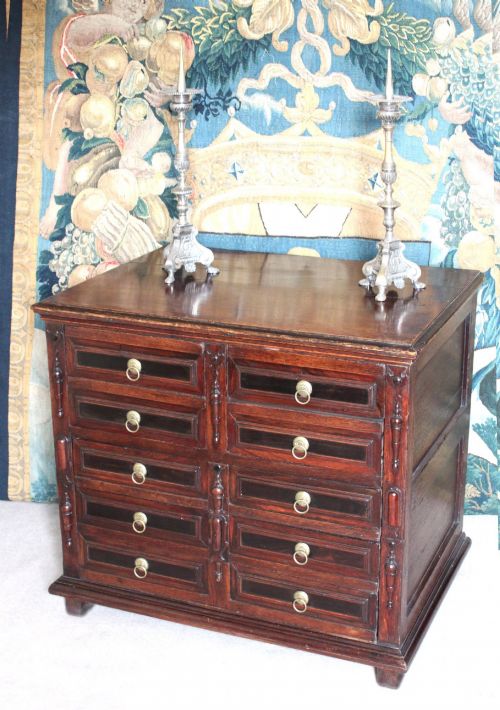
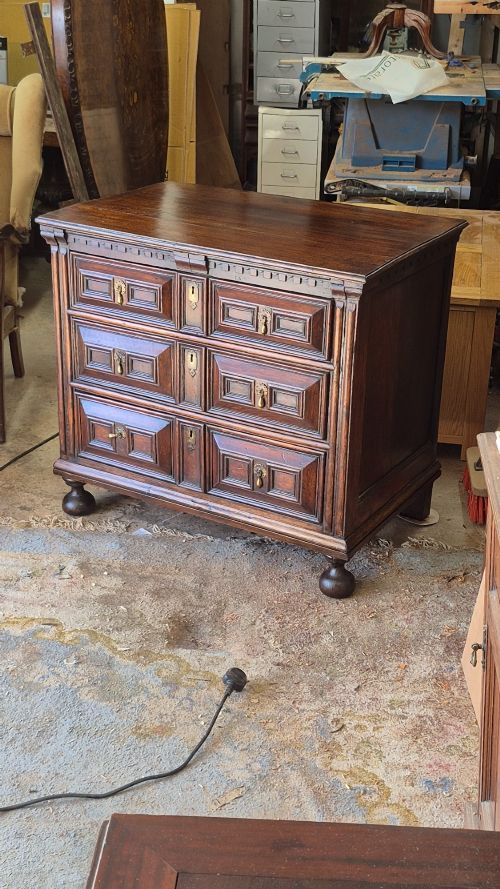
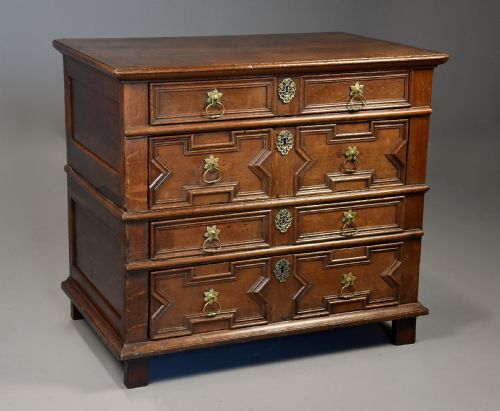
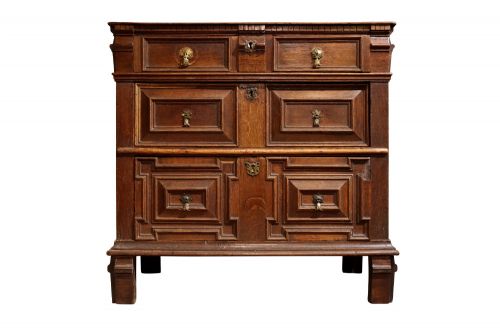
These moulded front oak drawers bring tactile depth to a room, offering sturdy seventeenth and eighteenth century storage with striking geometric panels.
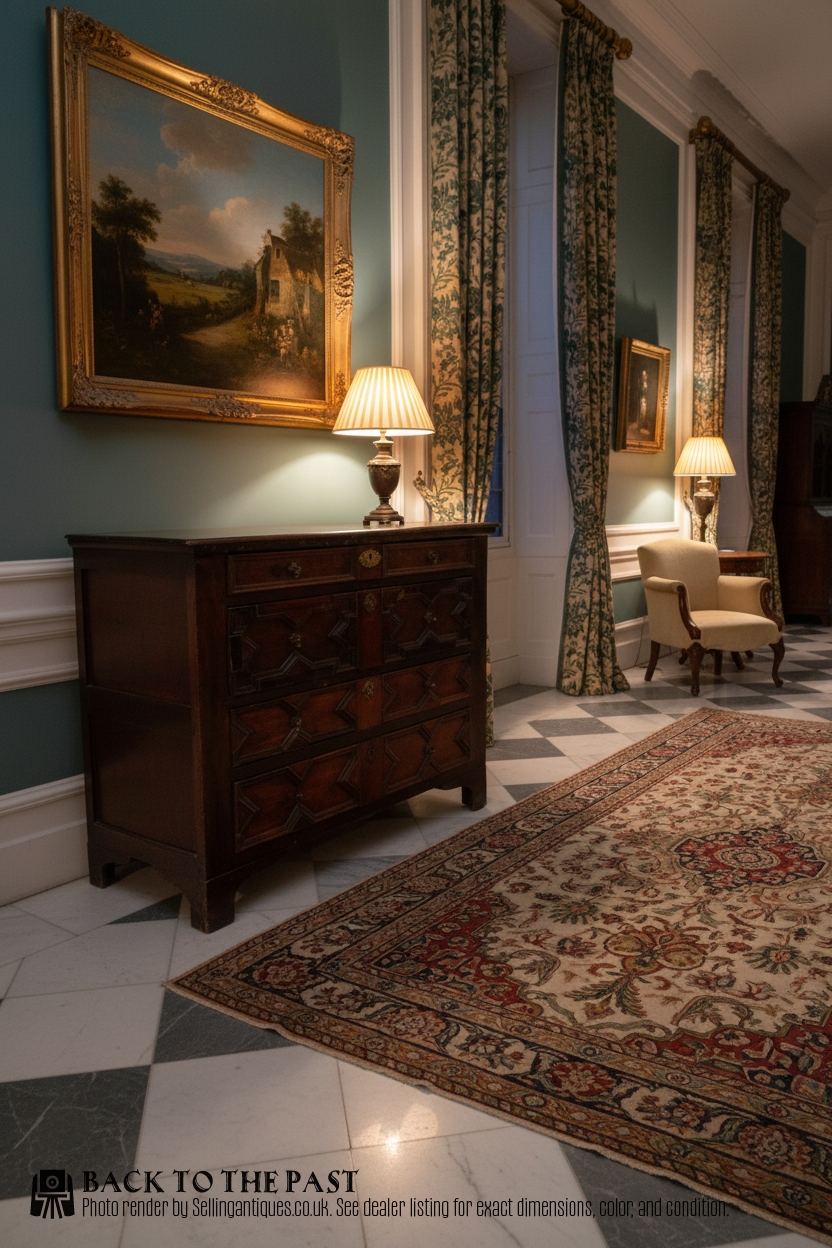
Moulded Front Oak Drawers
Moulded front oak drawers encompass chests of drawers, servers, low dressers, and writing bureaux spanning the seventeenth century, the eighteenth century, and the 1920s revival period. The vast majority of these pieces originate in the seventeenth century, showcasing the robust joinery and utilitarian design characteristic of that era.
Buyers encounter classic chests of four drawers alongside more occasional forms like servers and bureaux. The form leans heavily into British and European provincial traditions, particularly the Jacobean, Stuart, and Charles II styles that define early English cabinetmaking.
Materials and construction methods
Carpenters built these pieces primarily from solid oak, sometimes combining secondary timbers like elm, fruitwood, and snakewood for contrasting decorative effects. Wood inlay also appears, adding subtle tonal variety to the primary timber framework.
Makers applied applied geometric mouldings directly onto the drawer fronts, creating layered relief patterns that catch the light. Brass and iron hardware, including drop handles and escutcheons, secure the functional elements of these sturdy containers.
Snakewood decoration sneaks into seventeenth century panels just to remind everyone that trees can have scales.
Distinctions in quality and finish
The sophistication of the timber grain and the depth of the surface patina dictate the visual success of the piece. Examples with fine, faded surfaces and contrasting fruitwood or snakewood decoration display superior decorative ambition from the maker.
The crispness of the geometric mouldings and the integrity of the original oak structure separate standard utility pieces from exceptional survivals. Later revival pieces, such as those from the 1920s, rely on different joinery standards compared to their seventeenth century predecessors.
The Moulded Front Oak Drawers Glossary
- Geometric moulding
- Relief work applied to drawer fronts in repeating angular patterns. This technique creates pronounced shadow lines across the facade.
- Patina
- The surface sheen and colour developed by oak over centuries of handling and exposure. Good examples show a soft, faded warmth.
- Snakewood
- A dense exotic timber used for contrasting decoration. Its distinctive mottled grain marks high status seventeenth century work.
- Bureau
- A writing desk featuring a sloping fall-front that opens to reveal internal compartments and drawers. Some variants incorporate moulded drawer fronts beneath the writing surface.
- Server
- A low sideboard or dresser base fitted with drawers for storage. These pieces sit lower than tall chests and often serve in dining spaces.
Moulded Front Oak Drawers: Frequently Asked Questions
How do I date these chests?
Examine the construction of the drawer boxes, the style of the geometric mouldings, and the overall colour of the timber.
Seventeenth century pieces typically display hand-split oak boards and pegged joints, whereas later revival examples from the 1920s reveal more uniform machine cutting.
Where were they used?
These pieces served as primary storage furniture in domestic chambers and halls, holding linens, garments, and personal valuables.
Servers and low dressers also functioned in dining rooms and service areas for storing tableware and provisions.
How do I care for old oak?
Maintain a stable indoor humidity and keep the wood away from direct heat sources to prevent the solid oak panels from splitting.
Feed the surface sparingly with traditional beeswax to preserve the natural patina without building up synthetic residues.