
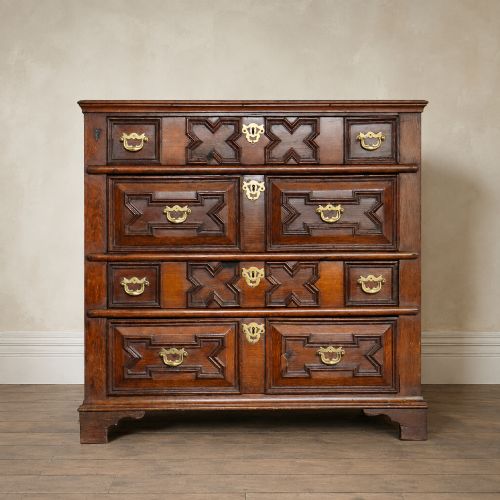
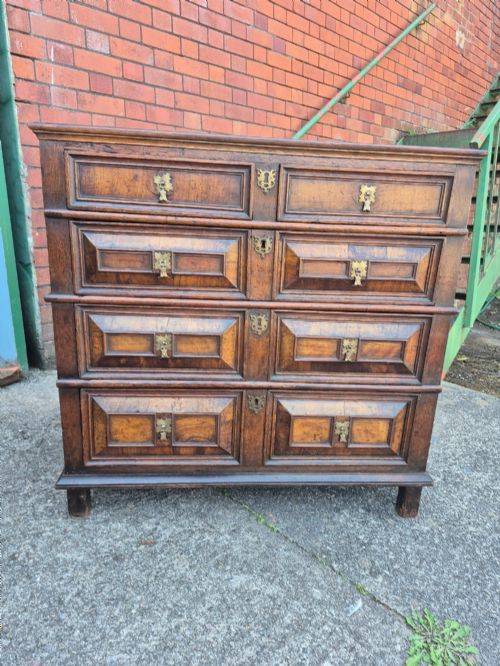
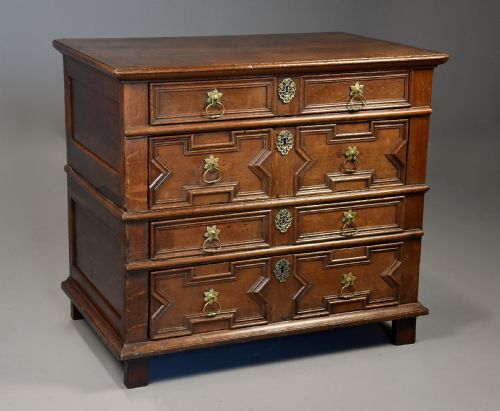
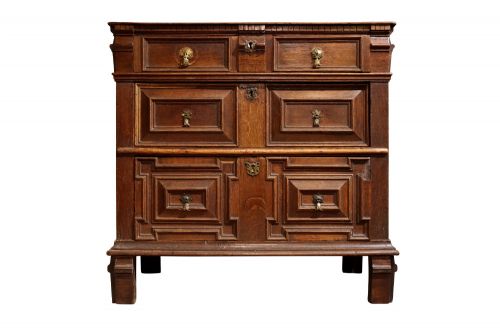


Carolean Moulded Chest
A carolean moulded chest brings seventeenth-century joinery into a modern interior, offering robust storage built from seasoned oak and walnut.
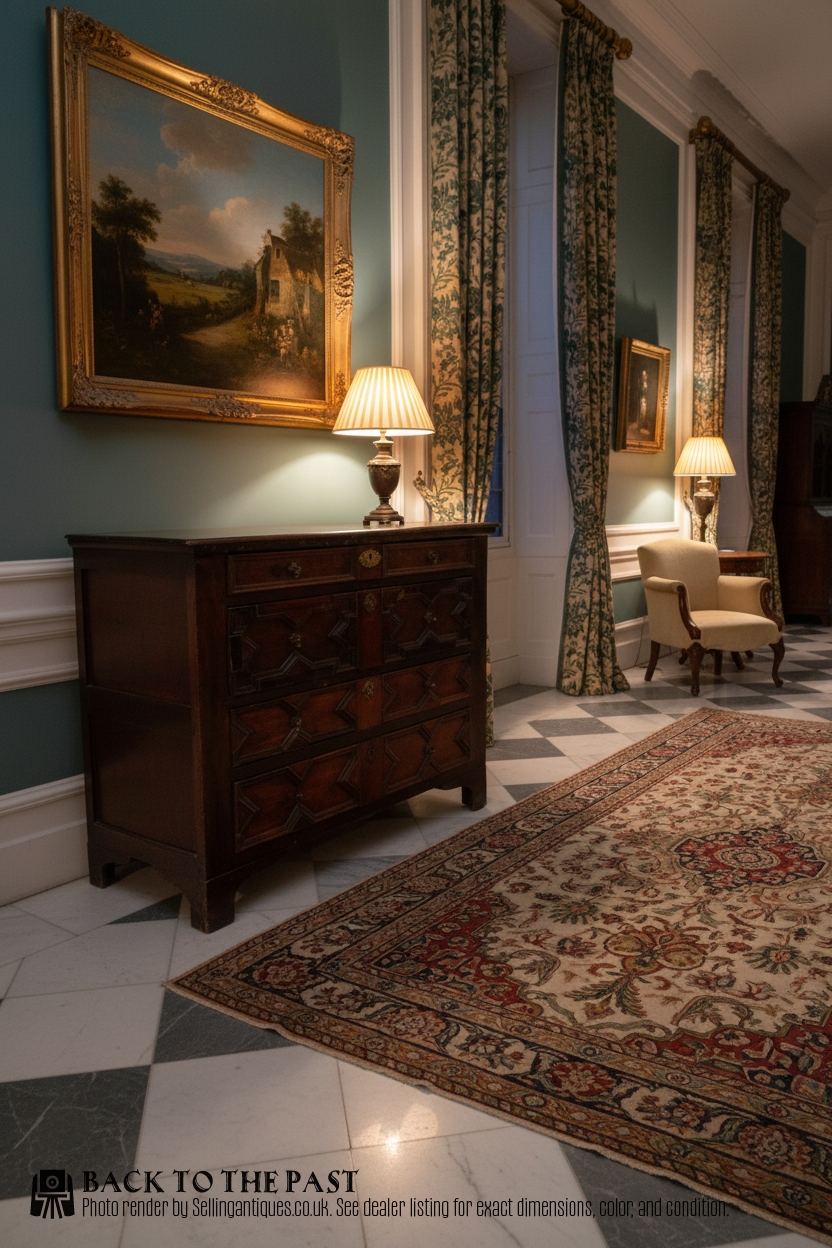
Carolean Moulded Chest
A carolean moulded chest belongs to the late seventeenth century, specifically spanning the Jacobean, Charles II, and William and Mary periods. These pieces serve as functional storage furniture, predominantly appearing as chests of drawers, two-part chests, and safe boxes.
The version most commonly met on this page is the oak moulded-front chest of drawers, often constructed around sixteen-eighty. Such examples show the transition from simple boarded boxes to sophisticated multi-drawer storage units.
Makers of this era employed sturdy timbers to build substantial carcasses, frequently arranging drawers in horizontal tiers. The form emphasises clean architectural lines achieved through geometric mouldings rather than applied ornamentation.
How they were made
Carpenters constructed the primary structure using solid oak, often combining walnut, fruitwood, and snakewood to create contrasting surface patterns. Oyster veneer appears on specialised panels, displaying circular grain formations sliced from small branches.
Mouldings are applied directly to the drawer fronts in geometric configurations, requiring precise hand-planing and joining. Iron and steel hardware, including complex locks and strap hinges, secure the lids and drawers.
Brass drop handles and escutcheons punctuate the dark timber surfaces, secured with original pins or wires. Surface finishes rely on natural waxes and age-related oxidation rather than modern varnishes.
Listings feature seventeeth-century and eighteenth-century pieces utilising oak, walnut, snakewood, fruitwood, and oyster veneer.
What varies in quality
Quality rests upon the preservation of the original timber surfaces and the complexity of the geometric mouldings. Pieces featuring intact oyster veneering and contrasting fruitwood or snakewood inlays demonstrate superior craftsmanship.
The integrity of the hardware, particularly original complex steel locks and brass mounts, elevates a piece significantly. Structural completeness, such as retaining a two-part carcass or untouched backboards, separates exceptional survivals from heavily altered examples.
The Carolean Moulded Chest Glossary
- Oyster veneer
- A method of slicing small branches transversely to produce circular or oval wooden discs resembling oyster shells. These discs form decorative patterns across drawer fronts and panels.
- Geometric moulding
- Raised wooden strips applied in repeating angular patterns to drawer fronts and drawer frames. This technique defines the architectural aesthetic of late seventeenth-century case furniture.
- Two-part chest
- A chest constructed in two distinct stacked sections to facilitate transport and placement. This configuration is typical of larger storage pieces from the seventeenth century.
- Snakewood
- A dense, heavy exotic timber featuring mottled markings that resemble snakeskin. Craftsmen utilised this wood for decorative inlay work alongside native fruitwoods.
- Patina
- The surface sheen and coloration developed through decades of handling, waxing, and exposure to light. A fine patina indicates genuine age and continuous preservation.
Carolean Moulded Chest: Frequently Asked Questions
What is a carolean moulded chest?
A carolean moulded chest is a seventeenth-century storage piece featuring geometric wooden mouldings applied to the drawer fronts. These items originate from the reign of Charles II and the surrounding decades.
They are constructed primarily from solid oak, sometimes accented with walnut, fruitwood, and oyster veneer.
How were these chests used?
These pieces served as domestic storage for clothing, linens, and valuables in seventeenth-century households. Safe boxes and small chests provided secure compartments for important documents and personal items.
The sturdy construction allowed them to withstand daily use in domestic settings over centuries.
How do I live with one?
Place the chest in a stable environment away from direct heat sources and strong sunlight to protect the aged timber and veneer. Regular application of suitable wax maintains the surface sheen without sealing the wood.
Allow sufficient clearance for opening drawers and handling the historic brass drop pulls gently.
How do I date a carolean chest?
Dating relies on examining construction techniques, timber species, and hardware styles characteristic of the seventeenth century. Hand-planed mouldings, joined backboards, and original steel locks provide primary chronological indicators.
The presence of specific decorative elements like oyster veneering and snakewood inlay points directly to the late seventeenth century.