

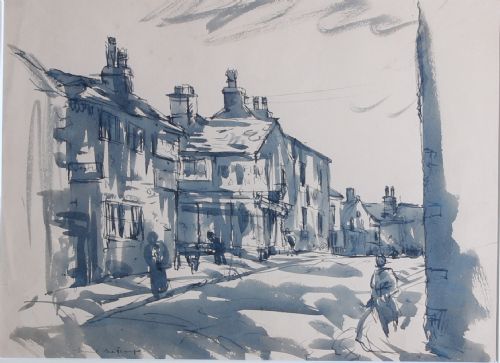
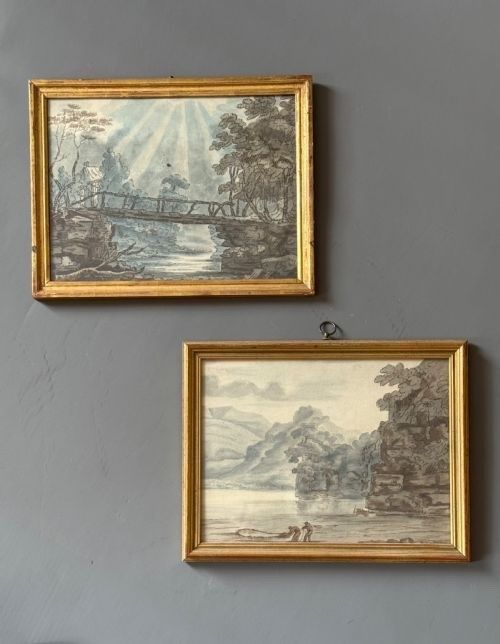
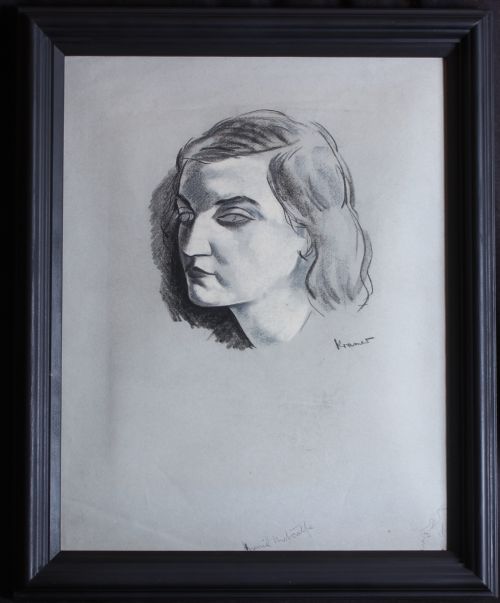
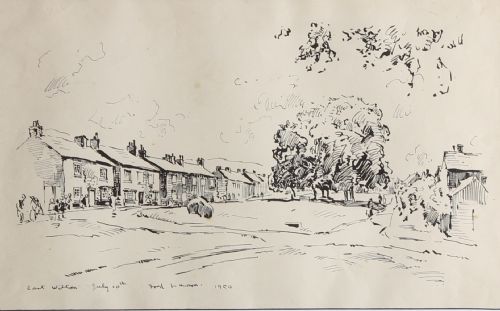
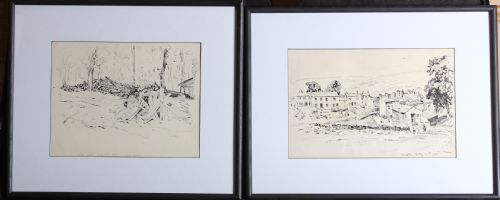


Monochrome Watercolour Sketch
A monochrome watercolour sketch distils light and form with frugal means, offering collectors a direct encounter with an artist's hand.
Monochrome Watercolour Sketch
When you search for a monochrome watercolour sketch, you are looking at works on paper that rely on ink, wash and pencil rather than a full palette of colours. The pieces on this page span the Georgian era through to the mid-twentieth century, capturing landscapes, townscapes and portraits.
You are most likely to meet British examples, ranging from early nineteenth-century topographical views to twentieth-century regional drawings. These works often combine ink or pencil underdrawing with subtle watercolour washes to establish tone and atmosphere.
How they were made
These works are executed primarily on paper using a combination of watercolour, ink and pencil to build depth without relying on heavy colour. Artists laid down precise lines in ink or pencil before applying monochrome washes to render shadow and light.
Framing materials such as wood, giltwood and glass protect these delicate works on paper, with many pieces retaining period frames that complement the restrained palette of the drawing within.
Monochrome Watercolour Sketch Retail Price Guide 2026
Typical asking prices for monochrome watercolour sketch among the pieces listed under this phrase on Sellingantiques today, from the lower quarter to the upper quarter. They describe what is for sale here now, not the wider market.
Listings feature works spanning the eighteenth century through to the 1960s, executed in pencil, ink and watercolour on paper.
What varies in quality
The distinction between a standard sketch and a superior example lies in the sureness of the initial draughtsmanship and the confident control of the tonal wash. Stronger works demonstrate a clear understanding of light and shadow achieved through minimal brushwork.
Condition of the paper and the integrity of the framing also dictate the standing of a piece, as exposure to light affects the subtlety of monochrome tones over time.
Fred Lawson·Edward Dayes·Charles Prosper Sainton·Thomas Lound
The Monochrome Watercolour Sketch Glossary
- Monochrome
- A work executed in a single colour or shades of a single colour, typically black, grey or sepia ink and wash.
- Wash
- A thin, transparent layer of diluted watercolour or ink applied across paper to create tone and shadow.
- Topographical
- Representing specific real-world places and buildings accurately, a common focus in earlier British drawings.
- Giltwood
- Wood carved and covered with a thin layer of gold leaf, frequently seen on traditional frames for these works.
Monochrome Watercolour Sketch: Frequently Asked Questions
What is a monochrome watercolour sketch?
It is a work on paper that uses ink, pencil and restrained watercolour washes to create an image without a full colour spectrum.
These pieces focus on line, tone and shadow to capture landscapes, townscapes and figures.
How should I display them?
Keep them out of direct sunlight to prevent the ink and paper from fading over time.
Ensure they are framed behind glass with appropriate mounts that keep the paper from touching the glazing directly.
How do I date a sketch?
Look to the handling of the medium, the style of the dress or architecture depicted, and the framing materials.
Papers and watermarks can also provide clues, alongside any attribution to known artists from specific periods.
Are these original works?
The pieces listed here are original hand-drawn and painted artworks rather than modern reproductions.
Each carries the unique marks of the artist's pen, pencil and brush.