


Monochrome Ink Artwork
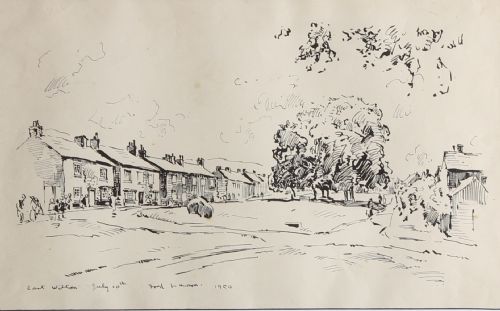
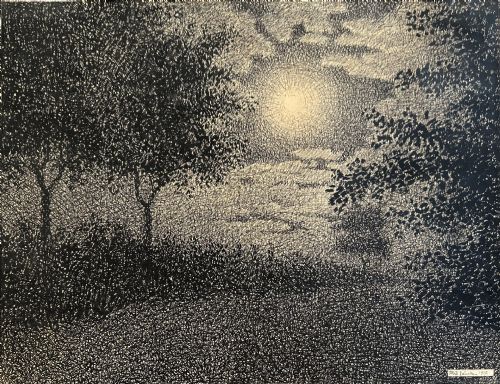
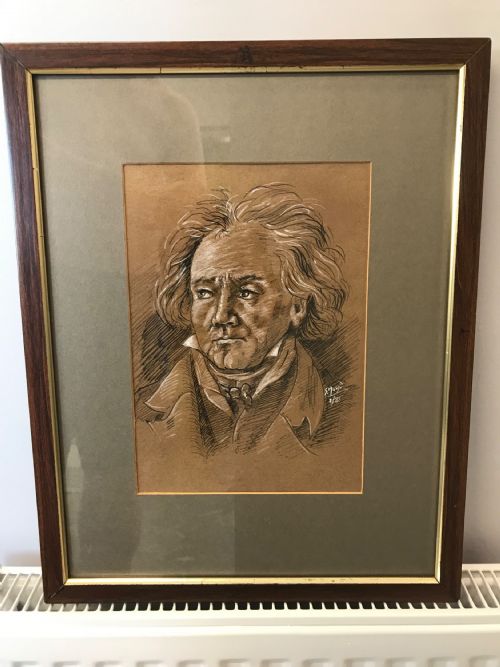
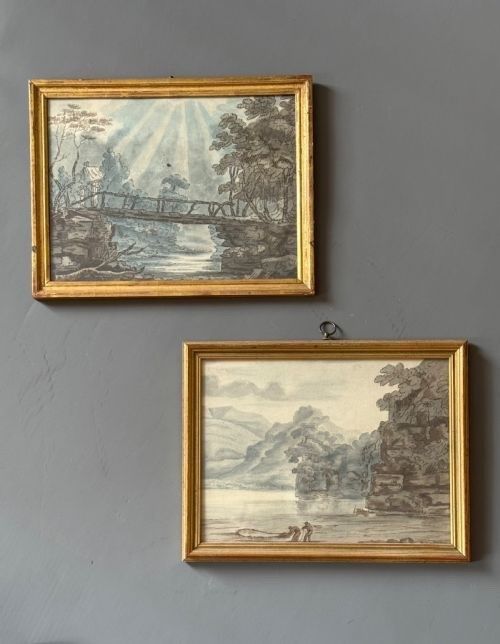
Monochrome ink artwork brings together historic sketches and drawings executed primarily in dark lines and washes upon paper.
Monochrome Ink Artwork
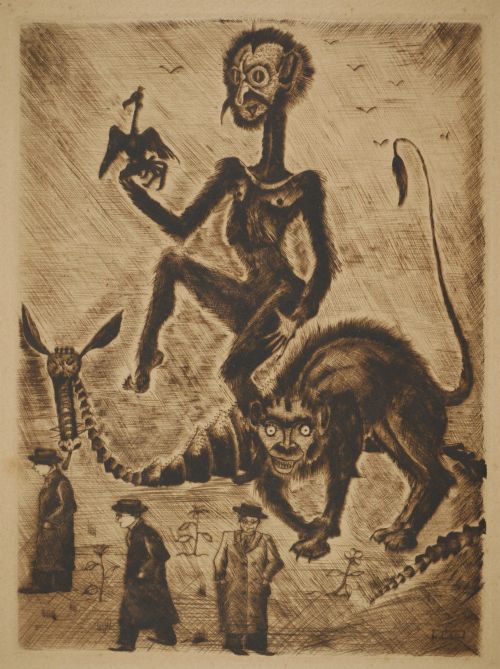
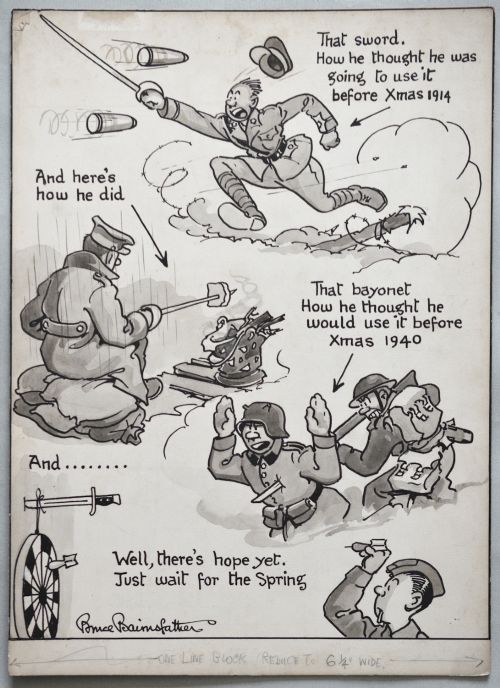
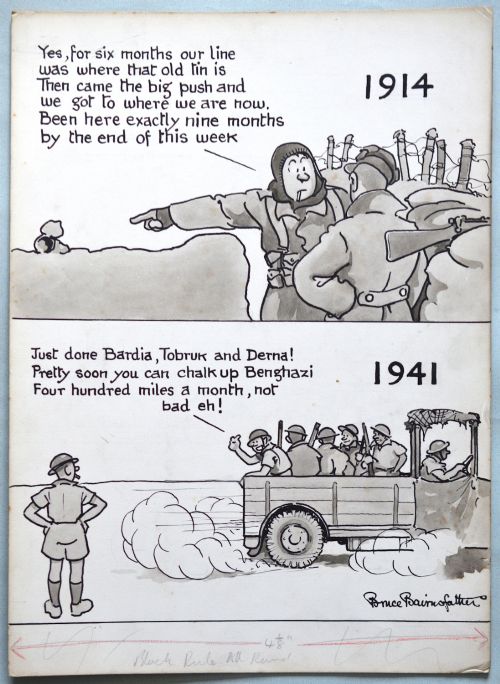
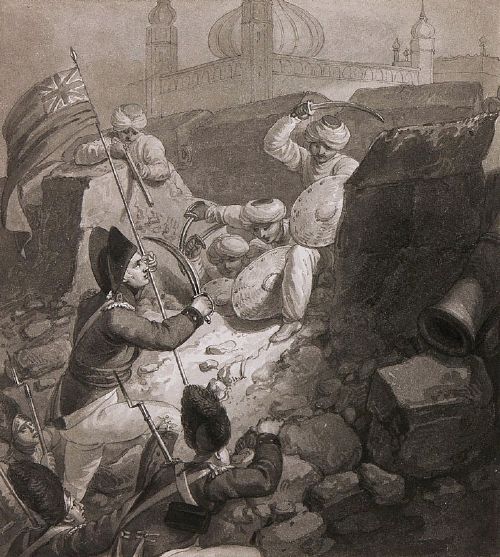
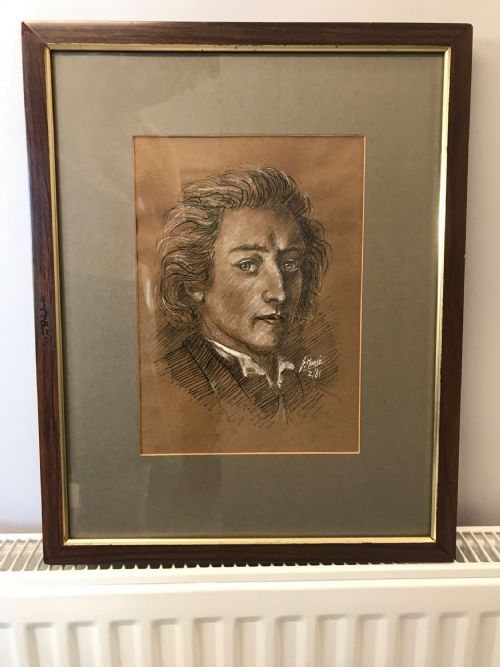
Monochrome ink artwork encompasses original drawings, wash sketches, and period prints created across the eighteenth, nineteenth, and twentieth centuries. These works include landscape scenes, architectural studies, portraits, and illustrative compositions produced by British and European hands.
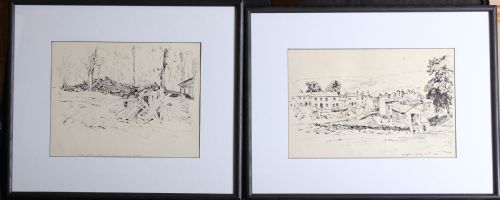
The pieces on this page are predominantly original ink drawings, pen and wash landscapes, and period prints framed under glass within wooden surrounds. Examples range from early Georgian topographical sketches to mid-twentieth-century landscape watercolours.
Buyers encountering this selection find both signed works by known artists and anonymous school pieces spanning Gothic revival, Edwardian, and modern British movements.
How they were made
Makers utilised iron gall or carbon inks applied with nibs and quills directly onto laid or wove paper, often combining pen line work with diluted wash for tonal depth. Watercolour, gouache, and graphite frequently supplement the primary ink medium to build highlights and shadows.
Finished works were mounted behind glass within wooden frames, protecting the delicate paper supports from atmospheric moisture and handling.
Several grumpy British bulldogs glare out from early twentieth-century etchings, keeping stern watch over the collection.
What varies in quality
The standard of an ink artwork rests upon the surety of the draughtsmanship and the preservation of the paper substrate. Superior sheets display confident, expressive line work without hesitation or heavy corrections.
Condition plays a major role in evaluation, distinguishing crisp, unfaded ink tones and clean paper from pieces suffering from foxing, severe toning, or damp staining.
Kurt Lorein Victor Peiser·Bruce Bairnsfather·William Marshall Craig·Fred Lawson·Herbert Dicksee·Stanley Orchart·Edward Dayes·Augustus Edwin John·James Dobie·W. Dendy Sadler·Owen Bowen·Peter Tillemans·Arthur E Gonne
The Monochrome Ink Artwork Glossary
- Wash
- A technique where diluted ink or watercolour is applied smoothly across paper to create tonal gradients and shadows. It provides depth behind crisp pen lines.
- Etching
- A printmaking method where acid bites lines into a metal plate to hold ink for transfer onto paper. It produces fine, detailed graphic impressions.
- Gouache
- An opaque water-based paint used alongside ink to add solid highlights and opaque colour details. It sits flat and dense upon the paper surface.
- Foxing
- Brown spots caused by chemical reactions within historic paper over long periods of time. It appears frequently in older works kept in damp conditions.
- Drypoint
- A printmaking process where an artist scratches directly into a metal plate with a sharp needle, producing a velvety line when inked and pressed.
Monochrome Ink Artwork: Frequently Asked Questions
How should I hang monochrome ink artwork?
Keep these pieces away from direct sunlight to prevent the ink and paper from fading over time. Direct exposure to strong natural light degrades historic paper supports permanently.
Use stable interior walls where humidity and temperature remain consistent throughout the year. Proper framing with conservation glass adds an extra layer of protection.
Can I tell the period from the paper?
Older papers from the eighteenth century often feature visible laid lines and watermarks when examined closely. These early supports feel heavier and more irregular than machine-made modern alternatives.
Nineteenth and twentieth-century sheets transition towards smoother wove textures and uniform manufacturing marks. Examining the paper edges and reverse side often reveals clues about age.
What is the difference between wash and watercolour?
Wash specifically uses monochrome ink diluted with water to establish shadows and tonal depth in a single-colour palette. It relies purely on light and dark values rather than hue.
Watercolour introduces varied pigments and distinct colours to the composition alongside the ink outlines. Many pieces on this page combine both techniques on the same sheet.
How do I identify a print from an original drawing?
Original drawings display the physical indentations of pen nibs and subtle pooling of ink where the artist paused their hand. Examining the surface under magnification reveals these unique manual gestures.
Prints and etchings show uniform plate marks or regular dot patterns from lithographic processes across the paper. Multiple identical impressions indicate a printed edition rather than a unique drawing.