


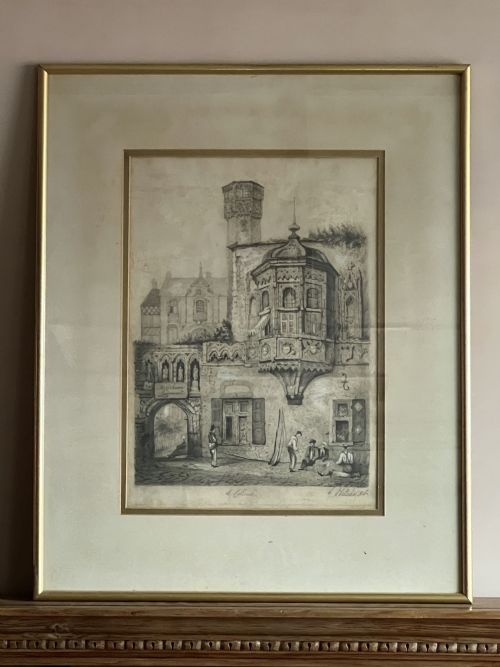


Monochrome Architectural Sketch
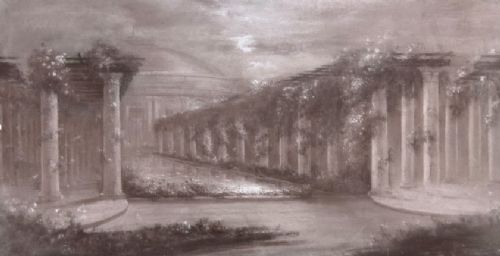
A monochrome architectural sketch captures a building or streetscape in graphite, ink, or charcoal, offering a direct view of a designer's hand.
Monochrome Architectural Sketch
A monochrome architectural sketch sits at the intersection of fine art and technical study, recording structures, churches, and historic buildings through graphic media.
The pieces on this page emerge primarily from the nineteenth and twentieth centuries, taking the form of original drawings, framed artworks, and period prints.
Makers recorded in the evidence range from named figures such as Henry Percy Huggill and Sir Francis Leggatt Chantrey to anonymous hands working within Gothic Revival, Georgian, and Victorian traditions.
Materials and technique
Works rely on paper as a primary ground, occasionally attached to canvas stretchers, utilising graphite, pencil, charcoal, and ink to build form and shadow.
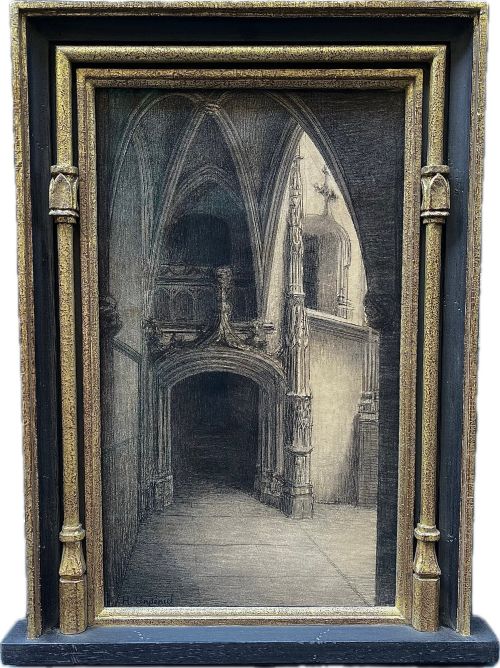
Several examples incorporate wash or subtle watercolour alongside ink, while select pieces are framed in wood and glass, sometimes augmented with gold leaf.
Materials across these listings include paper, ink, graphite, wood, glass, pencil, gold leaf, and charcoal.
What separates the range
Quality rests in the sureness of the line and the precision with which a structure's mass and perspective are rendered on paper.
Works bearing contemporary signatures or direct historical context carry greater documentary weight than anonymous studies, reflecting the skill of the individual hand.
Henry Percy Huggill·Henri Charles Angéniol·Sir Francis Leggatt Chantrey·Fred Lawson·Peter Tillemans·Henry Edridge
The Monochrome Architectural Sketch Glossary
- Graphite
- A form of carbon used in pencils to create marks ranging from hard silver lines to deep velvety blacks. It forms the primary medium for much early draughtsmanship.
- Wash
- A technique where ink or watercolour is diluted with water to create smooth, semi-transparent layers of tone. It establishes depth and atmosphere behind architectural line work.
- Gothic Revival
- An architectural and artistic style spanning the eighteenth and nineteenth centuries that revived medieval Gothic forms. It appears frequently in studies of churches and abbeys.
- Charcoal
- A dry drawing material made from burnt organic matter that produces rich, dark lines and broad shaded areas. It allows for expressive handling in landscape and building studies.
Monochrome Architectural Sketch: Frequently Asked Questions
What periods do these sketches cover?
The selection spans from the eighteenth century through the nineteenth century and into the mid-twentieth century.
Works range from early eighteenth-century panoramas to Victorian Gothic studies and 1930s townscapes.
Are these pieces original?
The listings comprise original drawings, pencil sketches, and ink works alongside period prints.
Many are unique hand-drawn studies executed directly on paper by artists and draughtsmen.
What subjects do the drawings show?
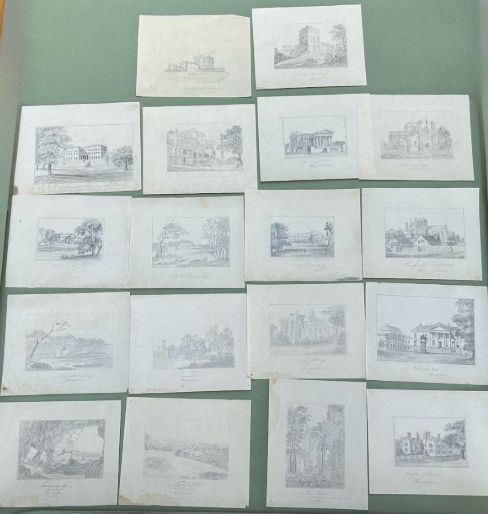
Subjects include historic churches, abbeys, townscapes, colleges, and specific locations across Britain and Europe.
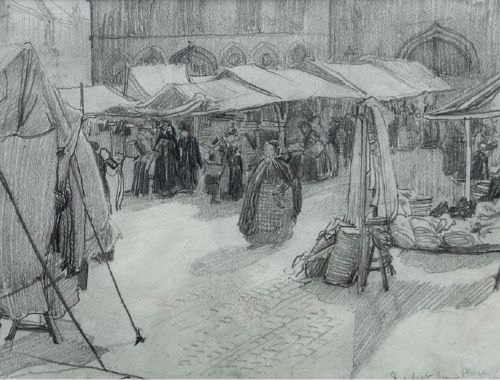
Examples record identifiable sites such as Cambridge colleges, Dublin locations, and Belgian market squares.
How are the works framed?
Framing materials recorded in the evidence include wood and glass, with occasional gilt frames.
Some pieces retain paper attached directly to canvas stretchers rather than traditional framing.