






Modernist Costume Jewellery
Modernist costume jewellery brings geometric edge and industrial flair to your collection, offering bold statements from the twentieth century.
Modernist Costume Jewellery
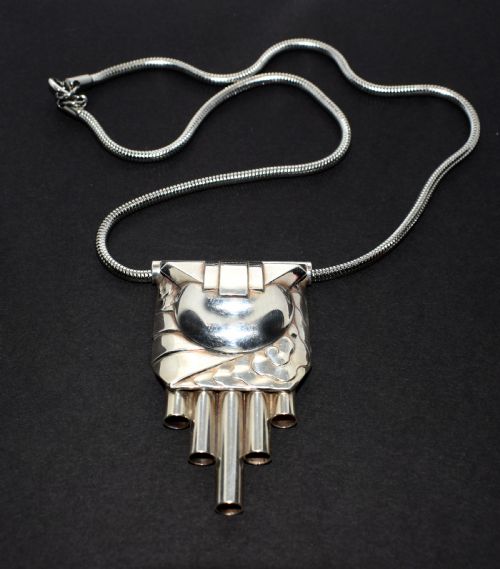
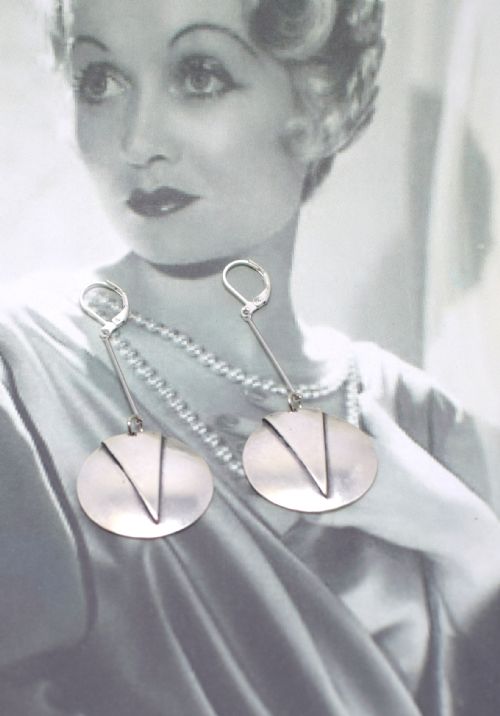
When you search for modernist costume jewellery, you encounter striking designs that break away from traditional ornamentation into clean, geometric forms. These pieces bridge the gap between industrial innovation and personal adornment, capturing the spirit of twentieth-century design movements. The selection here leans heavily towards the Art Deco period, featuring necklaces, earrings, and brooches that reflect architectural lines.
You are most likely to meet pieces originating from the 1930s, alongside items influenced by earlier aesthetics or carrying Art Deco Modernist styling. The inventory includes necklaces, earrings, dress clips, and brooches, each demonstrating the distinctive aesthetic of the era. These adornments were created to complement contemporary fashion by offering bold visual impact without relying on precious gemstones.
The objects on this page showcase a clear lineage of early twentieth-century design, with specific representation from the 1930s and occasional pieces attributed to the nineteenth century. Necklaces and earrings dominate the forms available, often incorporating layered metals and contrasting materials. A buyer examining this category appreciates the deliberate rejection of floral motifs in favour of stark, structural silhouettes.
Materials and construction
The makers of modernist costume jewellery utilised industrial materials such as chrome, metal, and silver plate to form the structural foundations of necklaces and earrings. These metallic elements were frequently paired with early plastics, including Bakelite, Galalith, and phenolic resin, to introduce stark colour contrasts and smooth surfaces. The combination of chrome and resin defined much of the visual vocabulary of the period.
Enamel and green glass also appear within the evidence, providing vibrant colour accents against polished metal backdrops. Techniques involved setting resin and glass directly into metal channels or linking stamped metallic components to create flexible necklaces and statement drops. This integration of industrial fabrication methods with synthetic materials marked a distinct departure from traditional jewellery manufacturing.
Listings feature items from the 1930s and the nineteenth century, incorporating chrome, Bakelite, Galalith, and silver plate.
Assessing quality and execution
Quality in modernist costume jewellery rests on the precision of the assembly and the condition of the materials. Pieces featuring secure linkage in necklaces and tightly fitted resin elements in chrome settings demonstrate superior craftsmanship. The crispness of the geometric lines and the uniformity of the enamel or glass inserts distinguish finer examples from simpler production.
Attribution also plays a role, as demonstrated by works associated with known makers like Jakob Bengel. The integration of diverse substances, such as chrome with Bakelite or phenolic resin, requires exact tolerances that separate expertly constructed items from standard commercial output. A well-preserved surface finish on the metals and plastics indicates careful historical handling.
Jakob Bengel
The Modernist Costume Jewellery Glossary
- Bakelite
- An early form of synthetic plastic used extensively in 1930s design for its ability to be moulded and polished into vibrant, durable components. It appears frequently alongside chrome in earrings and necklaces.
- Galalith
- A semi-synthetic plastic derived from casein and formaldehyde, prized for its smooth texture and rich colour depth. It serves as a primary decorative element in period pieces.
- Phenolic resin
- A class of synthetic polymers utilised for structural and decorative parts in twentieth-century accessories. This material provides stability and a distinct tactile quality.
- Dress clip
- An accessory featuring a dual-prong mechanism designed to attach securely to the lapel, neckline, or strap of a garment. These items were particularly popular during the Art Deco era.
- Silver plate
- A thin layer of silver applied to a base metal core to provide a lustrous finish without the weight and cost of solid precious metal. It forms the foundation for many period necklaces and earrings.
Modernist Costume Jewellery: Frequently Asked Questions
How do I wear modernist costume jewellery?
These pieces work best when paired with simple, uncluttered necklines that allow the geometric forms of necklaces and brooches to stand out without competing patterns. Let a statement necklace or a pair of drop earrings serve as the focal point of your outfit.
Because the materials include chrome, Bakelite, and glass, consider matching the industrial tones of the metal with complementary monochrome or solid-colour garments for a balanced look.
What periods do these pieces come from?
The listings span several distinct eras, with the 1930s representing the core period for modernist designs. You will also find items referencing the nineteenth century alongside pieces dated to 1940.
This chronological spread shows how industrial materials and geometric aesthetics evolved across decades, culminating in the distinct Art Deco styles seen in the current inventory.
How were dress clips used?
Dress clips functioned as versatile ornaments during the twentieth century, designed to clamp securely onto fabric without piercing it. Women wore them on lapels, necklines, waistbands, or even to join two straps together.
They offered a way to transform plain garments instantly, reflecting the practical yet stylish approach to accessorising characteristic of the period.
What materials define this jewellery?
The primary materials include industrial metals such as chrome and silver plate, which provide durable and reflective foundations. Early plastics like Bakelite, Galalith, and phenolic resin are paired with these metals to add colour and texture.
Enamel and glass also appear as accent materials, completing the distinctive material palette of twentieth-century modernist design.