



Geometric Pendant Necklace
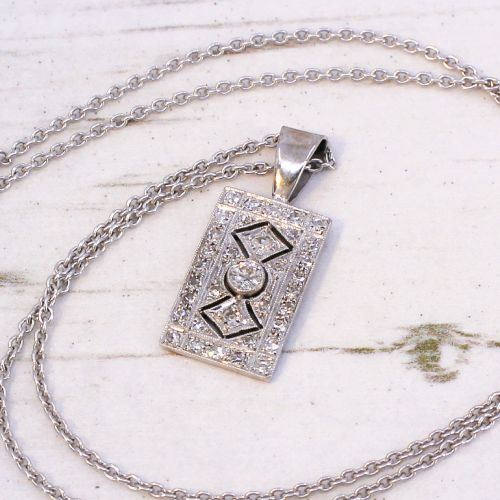
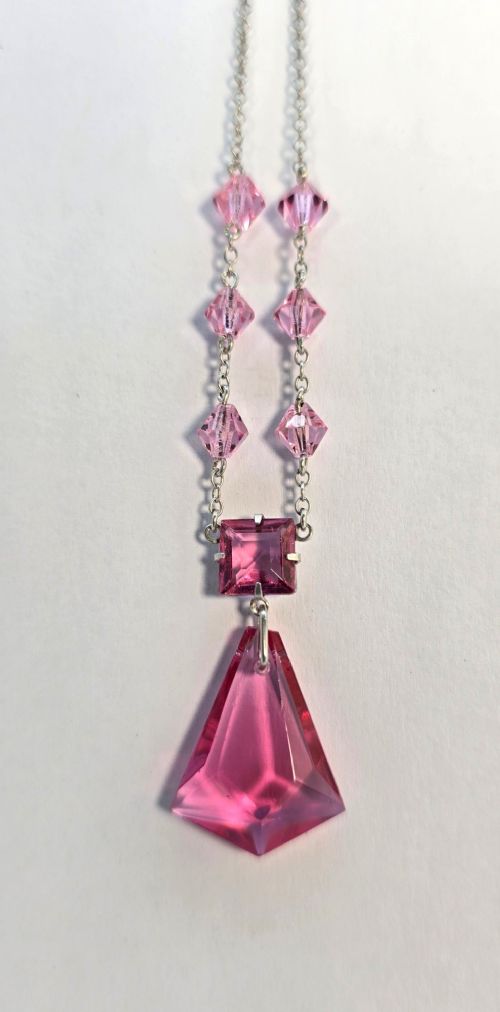
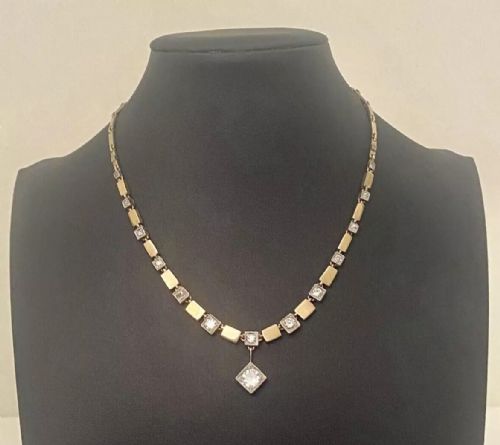
A geometric pendant necklace brings together sharp angles and clean lines, offering a striking piece of period jewellery that defines modernist elegance.
Geometric Pendant Necklace
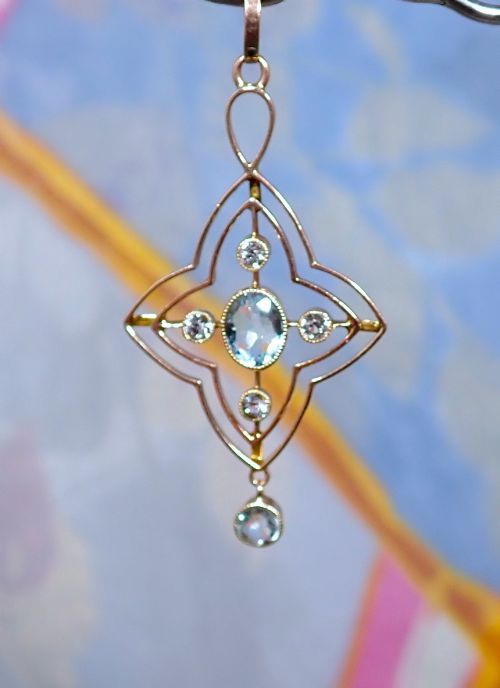
The selections span from delicate Edwardian drop designs to bold modernist statements in chrome, Bakelite, and Galalith. Alongside precious platinum and diamond configurations, simpler silver and base metal settings demonstrate the wide socio-economic spread of modernist design principles.
Materials and construction
Construction relies heavily on precious metals like platinum, white gold, and silver, paired with alternative materials including chrome, Bakelite, and Galalith for industrial modernist effects. Gemstones are hand cut into square, rectangular, and triangular facets to fit rigid metal channels and bezels.
Makers utilise channel settings, open-work metal wireframes, and soldered links to create rigid geometric drops or flexible articulated necklaces. Enamel work and polished rock crystal provide colour contrast and smooth planar surfaces without relying entirely on traditional faceted stones.
Listings span from Victorian and Edwardian iterations through to the height of Art Deco and Mid-Century Modern modernist production.
Assessing quality and execution
Quality rests upon the precision of the metalwork and the exact alignment of individual geometric segments. Superior examples display crisp solder joints, secure stone settings, and balanced weight distribution across the pendant drop.
The choice of materials dictates the tier of the piece, moving from mass-produced chrome and synthetic plastics to heavy platinum frames set with substantial old-cut diamonds and natural aquamarines. The clarity of hand-cut rock crystal and the uniformity of coloured glass or onyx inserts further distinguish fine workshop output from standard commercial production.
Jakob Bengel
The Geometric Pendant Necklace Glossary
- Art Deco
- A design style dominant in the 1920s and 1930s characterised by sleek lines, symmetry, and geometric shapes. It draws inspiration from machinery, cubism, and ancient civilisations.
- Galalith
- An early semi-synthetic plastic derived from casein and formaldehyde, widely used in modernist jewellery for its vibrant colours and smooth finish. It was easily moulded into geometric beads and plaques.
- Negligee pendant
- A pendant style featuring two drops of unequal length suspended from a central motif, popular during the Edwardian era. These pieces often incorporate pearls and delicate openwork platinum chains.
- Rock crystal
- Colourless transparent quartz used by jewellers as a durable substitute for diamonds or to create smooth geometric facetted drops. It reflects light sharply in Art Deco settings.
- Bakelite
- An early phenol-formaldehyde plastic valued for its rich tones and durability in interwar modernist jewellery design. It allowed makers to achieve bold colours without precious stones.
Geometric Pendant Necklace: Frequently Asked Questions
What defines an Art Deco geometric necklace?
An Art Deco geometric necklace relies on symmetrical patterns, straight lines, and repeating squares, rectangles, or triangles. These pieces often feature contrasting materials such as platinum and onyx or chrome and coloured glass.
The aesthetic breaks away from organic floral curves in favour of industrial precision and architectural silhouettes.
How do I care for antique plastic jewellery?
Antique plastic pieces like Bakelite or Galalith require gentle handling and should be kept away from harsh chemicals, perfumes, and prolonged direct sunlight. Clean them softly with a dry or barely damp cloth rather than soaking them in water.
Store each necklace separately in a fabric pouch to prevent surface scratches and material degradation over time.
Are these necklaces made of solid platinum?
Many high-end pieces from the period utilise solid platinum or white gold for durability and strength, particularly when securing fine diamonds. Other examples employ silver, silver plating, or chrome over base metals.
Examination of the metal colour and hallmarks, where present, helps clarify the composition of the frame and chain.
How can I tell Edwardian from Art Deco pieces?
Edwardian designs usually feature lace-like platinum openwork, delicate swags, and softer feminine motifs like pearls and aquamarines. Art Deco pieces introduce bolder contrast, sharper angles, and industrial symmetry.
The transition reflects a shift from delicate Edwardian craftsmanship to rigid modernist geometry following the First World War.