


Modernist Canvas Painting
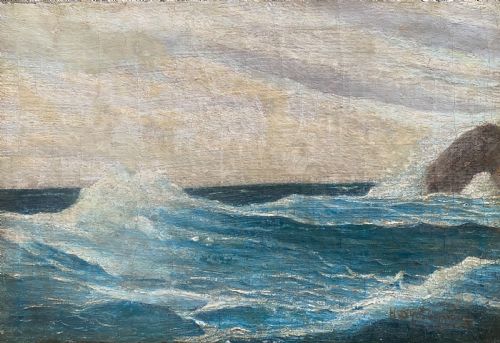
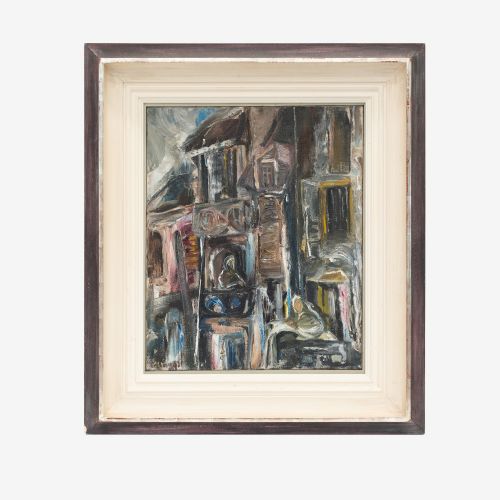
A modernist canvas painting captures the radical shifts in twentieth-century visual culture, offering buyers bold compositions and expressive brushwork.
Modernist Canvas Painting
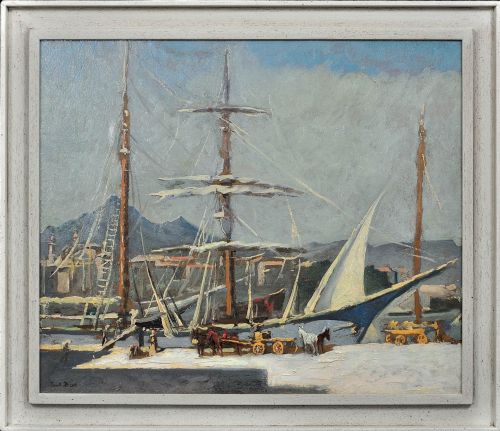
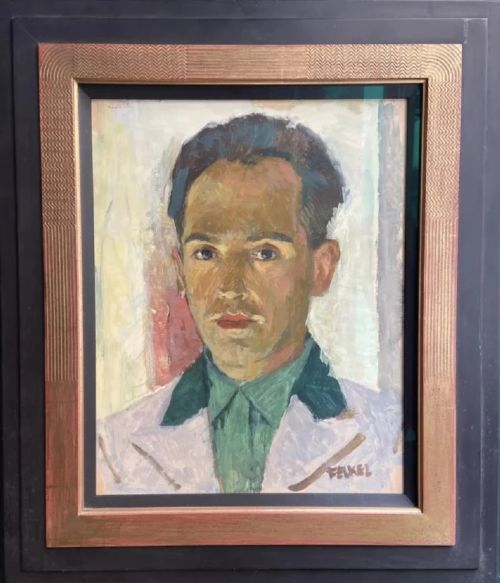
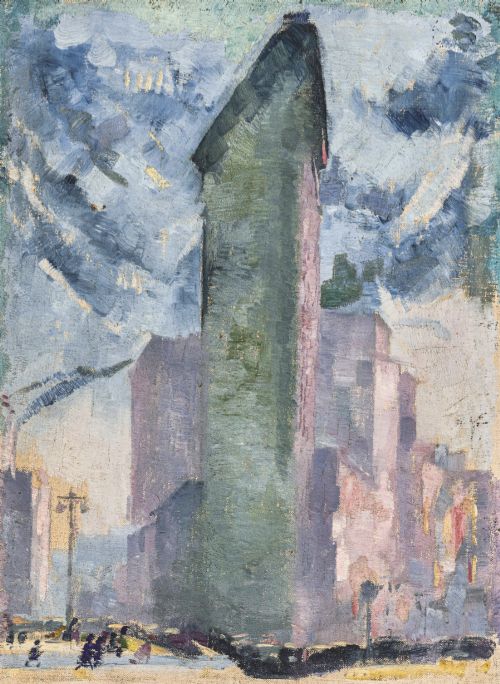
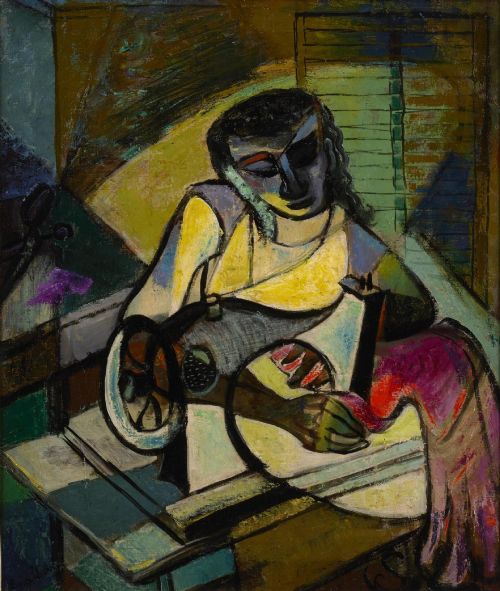
A modernist canvas painting represents experimental artistic movements spanning from the Edwardian era through the mid-twentieth century. Buyers encounter works exploring abstraction, expressionism, and cubism alongside figurative scenes.
The most common examples on this page date from the 1930s to the 1960s, reflecting mid-century modernism and French modernist influences. These pieces range from intimate still lifes and portraits to expansive cityscapes and coastal landscapes.
Makers utilise stretched canvas and board as primary supports, often housed within original wooden frames that complement the painting's period aesthetic.
How They Were Made
Artists built these works primarily using oil paint applied to stretched canvas or board, occasionally incorporating encaustic or acrylic media. The physical application of pigment creates varied surface textures, from smooth, flat planes of colour to thick, impasto gestures.
Supports were secured to wooden stretchers and frequently mounted in fitted wood frames. The physical construction reflects the standard atelier practices of European and British studios during the first half of the twentieth century.
Listings feature works spanning from the Edwardian period through the 1960s, utilising oil paint on canvas and board.
What Varies in Quality
Quality rests in the surety of the painterly execution and the strength of the compositional structure. Stronger works demonstrate a confident handling of pigment and a deliberate balance of colour and form.
The distinction between ordinary and superior pieces depends on the artist's ability to push spatial boundaries while maintaining cohesive design. Provenance and documentation linking the work to established regional schools also elevate a piece.
Paul Bret·Carl Felkel·Alfred Wolmark·Lena Gurr·Dubovsky·Lilian Colbourn·Raymond Moritz·Denis Mitchell·Gabriel Dauchot·William McCance·Peter Jackson·Pinchus Krémègne·Yo Mayer·Antonio Ferri·Andre Delfau·Rowland Fade·Yetta Kane·Kenneth B Malpass·Lamotte·Lillian M Harrison·Bernard Meninsky·Claude Mendelovic
The Modernist Canvas Painting Glossary
- Canvas
- A heavy woven fabric stretched across a wooden frame to serve as a support for oil painting. It provides a flexible yet durable surface that absorbs oil binders effectively.
- Impasto
- A technique where paint is laid onto a canvas in very thick layers, standing out visibly from the surface. This method introduces tactile depth and visible brush marks.
- Stretcher
- The internal wooden framework that holds a painted canvas taut. Traditional frames allow adjustment using corner keys to maintain fabric tension.
- Provenance
- The chronological documentation detailing the ownership history of a work of art. Clear records help authenticate the origin and exhibition history of the piece.
- Avant-garde
- Artworks that push the boundaries of established aesthetic conventions and traditional techniques. These compositions often pioneer new visual languages.
Modernist Canvas Painting: Frequently Asked Questions
What defines a modernist canvas painting?
These works break away from traditional academic realism in favour of experimental colour, form, and perspective. They reflect the shifting philosophies of twentieth-century art movements.
Created across several decades, the style encompasses everything from subtle tonal landscapes to bold geometric abstracts.
How should I hang these paintings?
Display them away from direct sunlight and excessive humidity to protect the oil pigments and canvas support. Adequate wall spacing allows the bold compositions to breathe within a room.
Ensure the hanging hardware secures safely to the wall, supporting the weight of both the canvas and its wooden frame.
How do I identify the period?
Look at the stretcher construction, framing materials, and stylistic cues such as cubist angles or mid-century palettes. Signatures, dates inscribed on the reverse, and exhibition labels provide concrete chronological markers.
Comparing brushwork techniques against known regional schools also helps narrow down the decade of creation.
Were these painted outdoors?
Many landscapes and street scenes originated as en plein air studies before being finished in the studio. Artists captured changing light conditions quickly on portable boards or canvases.
Larger interior compositions and abstract works were typically developed entirely within the controlled environment of an artist's workshop.