

Mirrored Coat Stand
A mirrored coat stand brings instant utility and period character to an entrance hall, combining a looking glass with hooks and umbrella storage.
Mirrored Coat Stand
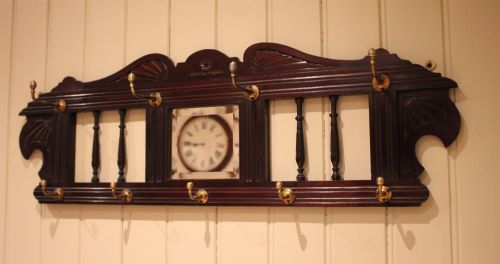
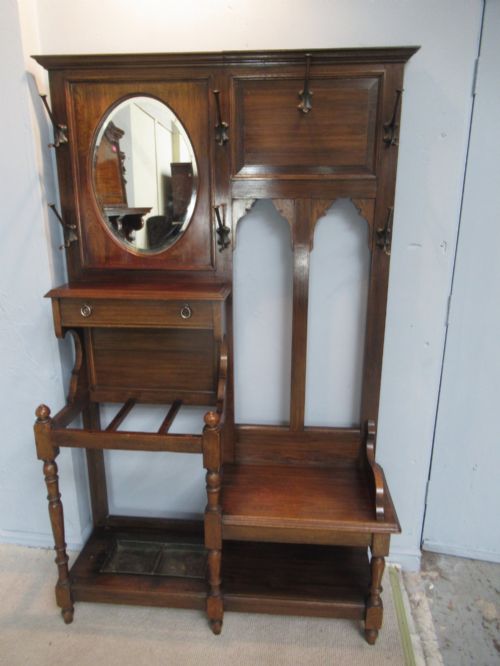
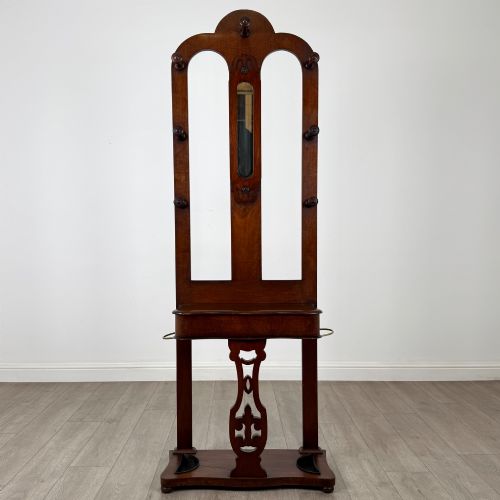
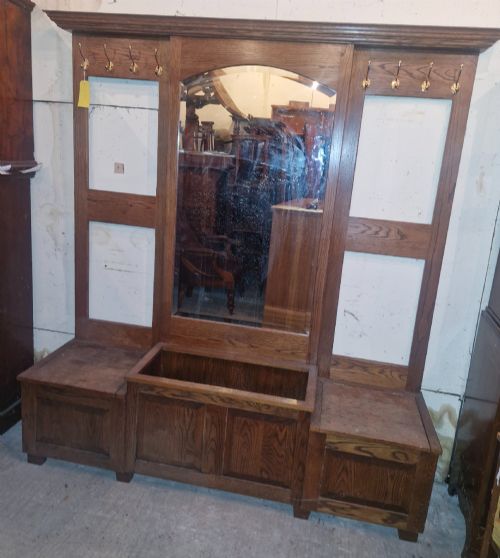
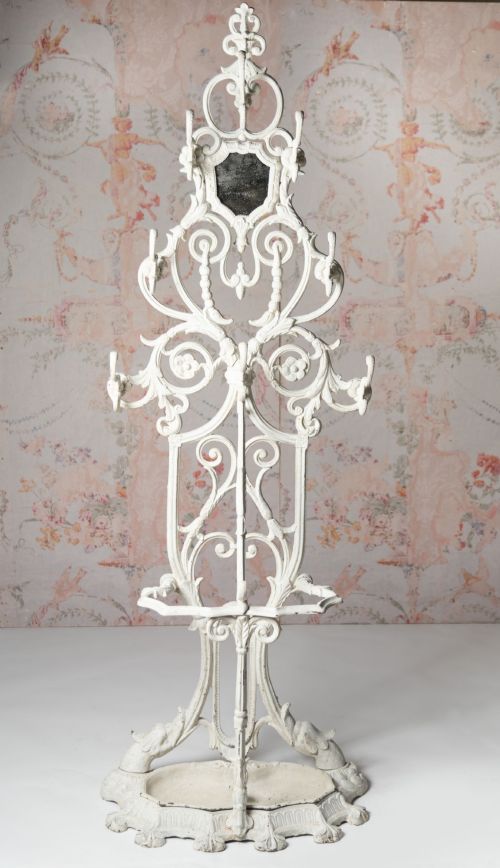
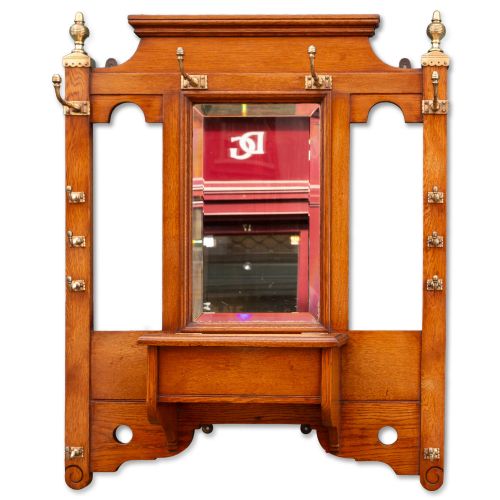
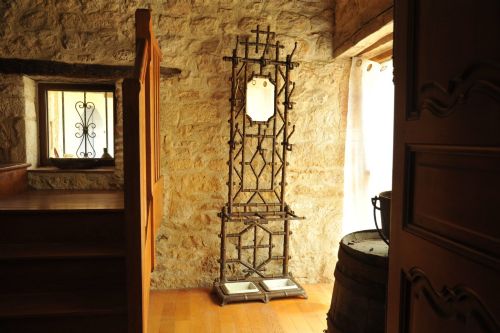
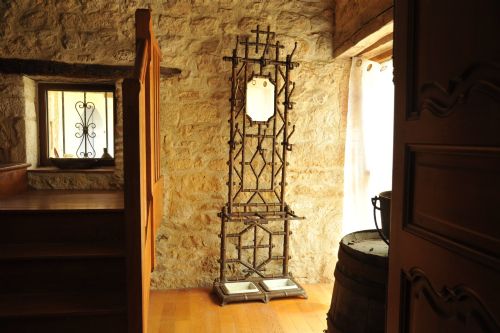
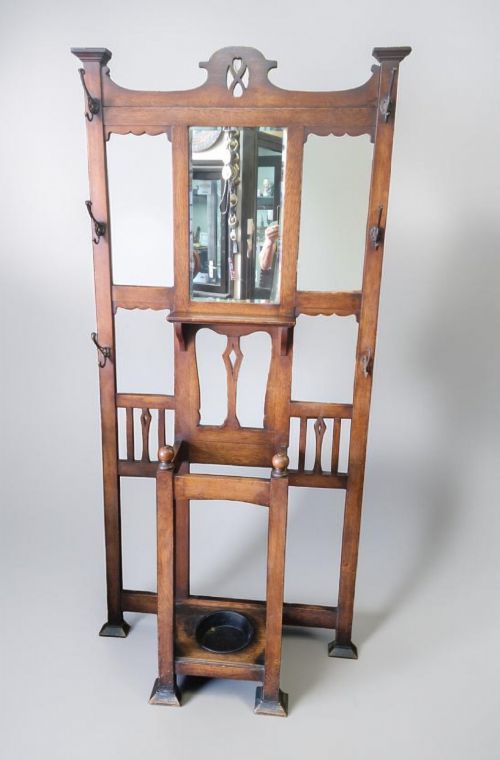
A mirrored coat stand combines timber framework, brass hooks and a central looking glass into a single piece of hall furniture. When you search for a mirrored coat stand, you find furniture designed for the entrance of a home, intended for hanging garments and checking one's appearance before heading outside.
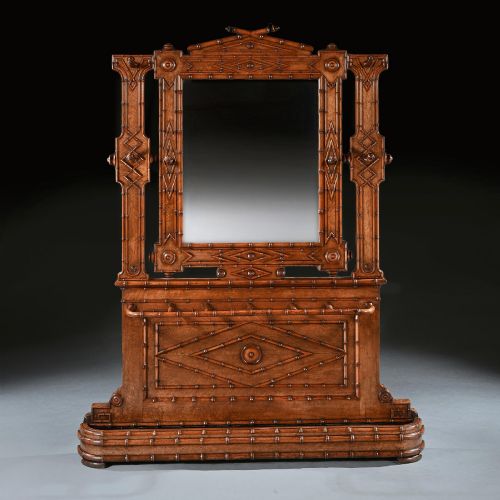
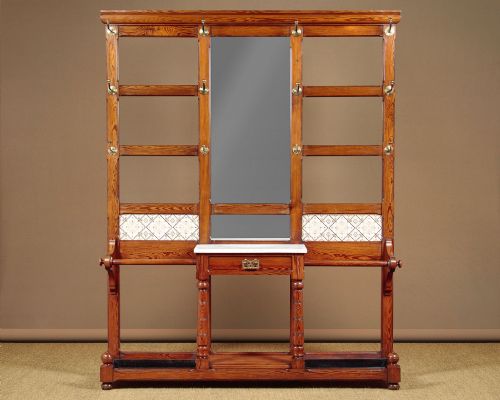
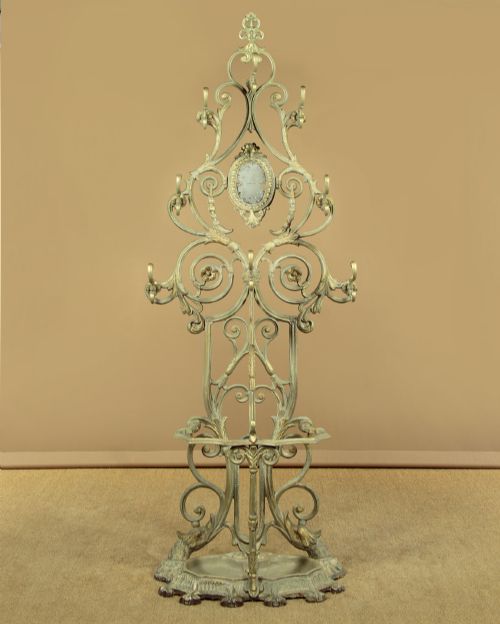
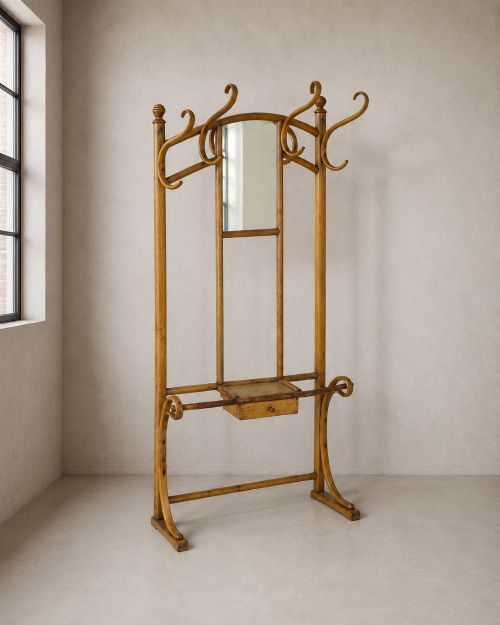
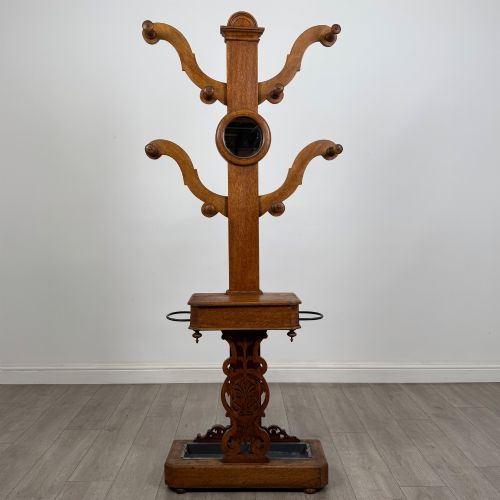
The versions most common on this page date from the Victorian and Edwardian eras, spanning styles from Aesthetic Movement bamboo to heavy carved oak. They appear under various descriptions including hall stands, coat racks and umbrella stands, often incorporating marble shelves or hinged glove boxes.
How they were made
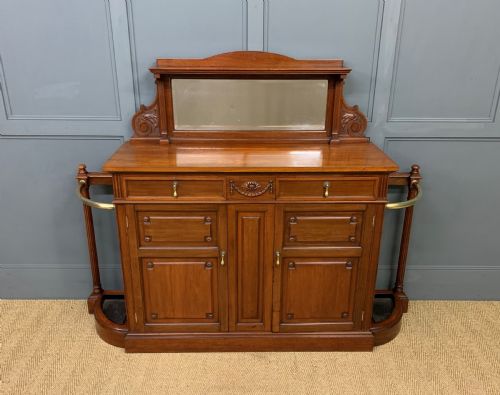
Cabinetmakers utilised solid timbers such as mahogany, oak, walnut and pine, frequently pairing them with cast iron frames or bamboo poles. Structural integrity relied on robust joinery to support the weight of heavy coats and wet umbrellas.
Mirrors were set with bevelled glass plates, whilst brass or iron coat hooks were screwed securely into the wooden backboards. Some pieces integrated cast iron drip pans at the base to catch water from umbrellas.
Materials span oak, mahogany, walnut, bamboo, brass, cast iron, glass and marble across Victorian and Edwardian periods.
What varies in quality
Quality rests in the choice of timber and the ambition of the carving, ranging from plain utility pieces in pine to elaborate walnut and mahogany structures with Green Man motifs. The presence of secondary materials like marble shelves and heavy brass hardware elevates the standing of a piece.
Construction details reveal finer craftsmanship, such as deep bevelled mirror plates, secure peg attachment and well-fitted umbrella trays. Simpler bamboo or cast iron examples rely on the crispness of their moulding and the stability of their frame rather than carved ornamentation.
Shoolbred and Co·Thonet
The Mirrored Coat Stand Glossary
- Aesthetic Movement
- A late nineteenth century design style emphasising visual beauty over narrative subject matter. Pieces in this style often incorporate Japanese influences and bamboo construction.
- Faux bamboo
- A decorative technique where hardwood or metal is carved or moulded to mimic natural bamboo stalks. This finish appeared frequently on late nineteenth century French hall stands.
- Bevelled plate
- A mirror glass with an angled, polished edge that catches the light. Finer pieces use deep bevelling to add depth to the reflection.
- Hall stand
- A multi-functional piece of entrance furniture incorporating hooks, mirror, and frequently a seat or umbrella wells. It served as a central station for outdoor apparel in period homes.
- Japonisme
- The influence of Japanese art on Western design during the late nineteenth century. This aesthetic informed the slim lines and decorative motifs seen on specific bamboo and wood stands.
Mirrored Coat Stand: Frequently Asked Questions
How do I maintain the mirror plate?
Clean the glass gently with a mild cleaner applied to a cloth rather than sprayed directly onto the surface. This prevents moisture from seeping behind the silvering.
Check the mirror backing periodically to ensure it remains stable within its wooden or brass frame.
Can these stands support heavy winter coats?
Most pieces were built to carry robust outdoor garments on multiple brass or iron hooks. Distributing the weight evenly across the upper and lower hooks helps maintain stability.
Ensure the stand rests firmly on level flooring, as heavy items can increase the risk of tipping if the base is uneven.
Where is the best place to position a hall stand?
An entryway or hallway provides the traditional context, offering practical storage right by the front door. The integrated mirror also helps bounce light into darker corridors.
Allow sufficient clearance around the base if the design includes umbrella wells or a fold-down seat.
How do I identify an Edwardian piece?
Edwardian examples often feature lighter golden oak timbers and simpler geometric lines compared to earlier Victorian designs. They frequently date from around nineteen hundred to nineteen twenty.
Look for restrained Arts and Crafts influences or clean Edwardian proportions in the woodwork.