
Brown Wooden Coat Rack
A brown wooden coat rack brings practical utility and period character to an entrance hall, ranging from upright bentwood stands to wall-mounted oak hooks.
Brown Wooden Coat Rack
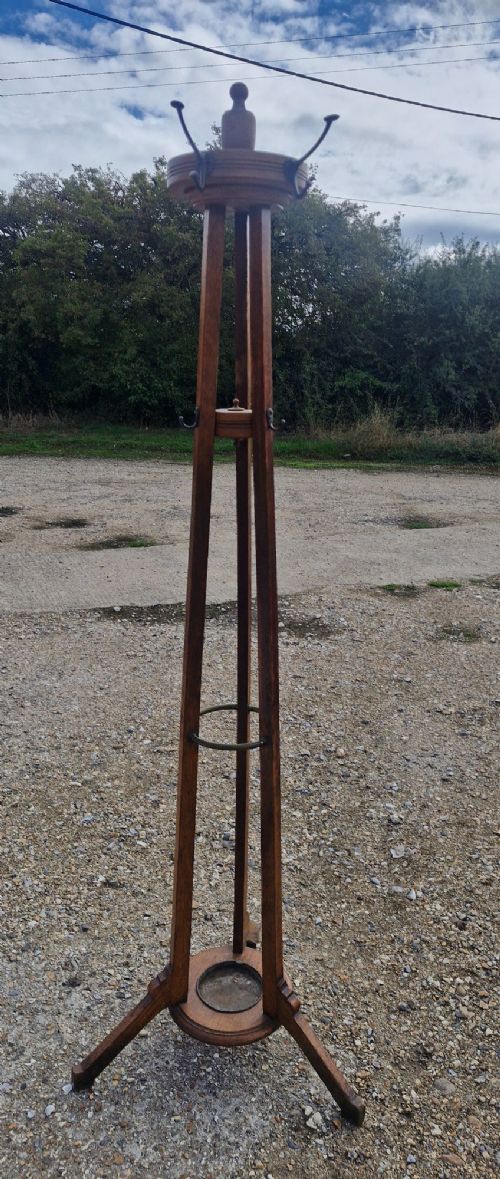
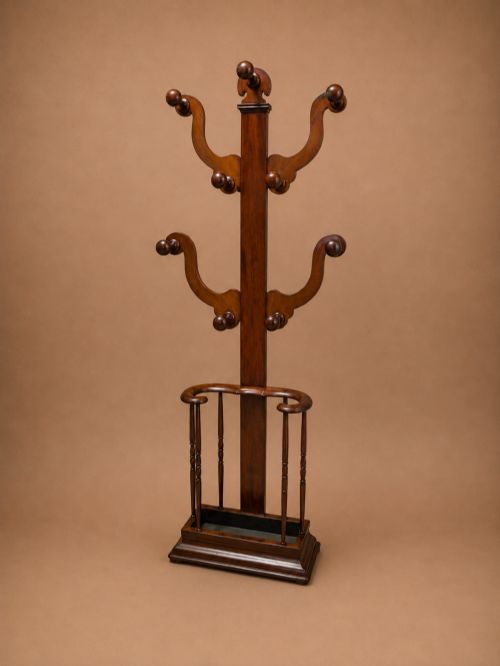
A brown wooden coat rack serves as functional hallway furniture designed for hanging garments, hats and umbrellas. When searching for a brown wooden coat rack, buyers encounter a diverse selection spanning wall-mounted cloakroom hooks, revolving hat stands and substantial floor-standing pieces.
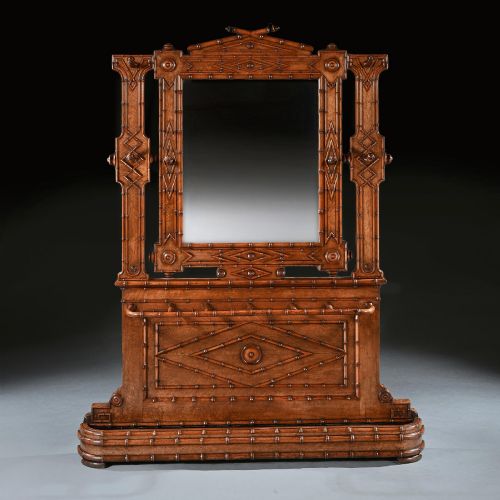
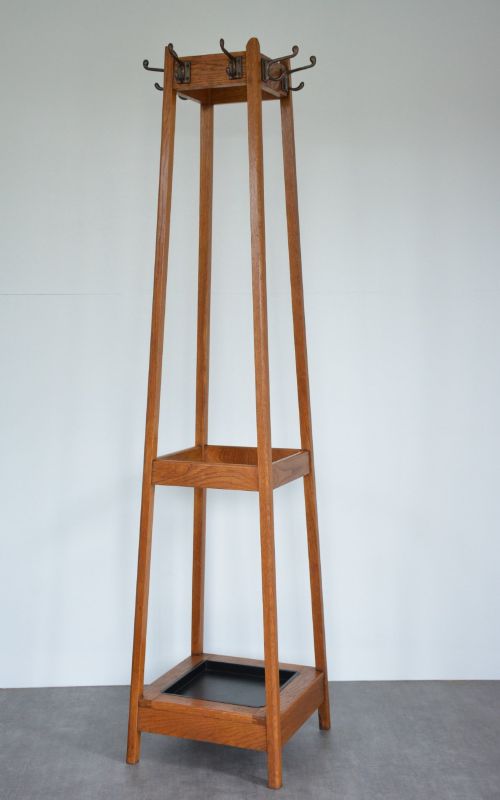
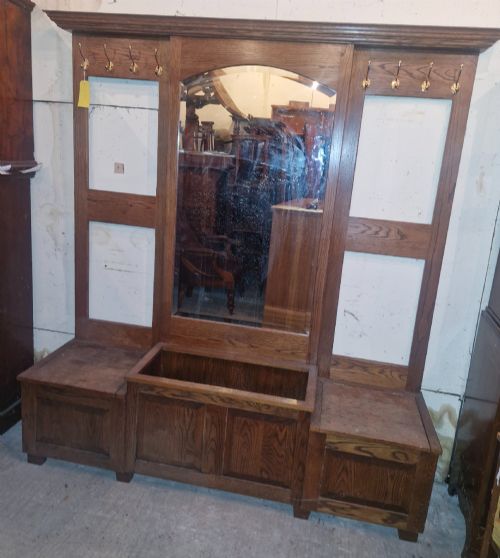
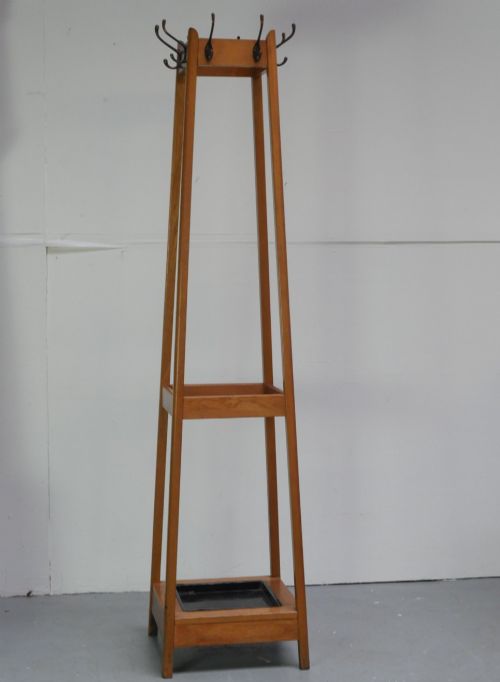
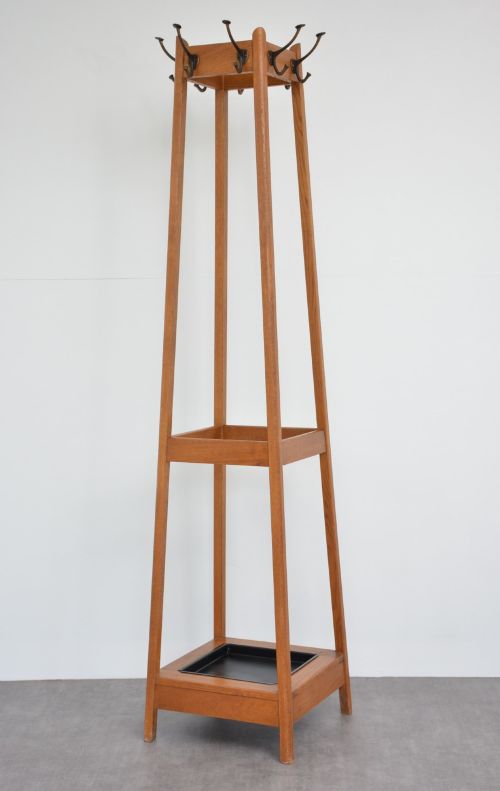
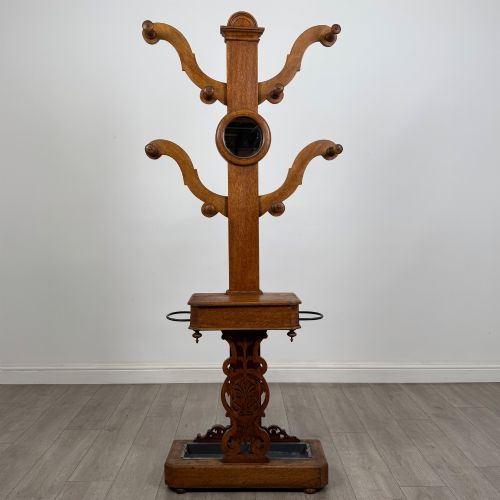
The pieces on this page originate predominantly from the Victorian and Edwardian eras, extending into the early twentieth century. Common forms include hall stands with integrated mirrors and drip trays, alongside minimalist bentwood designs created for daily domestic use.
How they were made
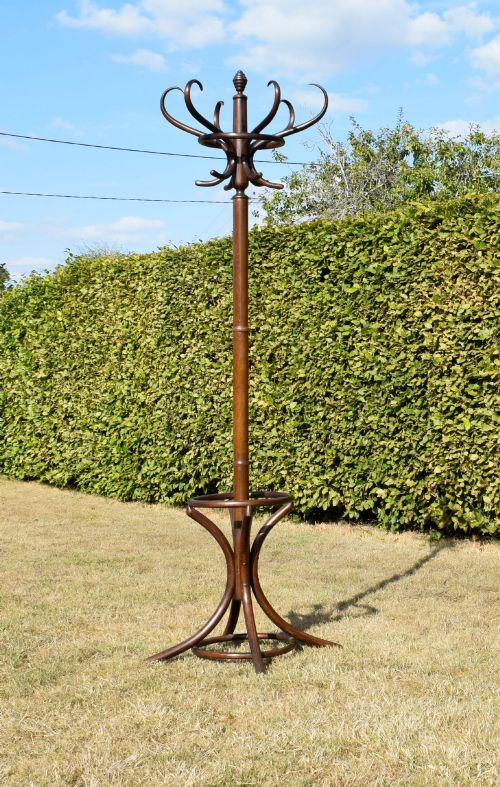
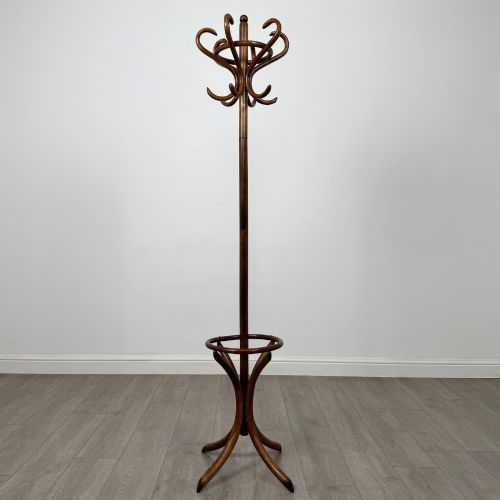
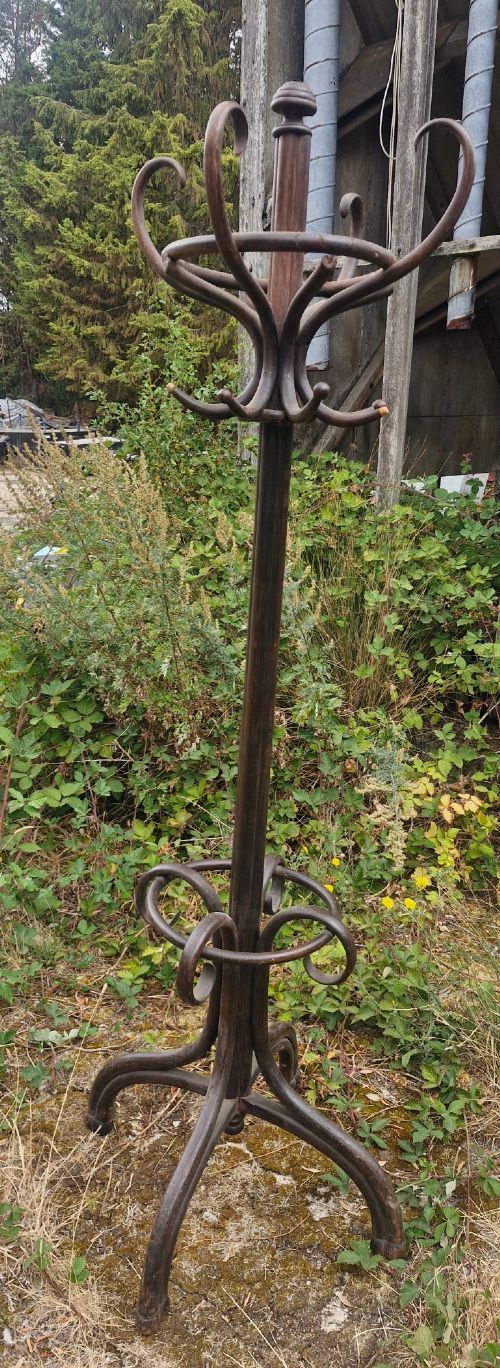
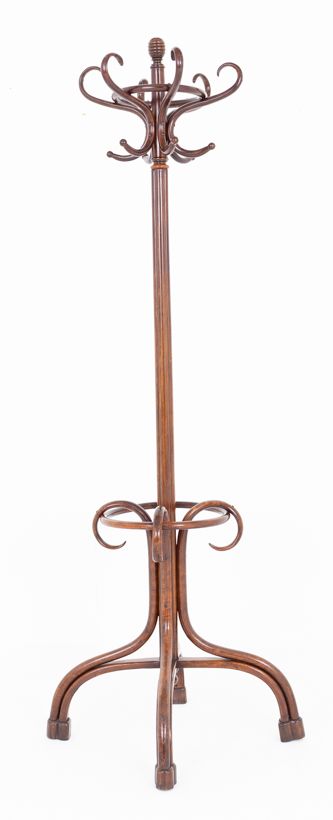
Carpenters and manufacturers utilised sturdy timbers such as oak, beech, mahogany and walnut to construct these pieces, often combining solid woods with steam-bending techniques. Beech appears frequently in sculptural bentwood frameworks, while oak and mahogany provide the structural stability required for large hall stands.
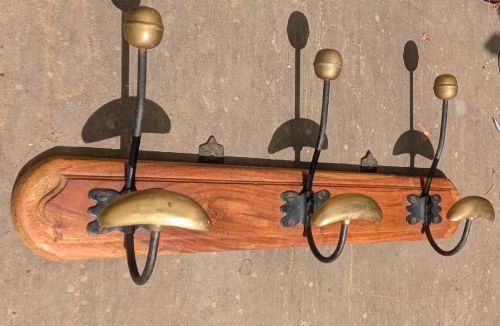
Metal components such as brass and iron provide hooks and hanging brackets, frequently paired with glass or ceramic details. Many floor-standing variants incorporate cast metal drip trays and umbrella holders designed to manage wet weather gear.
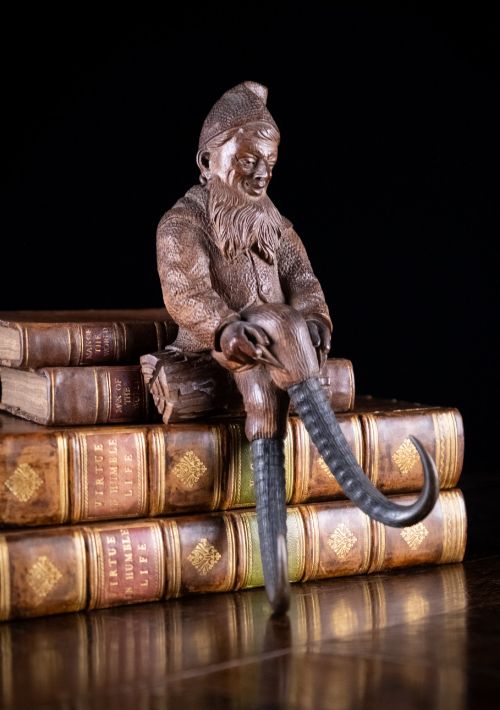
A gnome whip hook stands guard among the offerings, proving that Victorian hallways had a distinct sense of humour.
What varies in quality
The standard of a piece depends on the selection of timber and the complexity of its construction, such as steam-bent curves or hand-carved ornamentation found in Black Forest examples. Robust joinery and well-fitted mirrors distinguish superior examples from simpler utilitarian items.
Design ambition separates basic utility items from sophisticated hall furniture, with stylistic influences like the Arts and Crafts movement or Art Nouveau elevating standard hat stands into decorative focal points.
Astrola·Thonet
The Brown Wooden Coat Rack Glossary
- Bentwood
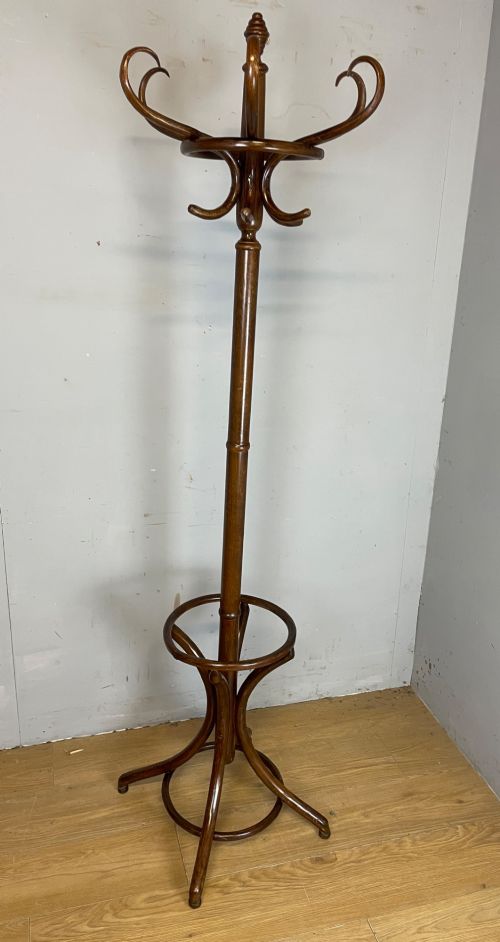
- Wood that has been heated with steam and bent into curved shapes. This technique defines many lightweight hat and coat stands produced in beech.
- Hall stand
- A piece of hallway furniture combining a coat rack, mirror and umbrella stand, often featuring a small seat or storage compartment. These multi-functional items anchored grand entrance spaces.
- Japonisme
- A style reflecting Japanese artistic influence on Western decorative arts during the late nineteenth century. It appears in specialist furniture finishes and bamboo-turned details.
Brown Wooden Coat Rack: Frequently Asked Questions
Where should a hall stand be placed?
A hall stand belongs in an entrance hall or reception space where guests arrive and outdoor garments require storage. Floor-standing variants need adequate clearance from doors and walkways.
Wall-mounted versions suit compact corridors where floor space is limited, allowing coats and hats to hang neatly at a convenient height.
How do I care for wooden coat furniture?
Maintaining wooden hall furniture involves dusting regularly with a soft cloth and applying a suitable wax or polish occasionally to nourish the timber. Avoiding direct sunlight prevents the wood and any integrated mirror backing from fading or drying out.
Metal hooks and drip trays benefit from dry cleaning to remove moisture and prevent tarnishing, particularly on items subjected to daily wet weather use.
What is the difference between a hall stand and a coat rack?
A hall stand is a substantial, self-standing item of furniture that typically incorporates umbrella holders, a mirror, and sometimes a seat alongside coat hooks. They served as central furniture pieces in traditional entranceways.
A coat rack is generally a simpler, more compact fixture attached to a wall or door panel, designed strictly for hanging garments and hats without occupying floor space.
How do I identify a bentwood hat stand?
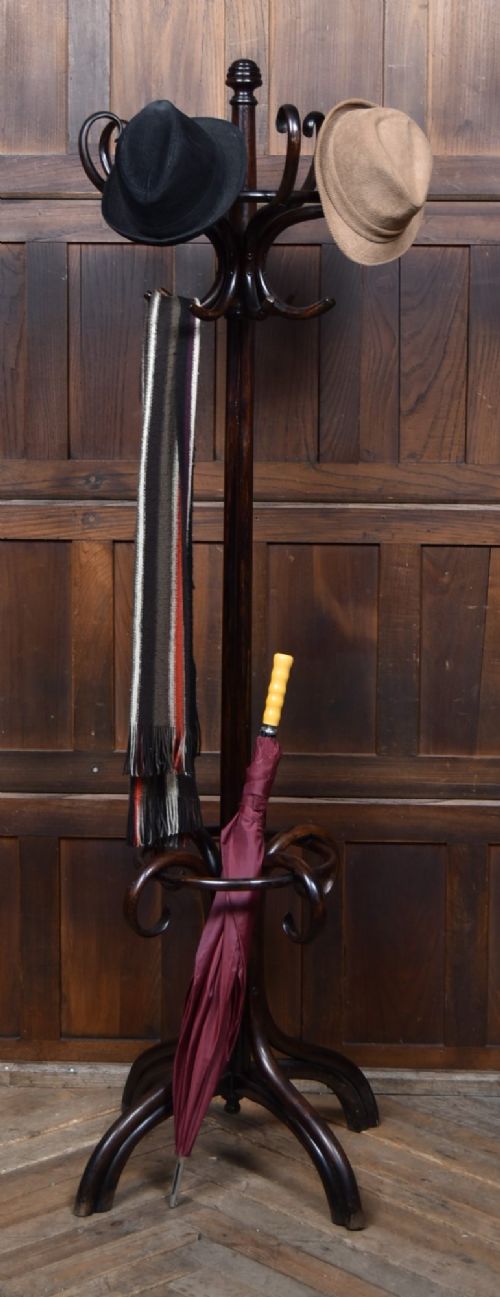
Bentwood hat stands feature characteristic curved wooden sections created through steam-bending processes, resulting in lightweight yet strong frames. They often display smooth, rounded loops designed to hold hats and coats without snagging fabric.
Beech is the most common timber utilised for these pieces, frequently accompanied by circular bases and multi-tiered hanging prongs.