
Mirrored Bedroom Armoire
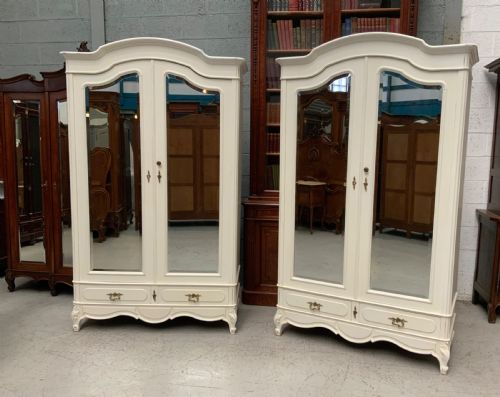
A mirrored bedroom armoire brings scale and reflective light to a room, offering grand storage through tall wooden doors.
Mirrored Bedroom Armoire
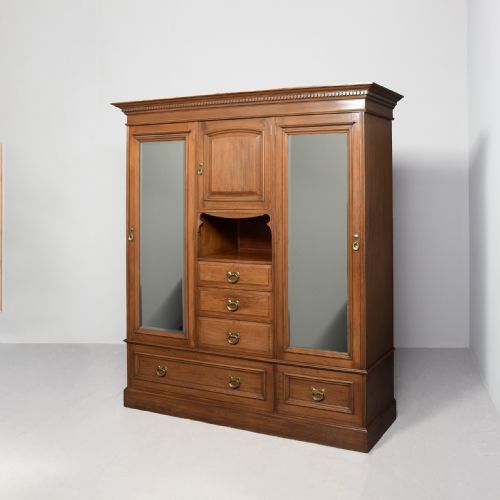
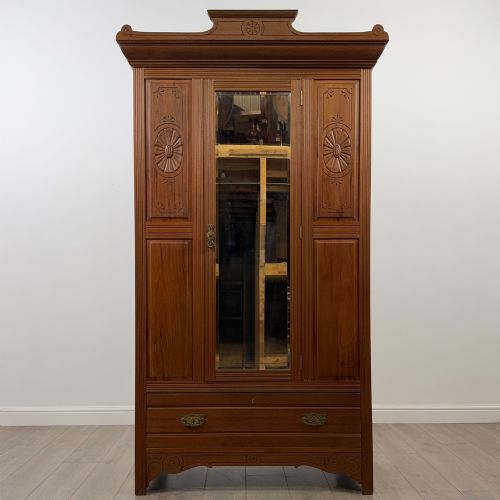
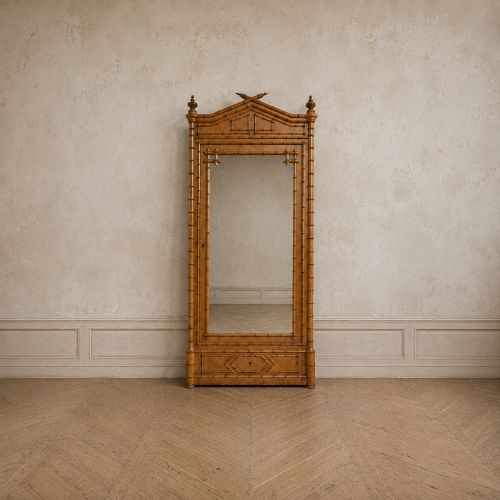
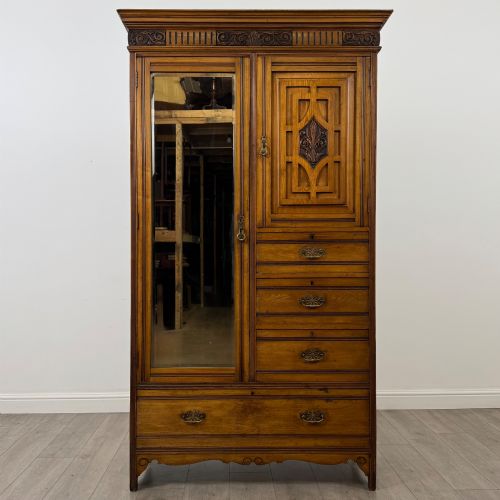
A mirrored bedroom armoire combines hanging space and shelving within large timber housings, often incorporating full-length looking glasses set into the doors. These substantial pieces serve as the primary storage furniture in domestic sleeping quarters.
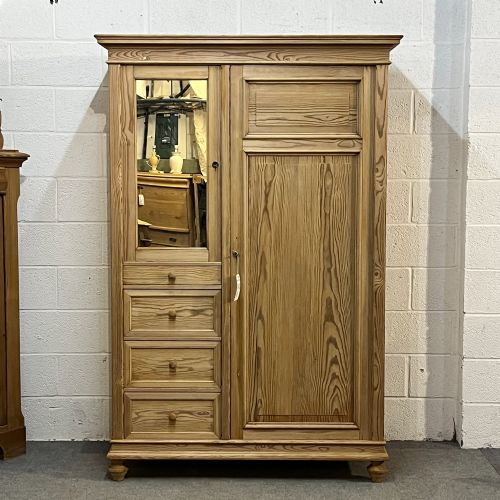
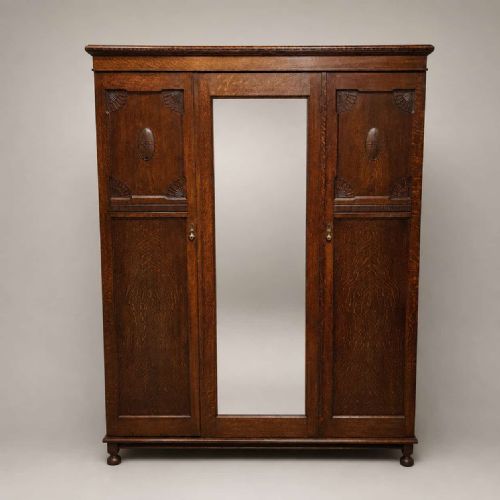
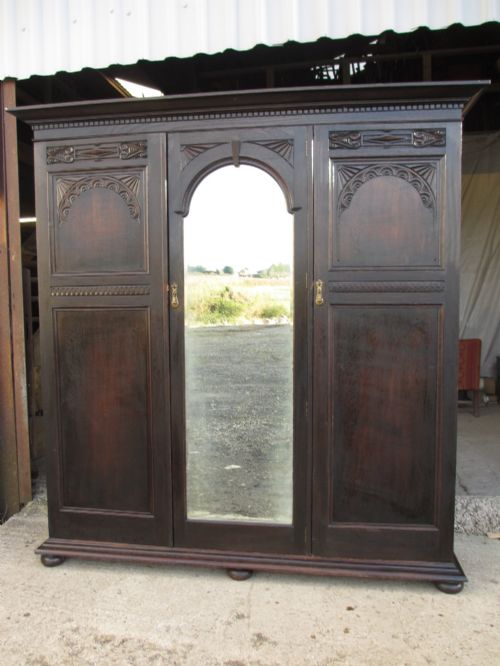
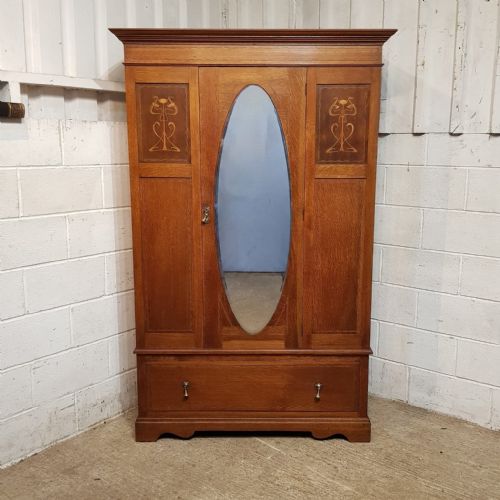
The selection here draws principally from Victorian and Edwardian workshops, alongside pieces spanning the nineteenth and early twentieth centuries. Forms range from single-door units to sprawling triple-section wardrobes and compactums.
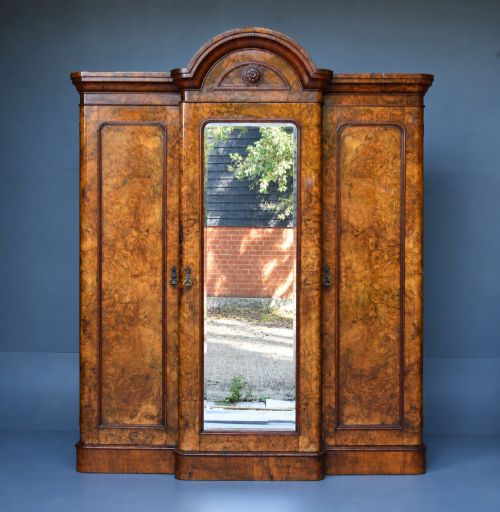
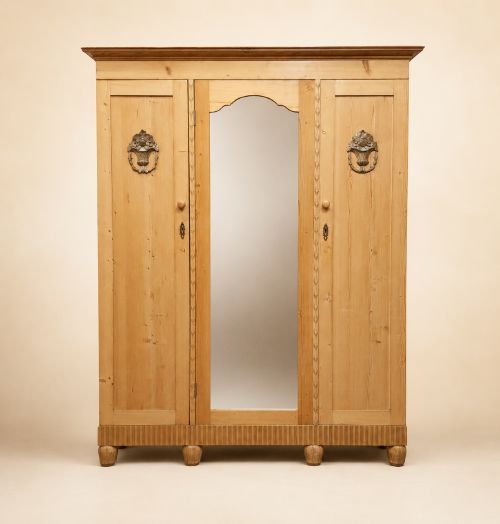
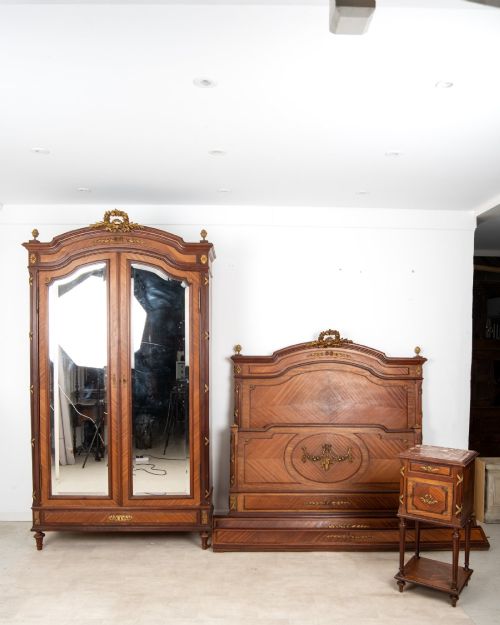
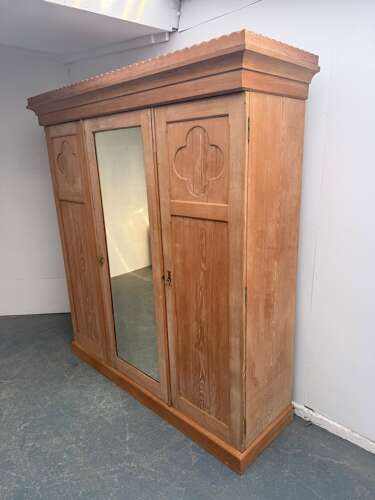
Makers utilised various formats, including French styles with ormolu mounts and British Arts & Crafts designs. Buyers encounter everything from pitch pine country pieces to finely figured burr walnut and mahogany constructions.
Construction and materials
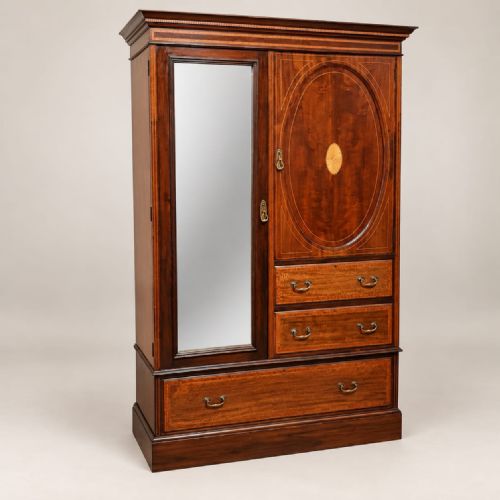
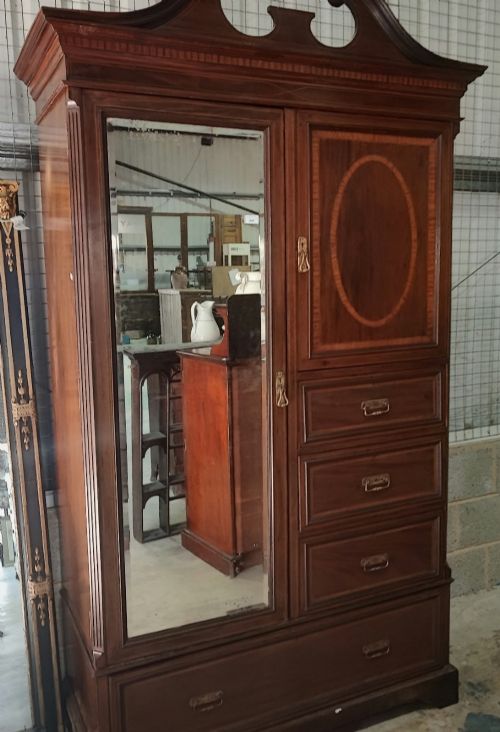
Cabinetmakers built these large wardrobes using solid foundational woods like oak, pine, and ash, frequently overlaying them with choice veneers of mahogany, walnut, and satinwood. Glass forms the central mirror panels, which are often bevelled and secured within heavy wooden framing.
Joinery methods relied on sturdy panelled construction to support the heavy mirrored doors without sagging. Metal elements such as brass handles, hinges, and gilt bronze ormolu mounts provide structural and decorative reinforcement.
Listings demonstrate a strong preference for mahogany, walnut, and oak, supplemented by decorative ash and satinwood veneers.
The markers of finer execution
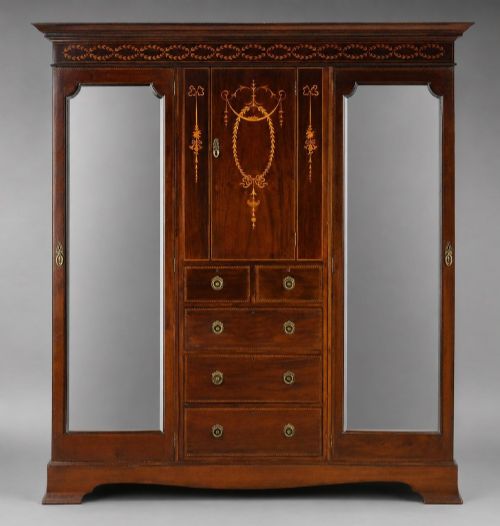
Superior examples distinguish themselves through the choice of timber and the handling of grain, particularly in highly figured burr walnut, satinwood, and bird's-eye maple. The depth and clarity of hand-carved ornamentation or delicate marquetry inlay also elevate a piece from standard utility.
The architectural presence of the cornice and the integrity of the original glass mirror plates dictate the overall calibre. Heavier, multi-section combinations with integrated drawers and specialised compartments demonstrate more ambitious workshop design.
Edwards and Roberts·Holland and Sons·Shapland and Petter
The Mirrored Bedroom Armoire Glossary
- Armoire
- A tall wardrobe or cupboard used primarily for hanging garments. These large storage pieces often feature mirrored doors.
- Compactum
- A fitted wardrobe containing a combination of hanging space, drawers, and shelving units. This specialised layout maximises internal storage efficiency.
- Marquetry
- Decorative patterns formed by fitting together thin veneers of various coloured woods. Craftsmen apply these intricate designs to door panels and cornices.
- Ormolu
- Gilt bronze mounts applied to furniture for decorative effect. French pieces frequently utilise these cast metal ornaments on the corners and frames.
- Pitch Pine
- A durable resinous softwood utilised extensively in nineteenth-century cabinetmaking. It yields a distinct grain pattern visible on regional and country pieces.
Mirrored Bedroom Armoire: Frequently Asked Questions
How do I fit a large mirrored armoire?
These tall pieces require careful measurement of ceiling heights and stairway clearances before installation begins. Many nineteenth-century examples dismantle into smaller modular sections for transport.
Positioning the wardrobe away from direct dampness preserves the wooden frame and prevents silver degradation on the glass plate behind.
What is a compactum wardrobe?
A compactum combines hanging compartments with internal drawers and linen slides within a single housing. This layout offers varied storage without requiring separate chests of drawers.
Victorian and Edwardian makers frequently added mirrored doors to these multi-functional units to brighten dressing spaces.
How do I date a wooden wardrobe?
Stylistic clues such as Arts & Crafts carving, Art Nouveau floral motifs, or French Louis XVI revival details indicate the manufacturing era. Wood choices like pitch pine, heavy mahogany, or burr walnut also point to specific nineteenth and early twentieth-century decades.
Construction marks and drawer dovetailing provide further evidence of the period in which the workshop operated.
Are these wardrobes supplied in sections?
Many triple-door and combination wardrobes separate into distinct components, including a heavy cornice, flanking side robes, and a central mirrored section. This modular build helped nineteenth-century makers deliver bulky furniture into domestic bedrooms.
Single-door and French armoire variants typically remain as singular, solid constructions.