


Miniature Writing Desk
A miniature writing desk packs the workspace of a full-scale study into a portable or tabletop form.
Miniature Writing Desk
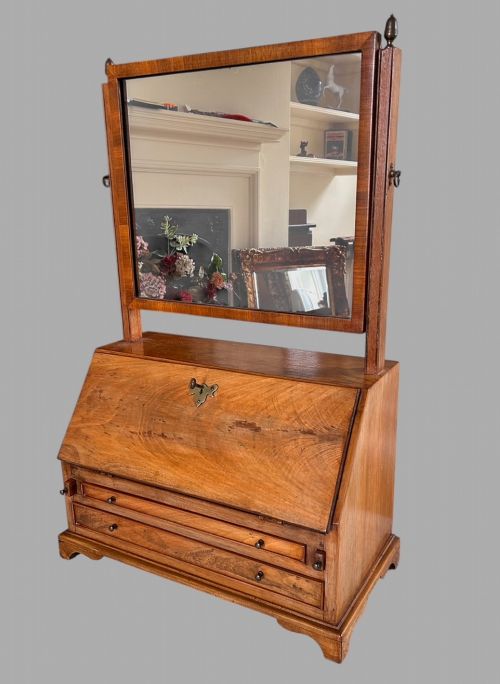
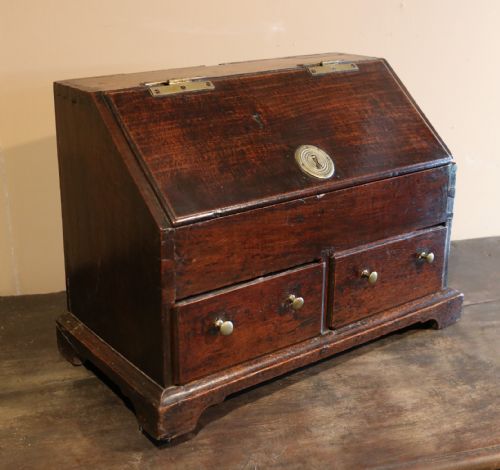
A miniature writing desk represents scaled-down furniture made across the Georgian, Victorian, and Edwardian eras. These pieces include tabletop bureaux, cylinder display desks, secretaire cabinets, and fall-front desks designed for compact spaces or specialised tasks.
The versions most commonly met on this page range from walnut and mahogany tabletop bureaux to elm and yew wood kneehole desks. Makers also produced smaller variants such as lap desks, writing slopes, and pen cases.
Objects in this category often double as apprentice pieces or salesman samples, demonstrating cabinet-making skill at a reduced scale. Others serve as fine desk accessories like silver pen wipes or lacquered papier-mache pen cases.
Materials and construction
Cabinet makers built these pieces using dense hardwoods like mahogany, walnut, satinwood, elm, and oak, frequently adding intricate parquetry or satinwood banding. French polishing appears alongside lacquered papier-mache and specialised inlays like Sadeli mosaic.
Metalwork played a key structural and decorative role, with brass hinges, handles, and locks securing folding flaps and internal compartments. Glass and mirror glass were integrated into display sections and dressing mirrors.
Some specialised items incorporate materials outside traditional cabinet work, including sterling silver, horsehair, and lacquered surfaces found on Indo-Persian pen cases.
Listings feature woods including mahogany, satinwood, walnut, yew, elm, and Welsh oak across Georgian, Victorian, and Edwardian periods.
Assessing quality
Quality rests upon the proportion and fidelity of the reduction, distinguishing true cabinet-maker precision from simpler novelty items. The execution of internal pigeonholes, drawers, and writing surfaces shows whether a piece received the same attention as full-scale furniture.
The choice of timbers and secondary woods defines the upper tier of pieces, particularly where figured mahogany, yew wood, or parquetry patterns remain crisp. Well-preserved original brass hardware and glass elements further indicate a higher grade of manufacture.
Sampson Mordan & Co.·Edwards & Roberts
The Miniature Writing Desk Glossary
- Apprentice piece
- A project created by a woodworker to demonstrate mastery of a trade before gaining guild membership.
- Bureau
- A sloping desk with a hinged flap covering pigeonholes and small drawers.
- Secretaire cabinet
- A piece of furniture containing a pull-out or drop-down writing drawer, often fitted with shelving above.
- Sadeli mosaic
- A micro-mosaic technique utilising geometric patterns in horn, bone, and various woods, frequently seen on Anglo-Indian writing slopes.
- Parquetry
- Geometric mosaic woodwork arranged in patterns resembling brickwork or parquet flooring on desk surfaces.
Miniature Writing Desk: Frequently Asked Questions
What is a miniature writing desk used for?
These small desks served for correspondence, record-keeping, and organising documents in rooms where a full-sized bureau would not fit. Victorians also used them as decorative desk accessories or tabletop writing stations.
Today, they function as display pieces or compact storage for stationery and small items while occupying minimal surface area.
How do I date an antique miniature desk?
Dating relies on secondary wood types, construction methods, and prevailing architectural styles of periods like the Georgian or Edwardian eras. Drawer linings, dovetails, and hinge types provide clear physical evidence of the decade of manufacture.
Matching the proportions and decorative motifs, such as Sheraton Revival satinwood banding or William & Mary forms, helps narrow the production window.
Were miniature desks made for children?
While some examples such as child-sized mahogany bureaux were built for young learners, many were trade samples or apprentice pieces. Adult users also relied on them for letter-writing in parlours or bedrooms.
Scale alone does not indicate the intended user, as cabinet makers often constructed reduced versions to showcase their skill to prospective clients.
How do I care for antique wood surfaces?
Antique mahogany, walnut, and satinwood benefit from stable indoor humidity and protection from direct sunlight to prevent timber shrinkage and fading. Gentle dusting with a dry cloth maintains the polish without stripping historic finishes.
Avoid liquid cleaners and silicone polishes, which can penetrate hairline cracks in French polish and damage the wood grain.