

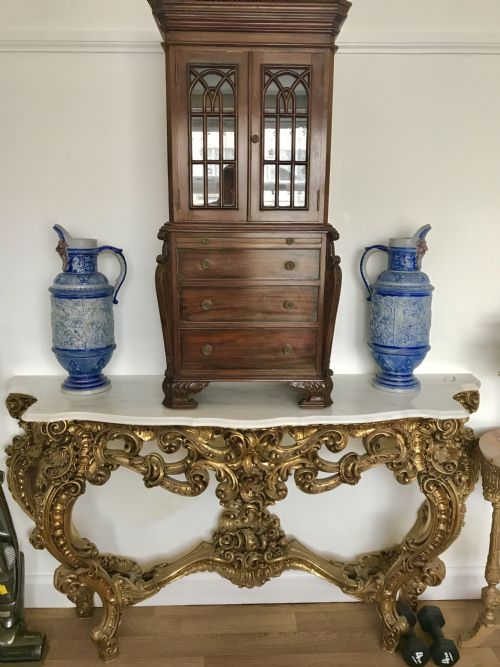
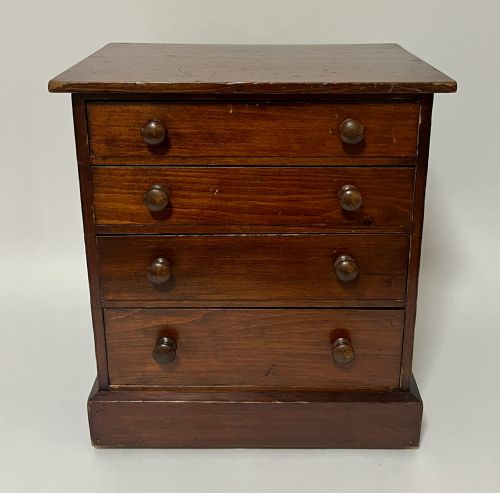
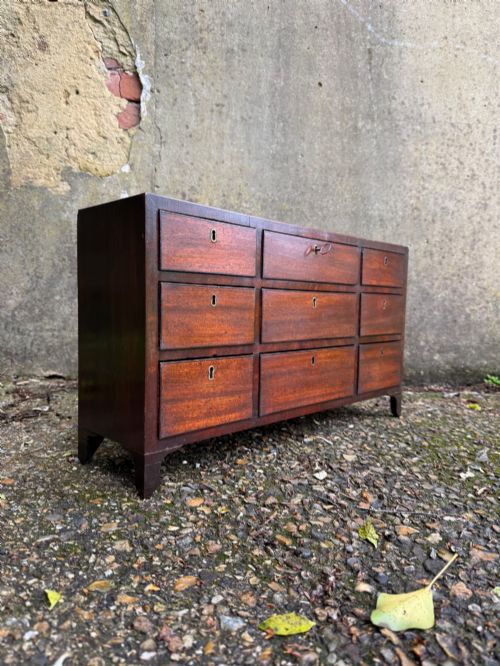


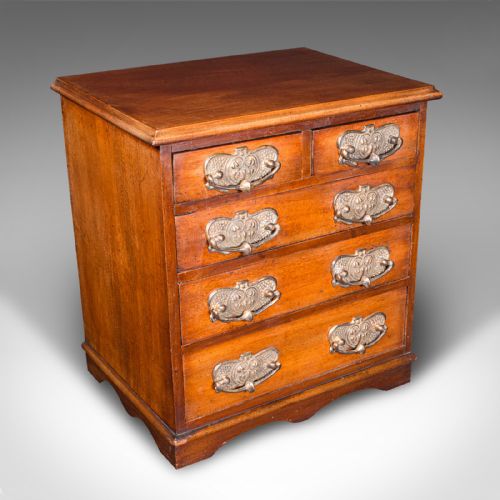


Brown Wood Miniature Desk
These brown wood miniature desk pieces are compact triumphs of scale, offering the refined presence of full-sized furniture in miniature proportions.
Brown Wood Miniature Desk
A brown wood miniature desk brings the intricate presence of full-scale library and writing furniture into a diminutive format. When you search for brown wood miniature desk, you encounter pieces spanning the eighteenth, nineteenth, and early twentieth centuries, including Georgian and Victorian examples.
Formats vary from modest slant-front chests to elaborately fitted escritoires incorporating small drawers and compartments. Each item demonstrates the ambition of cabinetmakers working at a reduced scale.
How they were made
Cabinetmakers utilised dense hardwoods like mahogany, walnut, and yew to achieve sharp details and crisp mouldings at a small scale. Surfaces often received French polishing to highlight the natural grain and depth of the timber.
Construction methods mirror full-size joinery, employing dovetailed drawer boxes and fitted interiors with working brass hardware. Parquetry and carved decorative elements appear on selected pieces to enhance the visual texture of the wood.
Some miniature drawers are so tiny they could scarcely hold a postage stamp, yet their dovetails remain perfectly cut.
What varies in quality
Quality rests in the fidelity of the proportions and the precision of the miniature joinery. Superior examples maintain the correct architectural relationship between the exterior case and the internal drawer configuration.
The selection of timber grain and the finesse of the surface finish distinguish finer works from simpler utilitarian items. Original brass fittings and intact internal compartments elevate the integrity of a piece.
Mappin and Webb
The Brown Wood Miniature Desk Glossary
- Apprentice piece
- A demonstration item created by a trainee to prove competency in advanced joinery techniques. These objects typically display exceptional attention to detail.
- Bureau bookcase
- A writing desk with a sloping fall front surmounted by a glazed or panelled shelving section. This dual-purpose form combines storage and workspace.
- Escritoire
- A small writing cabinet featuring a hinged writing surface and internal compartments for stationery. The form prioritises neatness and portability.
- French polishing
- A wood finishing technique that applies numerous thin coats of shellac using a pad to impart a deep gloss. This method accentuates the figure of mahogany and walnut.
- Kneehole desk
- A compact desk featuring a central recess for the user's legs flanked by banks of small drawers. This layout maximises storage within a restricted footprint.
Brown Wood Miniature Desk: Frequently Asked Questions
What is a brown wood miniature desk used for?
These compact writing surfaces served historically as portable writing stations, salesman samples, or apprentice demonstrations of advanced cabinetmaking skill.
Today, they function as striking decorative focal points on larger tables or within specialised collections of small-scale antiques.
How do I tell an 18th-century desk from a later copy?
Eighteenth-century examples rely on period construction methods such as hand-cut dovetails, older secondary woods, and genuine period brass hardware. The patina on the timber develops naturally through decades of handling and polishing.
Later interpretations often display uniform machine-cut elements and modern adhesives that lack the organic wear patterns of early furniture.
Are these desks sturdy enough for daily writing?
While these pieces feature functional drawers and folding writing flaps, their reduced scale and delicate joinery make them unsuited for heavy everyday office work. They are best appreciated as decorative items with occasional, careful use.
Placing them away from direct sunlight and radiators protects the dry timbers and prevents warping in the old wood.
Why do some miniature desks feature fitted interiors?
Fitted interiors with tiny pigeonholes and secret drawers reflect the high status and complex utility of full-sized cabinet furniture. Makers took pride in translating intricate mechanisms into restricted spaces.
These compartments housed inkwells, stamps, and correspondence materials safely while keeping the exterior profile clean and balanced.