
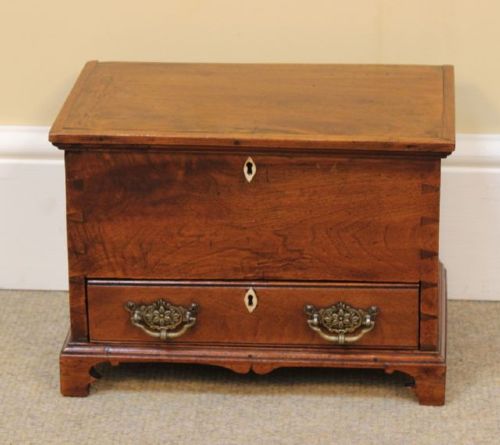
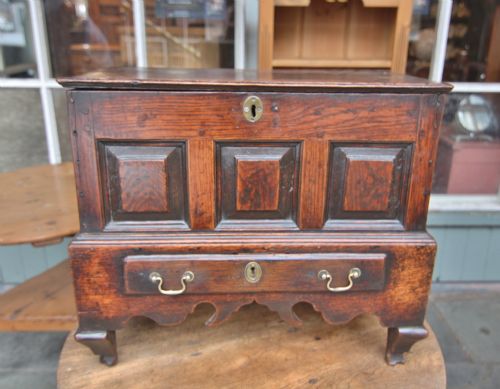

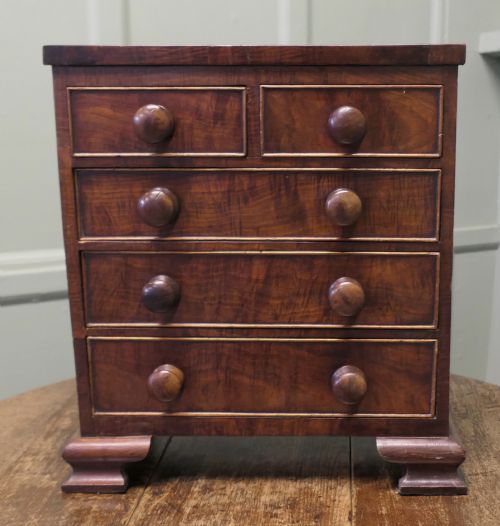
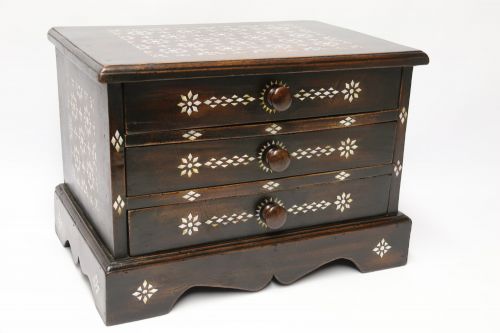



Miniature Wooden Drawer Box
These small-scale wooden drawer boxes are practical miniature chests and cabinets built to house jewellery, spices, or collector pieces.
Miniature Wooden Drawer Box
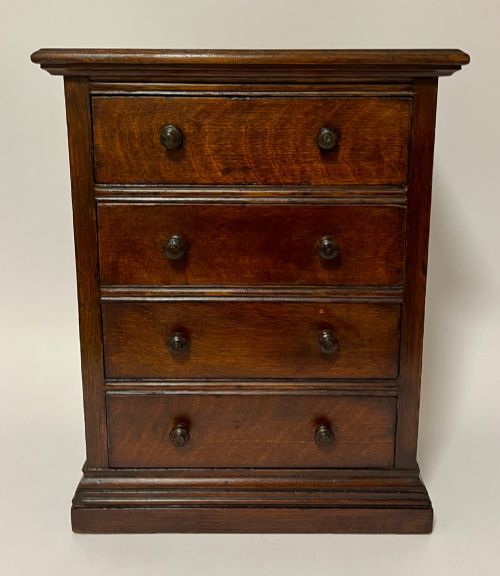
A miniature wooden drawer box brings fine cabinet-making down to a domestic table scale, spanning periods from the eighteenth century to the early twentieth century. You meet them most frequently as mahogany or oak miniature chests of drawers, alongside regional Welsh coffer bachs and specialised spice boxes.
The form encompasses apprentice pieces, tabletop cabinets, and compact jewellery chests produced across Georgian, Victorian, and Edwardian eras. Makers utilised rich timbers to construct these functional scale models for personal storage and display.
Regional variations appear in domestic Welsh vernacular pieces and exotic Anglo-Indian or Eastern hardwood boxes. Each container adapts full-size furniture typologies into portable, compartmentalised storage.
How they were made
Cabinet-makers constructed these small boxes using dense hardwoods such as mahogany, oak, walnut, and fruitwood, often selecting burr veneers for decorative surface figures. Joinery involved tight dovetailing on drawer carcases and precise framing to ensure stability across miniature proportions.
Surface enrichment relied upon brass fittings, bone escutcheons, mother-of-pearl inlay, and hand-applied polish to highlight the natural grain of the timber. Artisans integrated secret compartments and fitted interiors utilising the same joinery principles applied to full-scale furniture.
Some miniature chests hide tiny secret compartments behind dummy drawer fronts designed to outwit curious fingers.
What varies in quality
Quality rests in the fidelity of the proportions and the precision of the miniature dovetails joining the drawer sides. Finer examples retain original brass hardware, working locks with keys, and uncompromised secondary timbers inside the carcase.
The choice of primary timber dictates the grade, moving from standard utility woods to figured burr walnut, amboyna, or intricately inlaid hardwood surfaces. Superior pieces demonstrate crisp moulding details and patination achieved through centuries of careful handling.
The Miniature Wooden Drawer Box Glossary
- Coffer bach
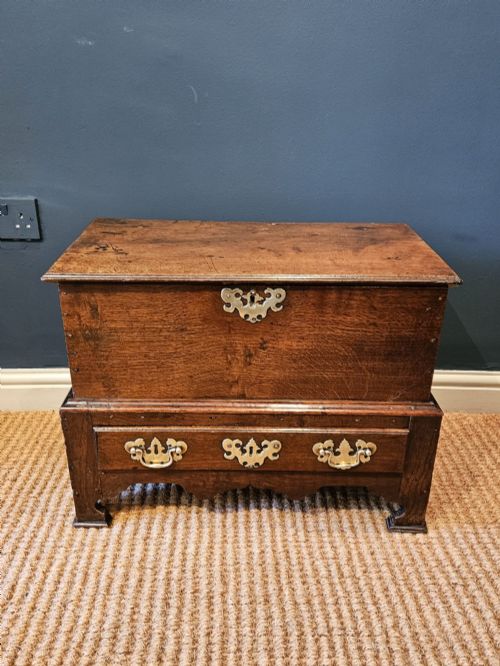
- A small Welsh chest featuring a hinged lid above one or more drawers, historically made as wedding gifts in oak. These miniature coffers rest on bracket feet or plain stiles.
- Apprentice piece
- A scale model constructed by a craftsman to demonstrate mastery of joinery techniques to a guild. They replicate full-sized chests with working drawers and miniature locks.
- Spice drawers
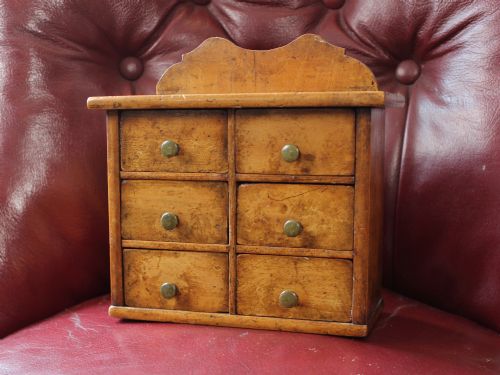
- A multi-drawer tabletop cabinet designed for storing culinary herbs and aromatic spices. They typically feature small, numerous drawers housed within a protective outer frame.
- Escutcheon
- A small protective plate surrounding a keyhole, frequently fashioned from brass, bone, or mother-of-pearl. It prevents the surrounding wood from wearing down with repeated use.
- Patina
- The surface sheen and mellow colour developed by aged wood through handling, wax application, and light exposure over generations. It indicates genuine age and unstripped surfaces.
Miniature Wooden Drawer Box: Frequently Asked Questions
What were miniature drawer boxes used for?
These compact wooden containers served varied domestic purposes, from organising precious jewellery and personal documents to housing culinary spices and small collections. Owners placed them on tables or desks for secure, accessible storage.
Craftsmen also built them as apprentice test pieces to showcase advanced woodworking skills to guild masters. Their scaled-down dimensions allowed portable utility within period households.
How do you date a wooden drawer box?
Dating relies on examining the timber species, secondary woods used inside drawer linings, and construction methods like dovetail fineness. Georgian pieces often feature oak linings and cockbeaded drawer edges, while Victorian examples frequently employ mahogany and applied brass handles.
Stylistic cues such as bracket feet, turned feet, and inlay techniques further anchor the piece to specific eighteenth or nineteenth-century periods. Hardware styles and lock mechanisms provide additional chronological markers.
Are apprentice pieces genuine antiques?
Genuine apprentice pieces are authentic scale models made by historical trainees to prove their proficiency in cabinet-making. They exhibit the same mature joinery techniques and wood ageing as full-sized furniture from the eighteenth and nineteenth centuries.
Collectors prize them for their meticulous detail, working drawers, and accurate proportions. Their miniature scale required exceptional dexterity from the maker.
How do I care for antique wooden boxes?
Keep wooden drawer boxes away from direct sunlight and fluctuating heat sources to prevent timber shrinkage and veneer cracking. Maintain the finish by applying microcrystalline wax sparingly to nourish the dry wood.
Avoid placing damp items directly inside the drawers to protect historical interior linings and paper labels. Gentle dusting with a soft cloth preserves the accumulated patina.