
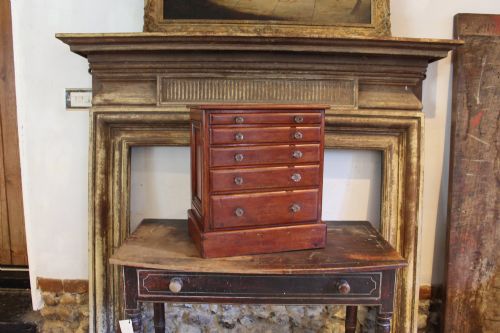
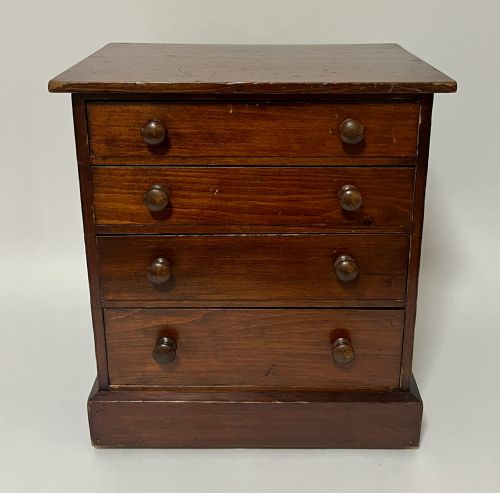


Miniature Drawers Unit
A miniature drawers unit is a compact chest designed to hold small treasures, and these diminutive pieces bring historic craftsmanship directly to a tabletop.
Miniature Drawers Unit
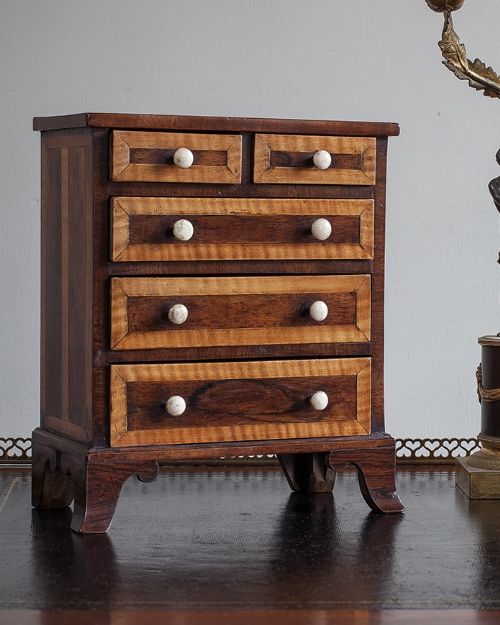
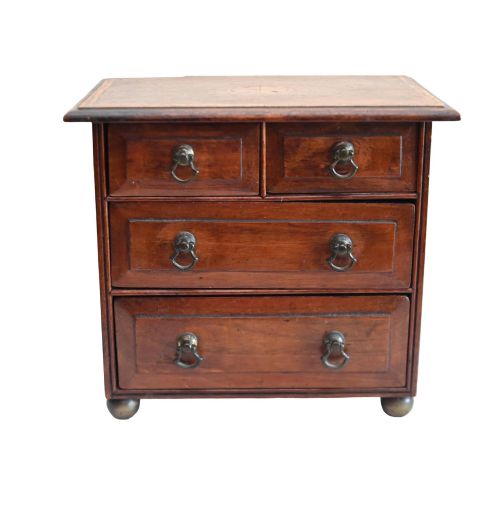
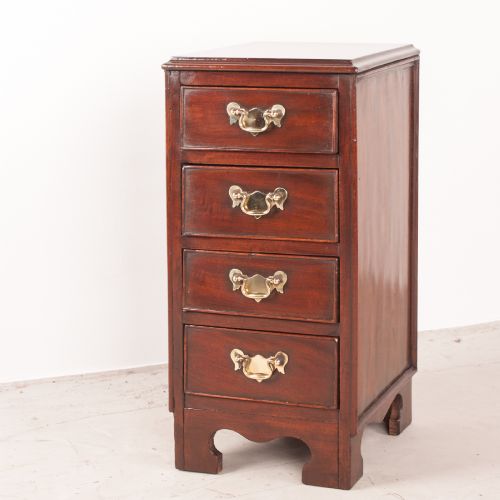
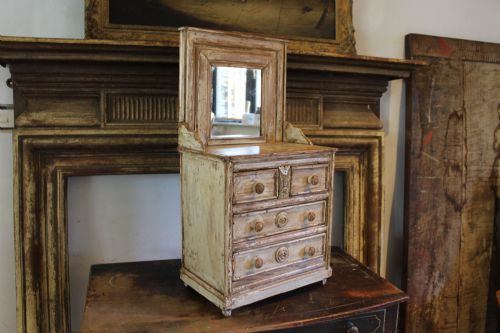
A miniature drawers unit provides scaled-down storage in forms such as apprentice chests, collector cabinets, and trinket boxes. These pieces mirror full-sized furniture designs from the Victorian, Edwardian, and Georgian style periods.
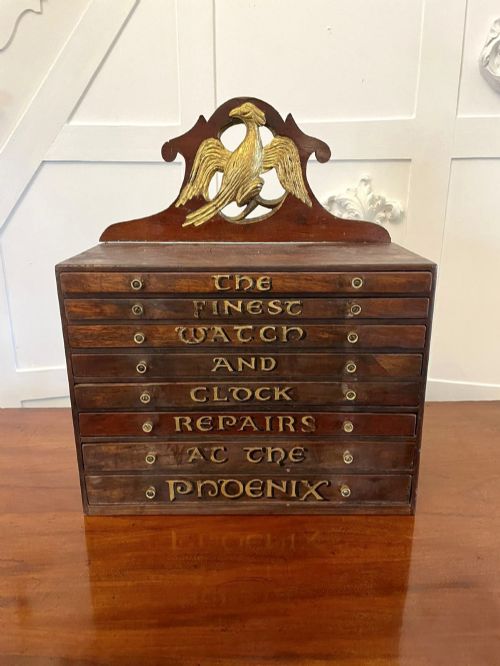
Most examples found on this page date from the nineteenth century through the early twentieth century. Common formats range from simple five-drawer specimen cabinets to multi-drawer watchmaker chests and inlaid table storage.
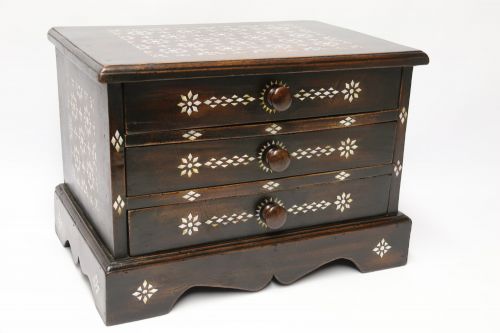
Origin and regional styles vary considerably across the selection, encompassing English workshop designs, French provincial examples, and Anglo-Indian hardwood creations. Each form serves a specific desktop or tabletop purpose while retaining traditional joinery.
Materials and construction
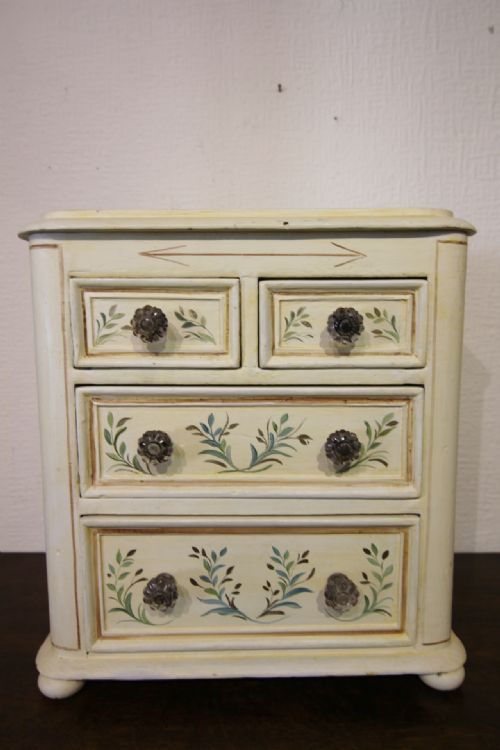
Cabinetmakers utilised dense timbers including mahogany, walnut, pine, deal, and exotic hardwoods for the primary structures. Surfaces frequently feature decorative wood veneers, inlaid details, or painted finishes.
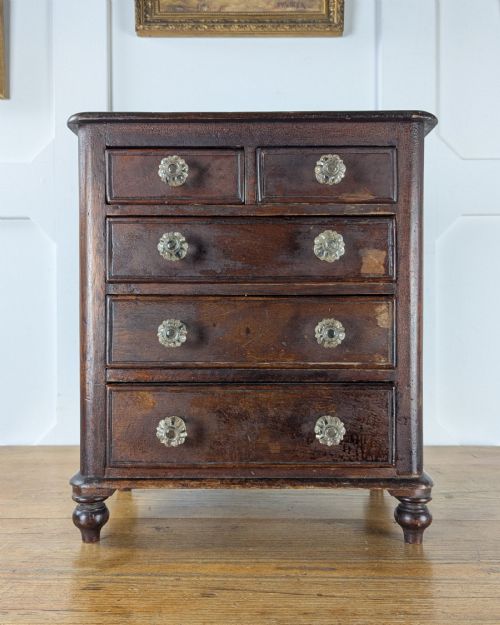
Metal fittings such as brass handles, bronze animal decorations, and glass panels appear across many pieces to secure or display the contents. Turned wooden feet and sturdy carcases support the miniature scale of these functional items.
Bronze animal decorations occasionally peer out from nineteenth-century Japanese table cabinets, standing guard over tiny desktop treasures.
Distinguishing quality
Quality rests in the precision of the miniature scale and the integrity of the timber selection. Finer pieces demonstrate meticulous attention to drawer alignment, dovetail joinery, and the refinement of turned feet or brass mounts.
The sophistication of the surface finish separates standard utility pieces from exceptional examples. Hand-painted decoration, choice mahogany grain, or intricate Anglo-Indian inlay denote higher craftsmanship in smaller furniture.
The Miniature Drawers Unit Glossary
- Apprentice piece
- A small-scale item created by a trainee woodworker to demonstrate mastery of traditional furniture-making techniques. These often replicate standard chest of drawers designs.
- Collector cabinet
- A specialised storage unit with multiple small drawers designed for organising natural history specimens, coins, or medals. They frequently feature secure doors or fitted interiors.
- Specimen cabinet
- A piece built specifically to house geological, botanical, or entomological samples in shallow drawers. The internal depth is tailored for individual display.
- Watchmaker chest
- A functional tabletop work chest equipped with numerous tiny drawers for sorting watch components and tiny tools. These pieces prioritise utilitarian durability and compartmentalisation.
- Deal
- A softwood timber derived from pine or fir, commonly utilised for the carcase construction of utilitarian nineteenth-century storage units.
Miniature Drawers Unit: Frequently Asked Questions
What were miniature drawers used for?
These small chests served diverse practical functions, from storing jewellery and pocket watches to organising scientific specimens and collector items. Watchmakers and naturalists relied on them to keep delicate components secure and sorted.
In domestic settings, they sat upon dressing tables or desks to hold trinkets and personal valuables. Their compact dimensions offered the utility of a full-sized chest within a confined workspace.
How do I date a miniature chest?
Dating relies on identifying the timber species, construction methods, and stylistic cues present in the piece. Victorian examples often feature mahogany or stained pine with turned feet, while Edwardian and later pieces might incorporate different veneers.
Hardware styles, such as brass pulls or hinges, also provide clues to the period of manufacture. Comparing the joinery inside the drawers helps confirm the era in which the unit was built.
Are these pieces actually made by apprentices?
Many nineteenth-century small chests are traditionally attributed as apprentice pieces, though numerous examples were produced commercially as novelty items or specialised desktop storage. The term often describes the specific small-scale form rather than a strict provenance.
Regardless of workshop origin, these units reflect the exact techniques used in full-sized furniture production. The skill required to scale down a chest of drawers demanded high technical proficiency.
How do I care for antique miniature wood?
Maintain antique wooden surfaces by keeping them away from direct sunlight and fluctuating heat sources. Gentle dusting with a dry, soft cloth prevents surface buildup without harming the polished finish.
Avoid using modern liquid polishes or silicone-based sprays, which can damage historic wood finishes. Occasional applications of appropriate wax help preserve the natural lustre of mahogany and walnut.