


Miniature Cabinet Sample
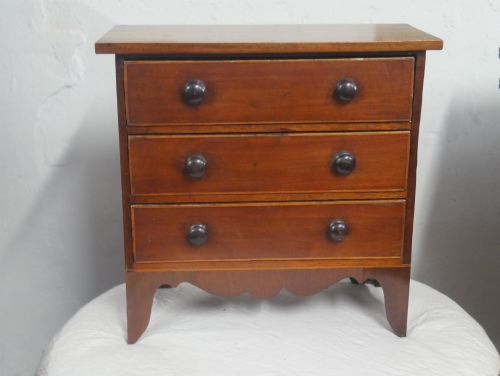
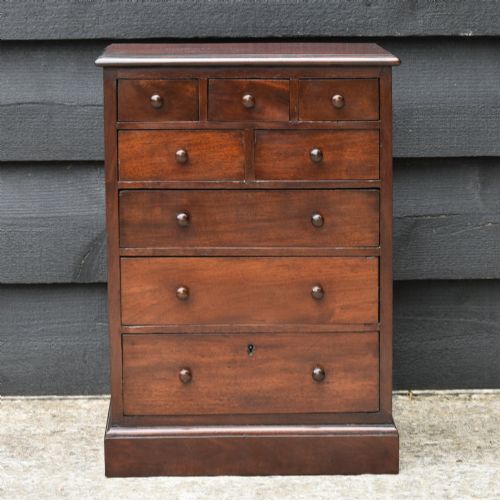
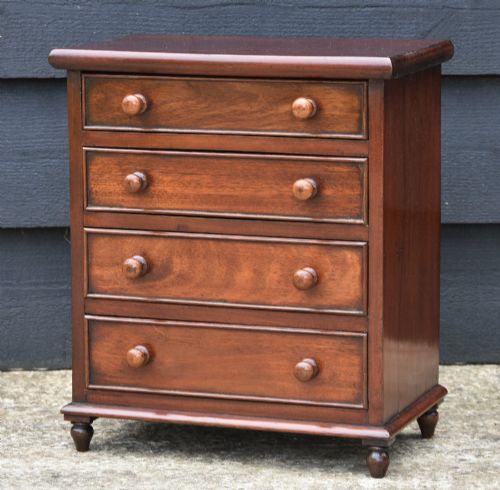
These small items known as a miniature cabinet sample offer detailed representations of full-scale furniture.
Miniature Cabinet Sample
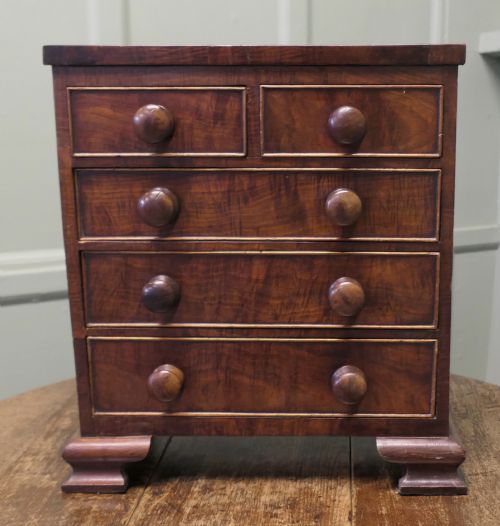
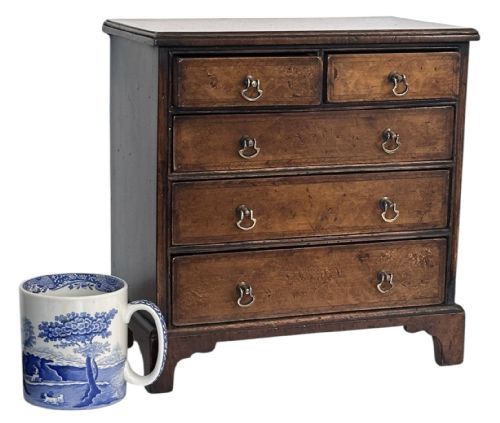
A miniature cabinet sample represents smaller-scale furniture created across the eighteenth, nineteenth and early twentieth centuries. These pieces encompass miniature chests of drawers, bureau bookcases, dressers and wardrobes modelled closely on domestic furnishings of their respective periods.
The items seen on this page span Georgian, Regency, Victorian and Edwardian styles, alongside specific regional iterations like 19th Century Scottish examples. Many function as apprentice pieces or traveller samples designed to demonstrate cabinet-making capability.
Mahogany forms the predominant material across the selection, accompanied by walnut, oak, satinwood and pine. These domestic and imported timbers support varied stylistic revivals including William and Mary and French Provincial designs.
Materials and construction methods
Construction relies heavily on solid hardwoods and delicate veneers such as kingwood and tulipwood applied to secondary carcases. Cabinet-makers utilised traditional joinery techniques scaled down to tiny proportions, incorporating brass hardware, bone details and glass elements.
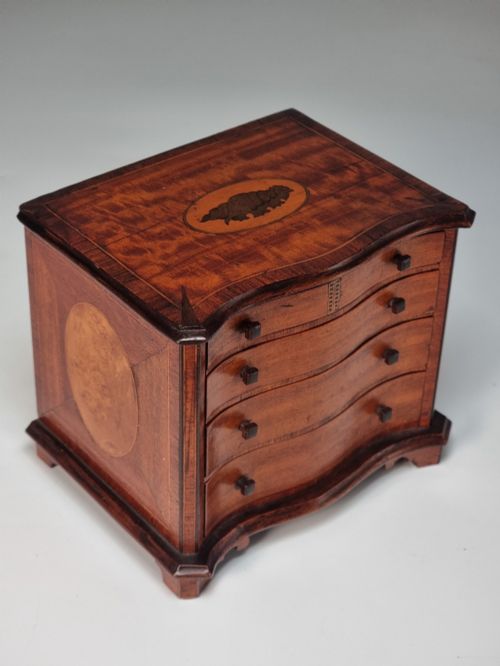
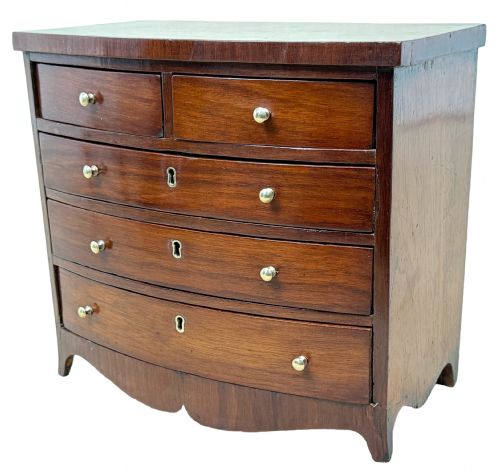
Surface finishes range from French polish to painted decoration, particularly on French provincial dressers and commodes. Ebonised mouldings, secret drawers and curved bowfronts demonstrate the same complex woodworking methods found in full-sized furniture of the period.
One tiny chest holds a secret compartment, proving that historic craftsmen loved hiding things just as much as modern ones do.
Distinctions in quality and execution
Quality rests upon the precision of the scaling and the fidelity of the miniature joinery to its full-sized counterpart. Pieces exhibiting crisp dovetailing, well-fitted drawers and refined timber selection stand apart from simpler iterations.
A. F. Lloyd, Bideford
The Miniature Cabinet Sample Glossary
- Apprentice piece
- A small item of furniture created by a craftsman in training to demonstrate mastery of joinery before admission to a guild.
- Bowfront
- A convex curved cabinet front popular during the Georgian and Regency periods. This shape requires advanced woodworking skill to scale down successfully.
- French polish
- A shellac finish applied in numerous thin layers using a rubber pad. It produces a high gloss and deep lustre on mahogany and walnut surfaces.
- Kneehole desk
- A small writing desk featuring a central recessed space for the legs flanked by pedestals of drawers. Miniature versions replicate this functional office furniture layout.
- Serpentine
- A furniture front characterised by a concave central section flanked by two convex ends. This flowing contour appears on fine eighteenth and nineteenth-century pieces.
Miniature Cabinet Sample: Frequently Asked Questions
What is a miniature cabinet sample?
These items are small-scale representations of larger furniture forms created by makers to demonstrate skill or display designs to prospective clients.
They mirror the styles, woods and construction methods of full-sized domestic furniture from the eighteenth to the early twentieth centuries.
Were these pieces made by apprentices?
Many examples are traditionally attributed to apprentices proving their mastery of woodworking techniques under strict guild or workshop standards.
Other pieces served as traveller samples that salesmen carried to show clients available furniture designs.
What woods are commonly found?
Mahogany forms the foundation of the majority of these small items, supplemented by walnut, oak, satinwood and pine.
Finer examples incorporate decorative veneers such as kingwood and tulipwood, sometimes paired with brass and bone accents.
How do I date a miniature cabinet?
Dating relies on identifying the prevailing style, such as Georgian, Regency, Victorian or Edwardian, alongside timber choice and construction traits.
Details like ebonised mouldings, dovetail construction and specific secondary woods help place an item within its nineteenth or early twentieth-century context.
Where should I place one at home?
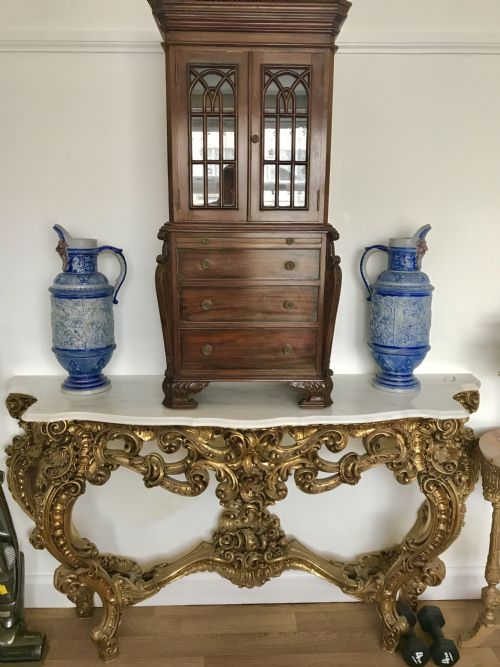
Their compact scale allows them to sit comfortably on side tables, desks or within dedicated display cabinets alongside other small antiques.
They require stable indoor conditions away from direct sunlight and extreme humidity to protect delicate wood veneers and polish.