




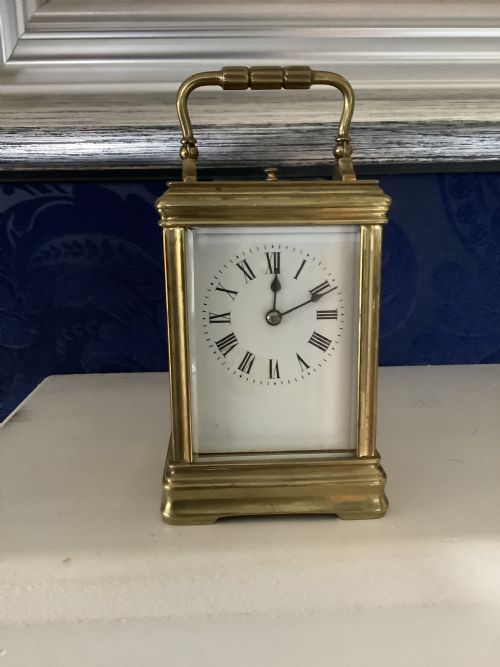
Miniature Brass Carriage Clock
These miniature brass carriage clock examples offer portable timekeeping enclosed in glass and metal, prized for their compact mechanics and decorative detail.
Miniature Brass Carriage Clock
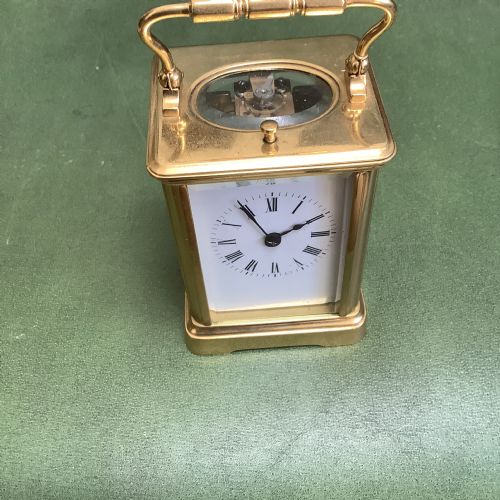
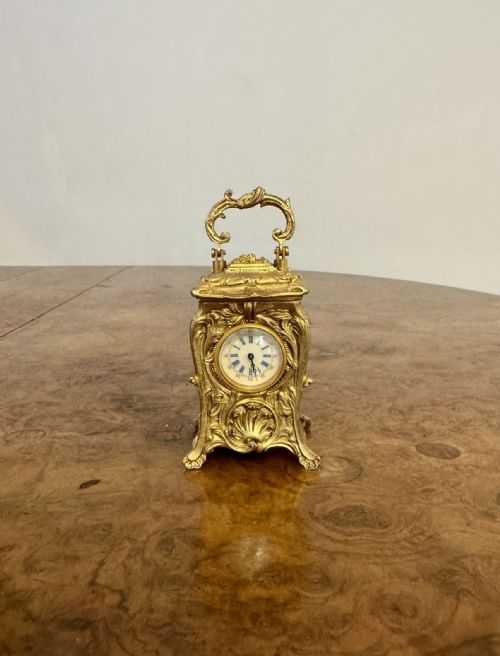
A miniature brass carriage clock is a compact portable timepiece designed for travel or bedside use, frequently encountered in Victorian and Edwardian styles. These pieces range from plain brass cases to ornate designs with engraved panels, enamel dials, and porcelain mounts.
Most examples originate from French workshops or British retailers during the nineteenth and early twentieth centuries. The selection includes simple timepieces alongside those fitted with alarms, striking trains, or original leather travelling cases.
Construction and Materials
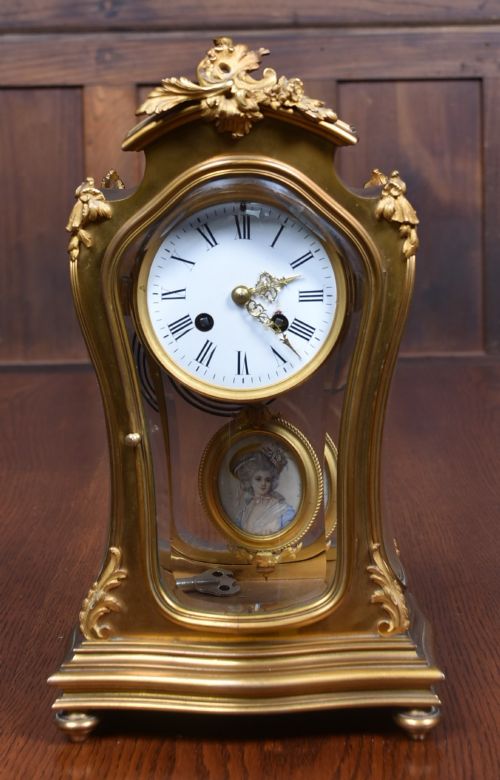
Casework relies heavily on brass, gilt brass, gilt bronze, and ormolu, often paired with bevelled glass panels to expose the internal movement. Silver, leather, and lacquered brass also appear in the historical record.
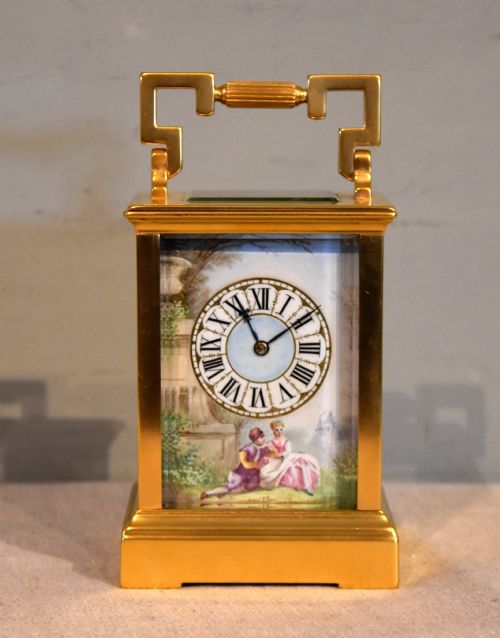
Dials and decorative elements incorporate hand-painted porcelain and enamel, sometimes featuring signed movements or fully engraved exterior cases executed by skilled metalworkers.
Listings feature periods spanning the Victorian era, the Edwardian period, and the early twentieth century up to nineteen thirty.
Assessing Quality
Quality depends on the crispness of the cast or engraved brass ornamentation and the complexity of the movement, such as the inclusion of alarm mechanisms or eight-day running trains. Signed works by established makers and pieces retaining their fitted travelling cases command particular attention.
The integration of decorative arts, including Limoges enamel panels or hand-painted porcelain, distinguishes superior examples from standard production pieces.
Richard Co Maker·J C Vickery London·Rodier
The Miniature Brass Carriage Clock Glossary
- Carriage clock
- A portable spring-driven timepiece originally made for travellers. These clocks typically feature a rectangular brass case with glass panels.
- Gilt brass
- Brass coated with a thin layer of gold or gold-coloured alloy. This finish provides a bright metallic sheen across many nineteenth-century cases.
- Enamel
- A glassy substance fused to metal through firing. It creates smooth, white dials or colourful decorative panels.
- Alarm
- A secondary mechanism within a clock that sounds at a pre-set time. Some miniature versions include this complication.
- Timepiece
- A clock that measures and indicates time without striking hours or quarters. Many simpler models operate as timepieces rather than striking clocks.
Miniature Brass Carriage Clock: Frequently Asked Questions
How do I wind a miniature carriage clock?
Most of these clocks use a dedicated winding key inserted into the backplate to tension the mainspring.
Care should be taken not to overwind the movement, stopping as soon as resistance is felt.
What is a grande sonnerie movement?
A grande sonnerie is a striking mechanism that chimes the hours and quarters automatically as time passes.
These complex movements represent higher-tier production within miniature timepieces.
Did these clocks travel in cases?
Many examples were supplied with fitted leather outer cases to protect the glass and brass during journeys.
Surviving travelling cases add significant context for collectors today.
How can I tell a Victorian from an Edwardian clock?
Victorian examples often display heavier cast ornamentation, ornate engraving, or Rococo revival styling.
Edwardian pieces tend toward cleaner lines or specific regional market designs from around nineteen hundred.