
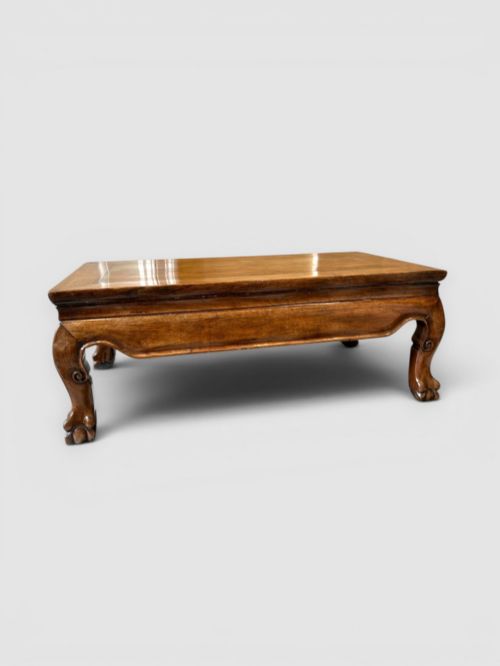


Ming Style Wood Carving
Ming style wood carving pieces are traditional Chinese furniture and architectural elements that bring deep historical character and rich timber grains into a room.
Ming Style Wood Carving
When you search for ming style wood carving, you encounter a curated selection of traditional Chinese furniture and architectural salvage that spans several centuries. The range includes seating such as armchairs, benches, and barrel stools alongside low tables, coffee tables, and architectural corbels.
The versions you are most likely to meet on this page date from the nineteenth and early twentieth centuries, alongside earlier seventeenth-century survivals. These objects reflect classical Chinese forms adapted for domestic use and architectural embellishment, constructed from various native timbers.
Makers utilised distinct forms like the low circular table and the opium table, each demonstrating traditional joinery and sculptural relief. Every piece carries the aesthetic of Chinese traditional and Qing Dynasty design principles into contemporary interiors.
How they were made
The construction relies heavily on dense hardwoods, elm, burr wood, and huanghuali timber, selected for their durability and striking natural grain patterns. Artisans shaped these materials using traditional Chinese woodworking techniques, often incorporating carved timber details, polychrome surfaces, and accents of gold leaf.
Architectural salvage items such as carved wooden corbels demonstrate deep sculptural relief work directly into solid timber blocks. Furniture pieces employ precise joinery methods that allow the wood to expand and contract naturally without metal fasteners.
The listings show items spanning from the seventeenth century through to the early twentieth century, utilising elm, hardwood, and huanghuali.
What varies in quality
The grade of the timber significantly dictates the distinction between standard examples and superior pieces, particularly the presence of highly figured huanghuali or burr wood. Richness of grain and density of the chosen hardwood reflect the ambition of the original commission.
Depth and precision in the carving of architectural corbels or figural statues separate masterwork output from simpler production. The crispness of relief work and the preservation of original surface treatments like polychrome and gold leaf determine the standing of each item.
The Ming Style Wood Carving Glossary
- Corbel
- A structural piece of stone or wood projecting from a wall to carry a weight. In Chinese architecture, these often feature intricate carvings.
- Burr wood
- A growth on a tree where the grain has grown in a deformed manner, producing intricate and swirly patterns. It is sliced into veneers or used for solid decorative panels.
- Opium table
- A low-profile rectangular or square table traditionally used in Chinese domestic spaces for reclining or serving tea. They often feature minimal framing and subtle hoof feet.
- Polychrome
- The practice of decorating architectural elements or sculptures in a variety of bright colours. This surface treatment enhances figural and structural details.
Ming Style Wood Carving: Frequently Asked Questions
What is a ming style wood carving?
These items encompass traditional Chinese furniture, statues, and architectural fragments created in historical styles.
They reflect the aesthetic principles and woodworking techniques developed during and after the Ming dynasty.
How were opium tables used?
Opium tables served as low central surfaces in traditional Chinese interiors for dining, writing, or resting.
Their low height suited seating arrangements that involved floor cushions or low platforms.
How do I live with antique Chinese benches?
Antique benches function well as seating in entryways or as display surfaces for large decorative objects.
Their robust timber construction allows them to endure daily use while anchoring a room with historical presence.
How do I identify seventeenth-century pieces?
Seventeenth-century items often manifest as architectural salvage, such as heavy carved wooden corbels showing deep patination.
They display the distinct wear patterns and joinery methods characteristic of early Chinese craftsmanship.