



Milliners Block Form
These milliners block form pieces are utilitarian shop tools turned sculptural objects, prized for their striking organic silhouettes.
Milliners Block Form
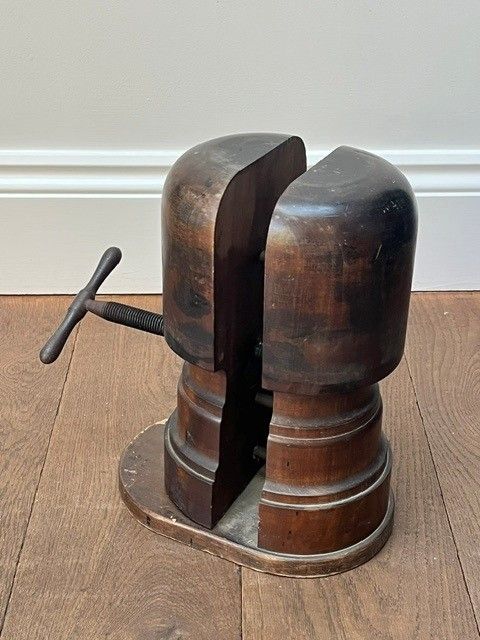
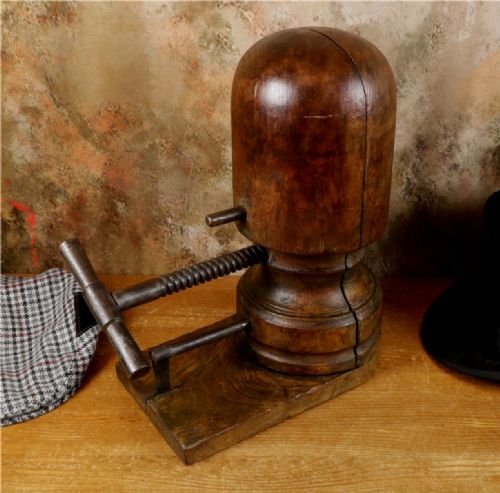
When you search for a milliners block form, you encounter wooden and metal apparatuses originally designed for shaping and sizing hats. The selection encompasses hat blocks, millinery moulds, millinery equipment, hat stretchers, and wig display stands.
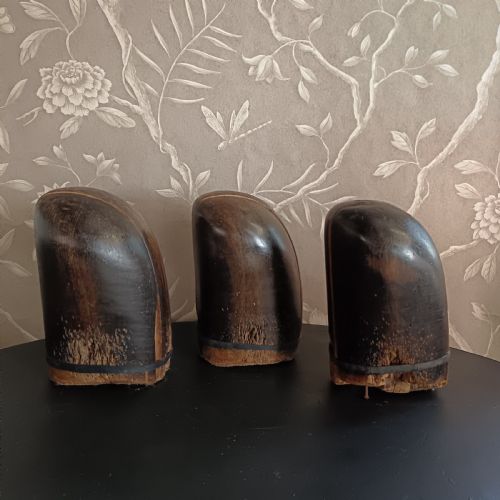
You are most likely to meet turned wooden forms and cast aluminium moulds originating from the nineteenth century through the 1920s. These industrial and haberdashery objects range from simple hat stretchers to carved folk art style heads and specialised military bearskin cap blocks.
How they were made
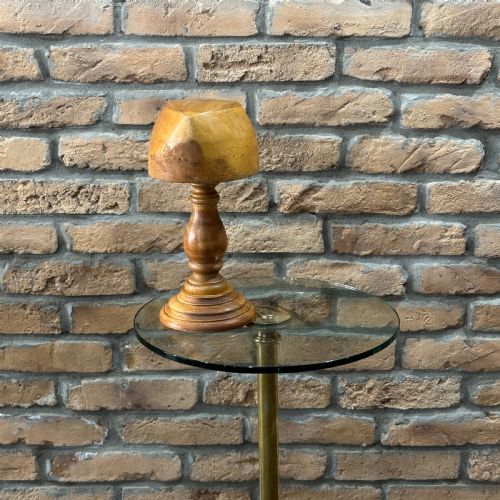
Makers constructed these objects using robust hardwoods such as oak, walnut, beech, and fruit wood, often turning them on lathes to achieve precise contours. Other examples utilise cast iron, aluminium, and cast aluminium for durability in production environments.
Carpenters and metalworkers shaped the materials to withstand the heavy pressure of hat making, resulting in dense blocks that retain tool marks and construction joints from their working life.
Materials span traditional hardwoods such as oak, walnut, beech, and fruit wood alongside industrial cast aluminium and iron.
What varies in quality
The distinction in quality rests upon the complexity of the carving and the integrity of the material. Sculptural items like carved folk art heads and detailed fruit wood trilby forms exhibit greater artisan involvement than standard industrial moulds.
Gradations also depend on the preservation of original surfaces, where retained patination from historical use enhances the visual depth of the wood or metal.
The Milliners Block Form Glossary
- Milliner
- A maker and seller of hats. Historically, these craftspeople utilised wooden and metal forms to shape millinery wares.
- Hat stretcher
- A mechanical device inserted into a hat to expand or adjust the inner circumference. These tools often feature hinged wooden segments operated by a central screw.
- Folk art style
- An aesthetic category reflecting utilitarian items made outside academic traditions. These pieces display vernacular carving techniques.
- Haberdashery
- Small items of merchandise connected to sewing and clothing. Equipment from this trade includes hat blocks and display stands.
Milliners Block Form: Frequently Asked Questions
What is a milliners block form used for?
These blocks served as solid foundations upon which milliners shaped, pressed, and dried newly made hats. Each form dictated the final crown height and brim angle of the headwear.
Today, collectors repurpose them as sculptural objects or displays for wigs and hats in domestic and retail interiors.
How do I identify the age of a hat block?
Age is determined by observing the manufacturing materials, tool marks, and overall style of the piece. Nineteenth-century examples often feature hand-turned fruit wood and oak construction.
Later pieces from the 1920s frequently incorporate cast aluminium or feature industrial markings typical of twentieth-century workshops.
Are aluminium blocks as collectible as wooden ones?
Aluminium millinery moulds attract buyers interested in industrial modern design and mid-century aesthetics. They offer a different tactile quality compared to traditional timber.
Wooden fruit wood and hardwood blocks remain favoured by those seeking nineteenth-century folk art warmth and natural patination.
How should I display a hat block at home?
These forms suit placement on bookshelves, sideboards, or mantelpieces where their sculptural profiles can be viewed from multiple angles. Grouping pieces of varying heights creates visual weight.
Keeping them away from direct heat sources prevents the timber from drying out or splitting over time.