


Military Horse Painting
Military horse painting works as a historical record of cavalry officers, royal commanders and notable mounts.
Military Horse Painting
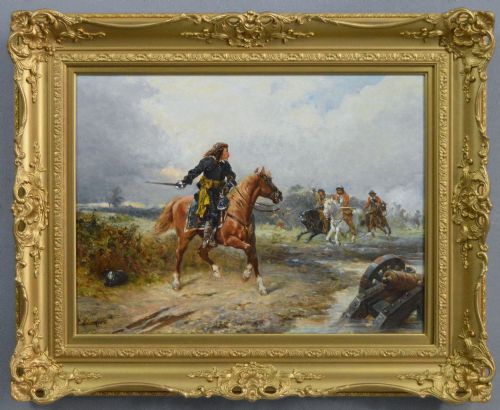
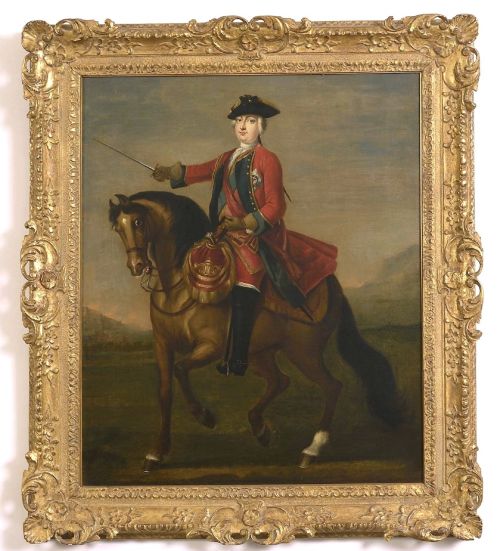
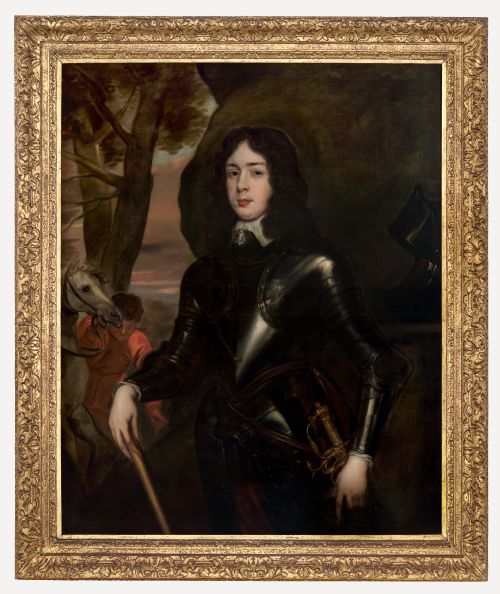
A military horse painting depicts mounted officers, royal commanders, cavalrymen and named horses across centuries of martial history. These works range from early portraits of royalty and royalist officers to detailed nineteenth-century depictions of hussars and chargers.
The pieces on this page include oil on canvas, oil on board, watercolours and porcelain wall plaques spanning the seventeenth to the early twentieth century. Buyers encounter formal portraits alongside narrative scenes of cavalry combat and pursuits.
Originating largely from English, Flemish and French schools, these artworks combine equine portraiture with military history. They document specific regiments, such as the 15th King's Hussars and the 8th Royal Irish Hussars, alongside historical figures.
How they were made
Artists painted these works primarily in oil on canvas or wood, though watercolours on paper and porcelain wall plaques also appear. Canvases received layers of oil pigment to capture the rich colours of military uniforms and the sheen of horse coats.
Many historical pieces feature elaborate giltwood frames that complement the traditional subjects. Painters utilised fine brushes to delineate intricate details of armour, horse tack and regimental insignia.
Listings feature oil on canvas, watercolours, and porcelain wall plaques spanning the seventeenth to the twentieth century.
What varies in quality
The quality of a military horse painting rests on the anatomical precision of the horse and the accurate rendering of period military uniform and equipment. Superior works demonstrate a confident handling of light on horseflesh and metal armour.
Handwritten provenance, clear artist attribution and known subject identity elevate a piece above anonymous works. The depth of composition, whether a solitary charger or a dynamic cavalry engagement, distinguishes accomplished academic output from routine studio production.
John Wootton·Thomas Hudson·Sir Anthony van Dyck·Edith Alice Simkins·Gilbert Scott Wright·Thomas Mackay·Albert Ferdinand Le Dru·Donald Wood·William Edward Millner·Harry Ashby
The Military Horse Painting Glossary
- Charger
- A cavalry horse used in battle or parades. These animals were typically bred for strength, speed and courage.
- Hussar
- A member of a European light cavalry regiment. They are often recognised in art by their elaborate pelisses and braided jackets.
- Giltwood
- Wood carved and covered with a thin layer of gold leaf. This material frequently appears on the frames surrounding historical oils.
- Wall plaque
- A decorative panel designed for display on a vertical surface. Some examples in this field utilise porcelain as a painting ground.
- Genre
- A category of painting depicting scenes of everyday life. In this context, it includes narrative military actions and tavern incidents.
Military Horse Painting: Frequently Asked Questions
What is a military horse painting?
A military horse painting is an artwork depicting horses together with soldiers, officers or cavalry regiments. These pieces serve as both equestrian art and historical military documentation.
Subjects range from formal portraits of named commanders on horseback to narrative scenes of combat and pursuit.
How were these paintings used?
Owners displayed these artworks in domestic interiors, regimental messes and country houses to signal military service, lineage or loyalty. They commemorated specific officers, notable campaigns and prized mounts.
Commissioned portraits celebrated military promotions and royal patronage.
How do I live with one?
Hang these artworks away from direct sunlight to protect oil pigments and watercolours from fading. Ensure wall fixings can support heavier giltwood frames.
Pairing the piece with traditional interiors complements the historical subject matter.
How do I tell periods apart?
Examine the clothing, facial hair and military uniform styles depicted in the artwork. Seventeenth-century pieces often feature armour and elaborate lace, while Victorian works show distinct regimental dress.
Materials and framing techniques also offer clues to the date of creation.