

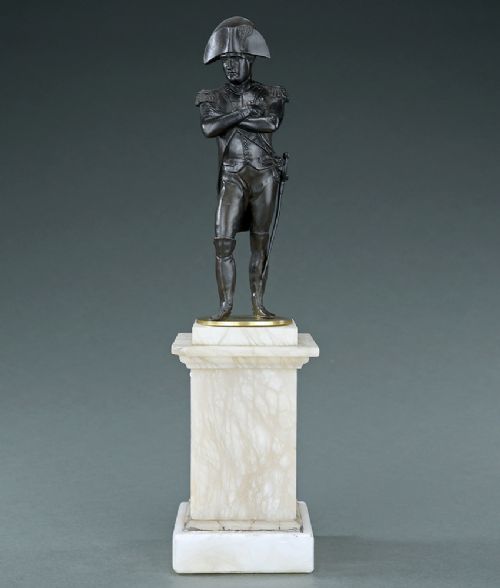


Military Desk Ornament
These military desk ornament pieces range from bronze Napoleonic figures to brass aircraft models, offering solid historical character for a workspace.
Military Desk Ornament
A military desk ornament encompasses desktop models, scale field guns, aircraft sculptures, and heavy paperweights produced across the nineteenth and twentieth centuries. Buyers searching for this phrase encounter solid cast models, bronze figures, and artillery pieces set upon marble or wood bases.
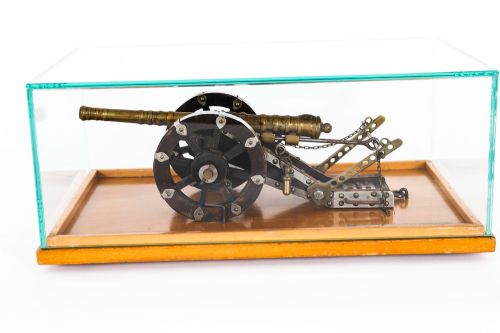
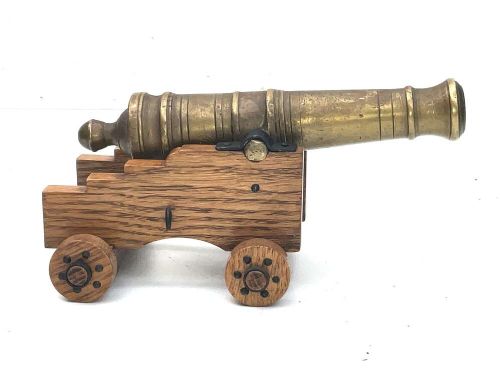
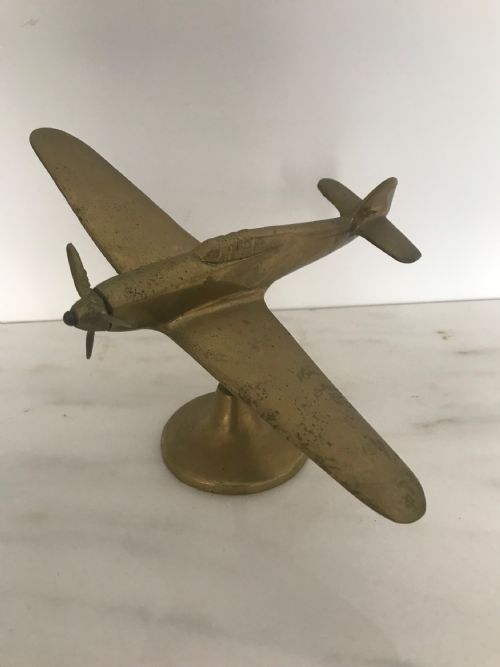
The selections span periods from the French Empire and George IV eras through to World War II, reflecting changing military technology and decorative tastes. Common forms include model cannons, aircraft such as the Hurricane and Vickers Wellington, and depictions of Napoleon on horseback.
Materials and Construction
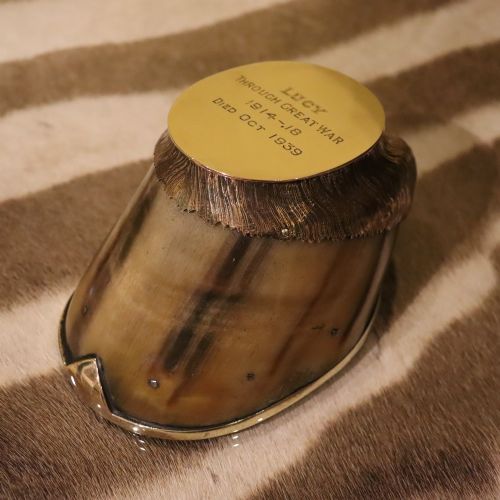
Foundry work dominates these items, utilising cast bronze, brass, iron, and silver plating shaped into detailed military figures and machinery. Metal components are frequently mounted on heavy marble or hardwood bases to provide stability and visual contrast.
Surface finishes vary from polished brass and silver plating to patinated bronze and dark iron, highlighting the mechanical parts of aircraft propellers and field guns. Detail work relies on traditional casting methods, resulting in sturdy desk objects built to last.
Military Desk Ornament Retail Price Guide 2026
Typical asking prices for military desk ornament among the pieces listed under this phrase on Sellingantiques today, from the lower quarter to the upper quarter. They describe what is for sale here now, not the wider market.
Listings for this phrase feature objects spanning the nineteenth century through the 1940s, utilising bronze, marble, brass, and cast iron.
Judging Quality
Fidelity to historical uniforms and machinery determines the standing of a model. Pieces that retain an original, undisturbed patination on the bronze or brass carry greater visual integrity than those with altered surfaces.
Emile Guillemin
The Military Desk Ornament Glossary
- Patina
- The surface sheen and coloration developed on metals like bronze and brass through age and handling. This thin layer adds depth to the appearance of antique desk ornaments.
- Gribeauval field gun
- A standardised artillery design developed in France during the eighteenth century and frequently recreated in nineteenth-century bronze or iron scale models.
- French Empire style
- A neoclassical design movement spanning the early nineteenth century that heavily influenced military ornamentation, notably through depictions of Napoleon and classical motifs.
- Scale model
- A smaller physical representation of an aircraft, artillery piece, or figure built with proportional accuracy. These items served as executive desk displays or commemorative objects.
Military Desk Ornament: Frequently Asked Questions
What are military desk ornaments?
These pieces are small-scale representations of military machinery, artillery, aircraft, and historical figures designed for use on a desktop or study table.
They function primarily as decorative objects or paperweights, reflecting the aesthetic tastes and technological interests of the nineteenth and twentieth centuries.
How do I date a brass cannon model?
Dating relies on stylistic markers, the type of metal casting, and specific historical ordnance designs associated with periods like the George IV era or the early twentieth century.
Examining the base materials, such as the inclusion of specific marble types or older fastening techniques, also helps narrow down the production period.
Where were these desk models displayed?
Historically, officers, statesmen, and civilians placed these items on library desks, office tables, and mantelpieces as symbols of military achievement or patriotic interest.
Today, they serve a similar decorative role in studies, offices, and living spaces where historical character is desired.
How should I clean antique bronze?
Dusting with a soft, dry cloth is generally sufficient to maintain metal desk ornaments without disturbing the historic surface layers.
Harsh chemical polishes must be avoided, as they strip away the natural patina that accumulates on brass and bronze over decades.