





Military Bronze Sculpture
These military bronze sculpture pieces bring historical commanders and soldiers to life through lasting cast metal.
Military Bronze Sculpture
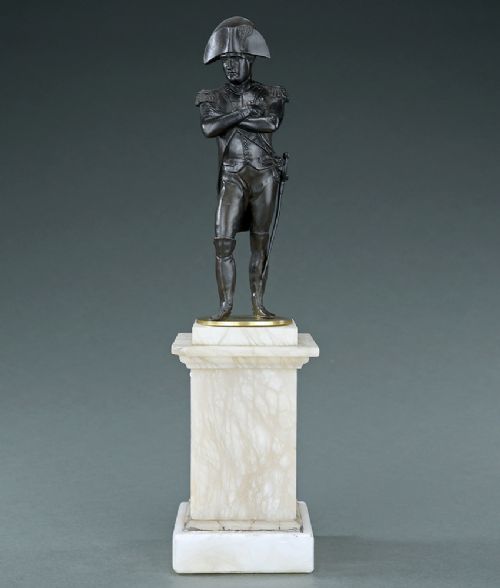
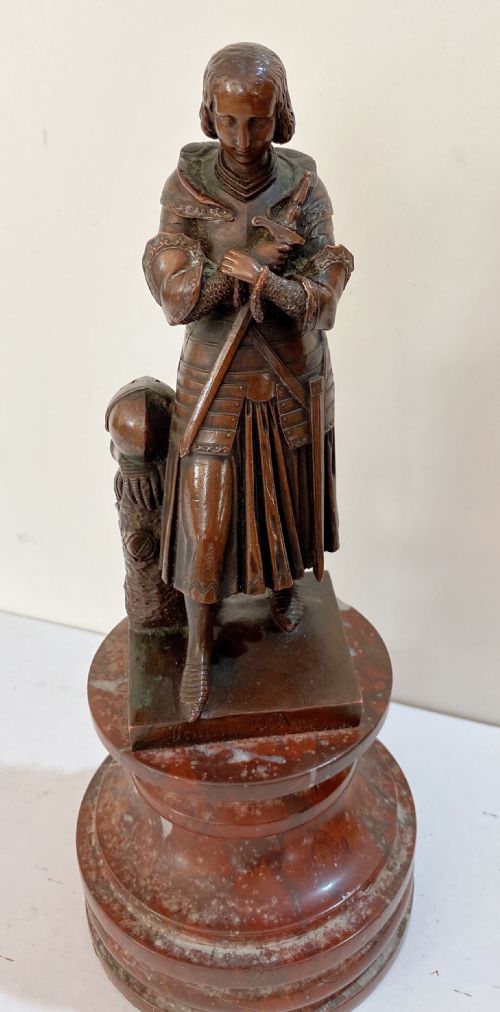
When you search for military bronze sculpture, you encounter figures cast across the nineteenth and early twentieth centuries, depicting historical figures like Napoleon Bonaparte alongside soldiers and horsemen. These works span French Empire, Victorian historicism, and Russian Imperial styles, capturing subjects from Jeanne d'Arc to Saladin and Bartolomeo Colleoni.
The objects take various forms, including desktop paperweights, cabinet figures, and large equestrian statues mounted upon marble bases. French foundries and Russian makers produced these pieces, reflecting distinct national interests in military prowess and historical commemoration.
Materials and casting methods
Military Bronze Sculpture Retail Price Guide 2026
Typical asking prices for military bronze sculpture among the pieces listed under this phrase on Sellingantiques today, from the lower quarter to the upper quarter. They describe what is for sale here now, not the wider market.
A St. Petersburg policeman stands immortalised in cold-painted bronze, guarding nineteenth-century history from a desk.
Quality variations in casting and finish
Quality rests in the crispness of the chasing and the fidelity of the cast to the original model, where sharp uniform details and distinct facial expressions separate superior examples from softer castings. The depth and longevity of the patination also dictate the visual strength of the piece.
The integration between the bronze figure and its marble base influences overall construction standards, alongside the presence of legible maker signatures or foundry marks.
Emile Guillemin·E.H. Dumaige·Fabergé·James Pradier·C.Anfrie
The Military Bronze Sculpture Glossary
- Patinated bronze
- Bronze that has been treated with chemical solutions to alter its surface colour. This process protects the metal and achieves specific brown, black, or green tones.
- Cold-painted bronze
- Metal figures painted after casting with oil or varnish paints rather than being fired in a kiln. This technique allows for intricate, colourful depictions of uniforms and dress.
- Grand Tour
- A cultural journey undertaken by nineteenth-century travellers who collected small bronzes of famous monuments and historical statues as souvenirs. These pieces often reproduced Renaissance sculptures.
- Equestrian
- A sculpture depicting a rider mounted upon a horse. Such works frequently commemorate military leaders and commanders.
Military Bronze Sculpture: Frequently Asked Questions
What periods do these sculptures date from?
The pieces span the nineteenth century and the early twentieth century, encompassing Victorian productions and pieces from the Edwardian era.
Foundries active in France and Russia created the majority of these military subjects during distinct historical revivals.
How were cold-painted bronzes decorated?
Artisans applied paint directly to the cold metal surface using oil-based paints to render uniforms and regalia accurately.
This method avoided high-temperature firing, preserving delicate details on small figures.
Where were these sculptures displayed originally?
Owners placed these figures on libraries, desks, and antechambers as decorative objects and scholarly paperweights.
Large equestrian monuments served as prominent focal points within formal interiors.
What subjects are most common?
Napoleon Bonaparte appears frequently, alongside Renaissance condottieri like Colleoni and historical military figures such as Saladin and Jeanne d'Arc.
Standard soldiers and cavalrymen also form a significant portion of the sculpted subjects.