


Military Black Powder Pistol
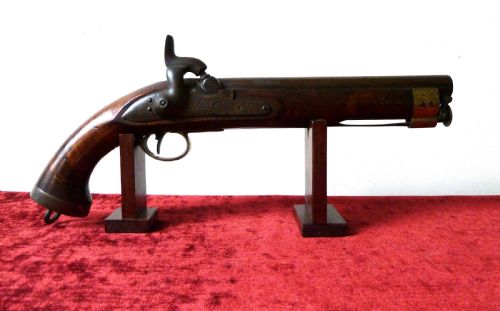
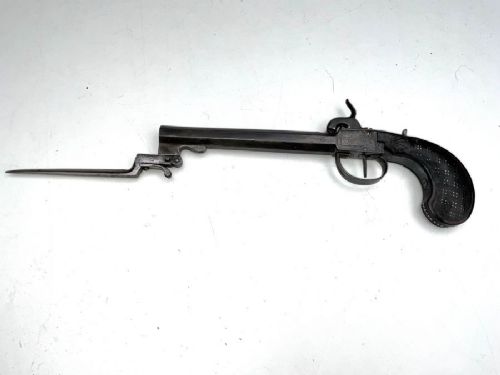
A military black powder pistol is a serviceable sidearm of iron, steel, brass and walnut built for service in the Georgian, Napoleonic and Victorian eras.
Military Black Powder Pistol
When you examine a military black powder pistol on this page, you encounter historical firearms spanning the eighteenth and nineteenth centuries. These pieces encompass flintlock and percussion ignition systems used by British, French, Russian and American forces.
The selection here includes East India Company service arms, Tower contract pieces, Dragoon holster pistols and Colt revolvers. Such sidearms served officers, cavalrymen and infantry across Napoleonic campaigns and the American Civil War.
Most examples date from the Georgian and Victorian periods, manifesting as heavy service arms or refined officers' pieces. Each military black powder pistol reflects the standard regulation patterns and private purchases of its respective era.
How they were made
Gunmakers combined forged iron and steel for barrels and lock mechanisms with seasoned walnut for stocks. Brass furniture such as trigger guards, butt caps and ramrod pipes appears frequently on British and French service arms.
Lock plates feature mechanical components assembled by hand, often bearing crown inspection stamps, maker names like Wilson or Brasher, and arsenal marks such as Tower. Barrels were bored from solid metal and secured to the stock via pins or barrel wedges.
Listings on this page span the eighteenth and nineteenth centuries, featuring walnut stocks alongside steel, iron and brass components.
What varies in quality
Quality in a military black powder pistol depends on the crispness of the lock markings, the integrity of the walnut stock and the originality of the components. Government contract arms made for the Board of Ordnance display standardised durability.
Private purchase officers' pistols often exhibit finer brass or steel mounts, checkering on the grip and more sophisticated engraving. Retention of original metal finish and clear stamps separates standard service issues from exceptional survivors.
Colt·Wilson·Brasher
The Military Black Powder Pistol Glossary
- Flintlock
- An ignition mechanism that uses a piece of flint held in a cock to strike a steel frizzen, creating sparks to ignite black powder in the pan.
- Percussion
- A later ignition system utilising a hammer that falls upon a small copper percussion cap placed on a nipple, transferring flame to the powder charge.
- Smoothbore
- A barrel lacking internal rifling, designed to fire lead balls from military sidearms at close combat ranges.
- Holster pistol
- A large service pistol carried in a saddle holster by cavalry troopers during the Georgian and Napoleonic campaigns.
Military Black Powder Pistol: Frequently Asked Questions
How do I identify a flintlock versus a percussion pistol?
A flintlock pistol relies on a cock holding a flint that strikes a vertical steel frizzen to generate sparks. The percussion pistol replaces this assembly with a simple hammer that falls upon a hollow nipple holding a priming cap.
Examination of the lock plate reveals these distinct mechanical systems. Flintlock arms generally precede the percussion innovations adopted widely around the middle of the nineteenth century.
Were these pistols used in actual combat?
Many of these pieces bear government acceptance stamps, arsenal markings and regiment numbers indicating active military deployment. Service pistols armed cavalrymen, naval officers and infantry troops across European conflicts and colonial campaigns.
Some pieces manufactured for officers were private purchases rather than direct contract issues. These private arms still served in active theatres where officers outfitted themselves.
How should I display a black powder pistol safely?
Display these antique firearms in a secure cabinet away from excessive humidity and direct sunlight to protect the walnut stocks. Maintaining a stable indoor climate prevents the historic wood from drying or cracking over time.
Ensure that any displayed piece rests unloaded and inactive. Wall brackets or fitted acrylic display stands provide secure support for the weight of iron barrels and brass furniture.
What do Tower inspection marks indicate?
Tower marks denote weapons inspected and issued through the British Board of Ordnance at the Tower of London. These stamps often include royal cyphers such as the Crown over GR to designate the reigning monarch during production.
Such ordnance markings provide reliable historical context for dating British service arms. They confirm that a piece met official military specifications for troops.