


Mid Victorian Gaming Table
These mid victorian gaming table pieces combine ingenious folding tops and rich timbers, offering a clever surface for cards, chess and sewing.
Mid Victorian Gaming Table
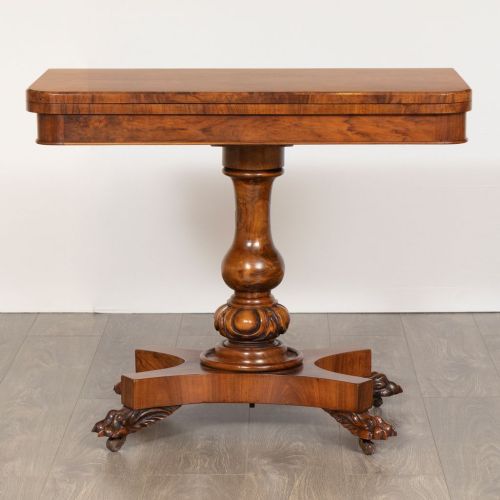
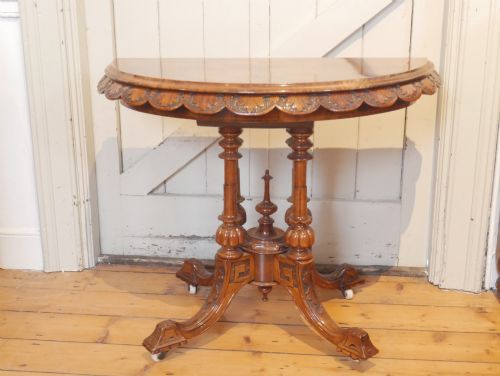
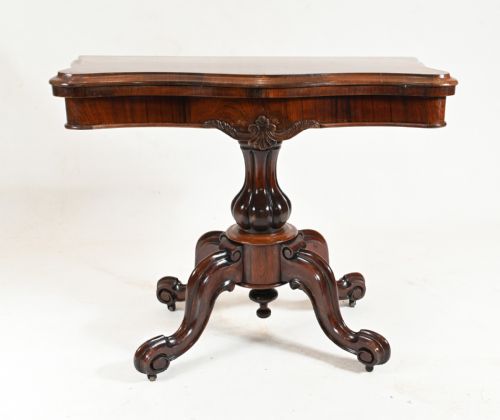
A mid victorian gaming table is typically encountered as a card table, tea and card table, or occasional table dating from the middle decades of the nineteenth century. These pieces usually feature a folding or turning top that conceals a lined playing surface beneath, designed for evening entertainment in the parlour.
The forms span from demi lune and butterfly shapes to chess top lamp tables and sewing combinations fitted with drawers. Walnut, burr walnut, rosewood, mahogany and kingwood dominate the selection, often enriched with intricate inlays and occasional ceramic or brass details.
How they were made
Cabinet makers utilised dense native and exotic timbers, selecting figured burr walnut and rich rosewood veneers for their decorative grain patterns. These veneers were painstakingly applied to stable secondary woods to create sweeping curves and polished surfaces.
Structural complexity defined these items, requiring robust pivot mechanisms, hinges and folding leaves that operated smoothly. Carved pedestals, cabriole legs and inlaid borders showcased the technical skill of nineteenth century workshops.
Walnut, burr walnut and rosewood dominate the material palette across these nineteenth century listings.
What varies in quality
The choice of timber veneer sets the baseline for visual appeal, with richly figured burr walnut and Circassian walnut commanding greater presence than plainer boards. Finer examples display meticulous matching of grain across the folding leaves and tabletops.
Carving depth and the crispness of inlaid details distinguish superior workshop output from simpler production. The mechanical integrity of the turning and folding actions also marks the distinction between standard and exceptional pieces.
The Mid Victorian Gaming Table Glossary
- Demi lune
- A half moon shape. This describes tables with a curved front and a flat back designed to sit flush against a wall.
- Burr walnut
- A growth deformity in the walnut tree that produces swirling, highly decorative grain patterns. Cabinet makers sliced this wood into thin veneers for tabletops.
- Rosewood
- A heavy, dense tropical timber with a deep reddish brown colour and dark grain markings. It was favoured for formal nineteenth century tables.
- Kingwood
- A hard, violet brown timber with darker streaks used for luxury cabinet work and banding. It appears on select refined games tables.
Mid Victorian Gaming Table: Frequently Asked Questions
What is a mid victorian gaming table?
It is a multi functional nineteenth century furniture piece designed for parlor games, featuring a folding or swiveling top that reveals a baize or wood playing surface.
These tables frequently double as tea or occasional tables when closed, combining decorative presence with practical utility in the home.
How do you use a card table?
The hinged top rotates and folds open to double the surface area, supported by a swing leg or the pivoting base itself.
Inside, you often find a lined surface intended for card playing, chess or writing, protecting the polished wood exterior during use.
What woods were used?
Walnut and burr walnut are the most common timbers seen in these nineteenth century pieces, alongside rosewood and mahogany.
Finer examples incorporate exotic woods like kingwood and satinwood for contrasting stringing and geometric inlays.
How do I date a gaming table?
Dating relies on stylistic clues such as the presence of Victorian Rococo Revival carving, butterfly shapes or specific Victorian proportions from the middle decades of the nineteenth century.
Construction methods, such as the type of hinge mechanism and secondary woods used internally, also help confirm the period.