



Mid Victorian Display Stand
A mid victorian display stand brings vertical elegance to a room, offering tiered shelving crafted from rich timbers for showing off cherished objects.
Mid Victorian Display Stand
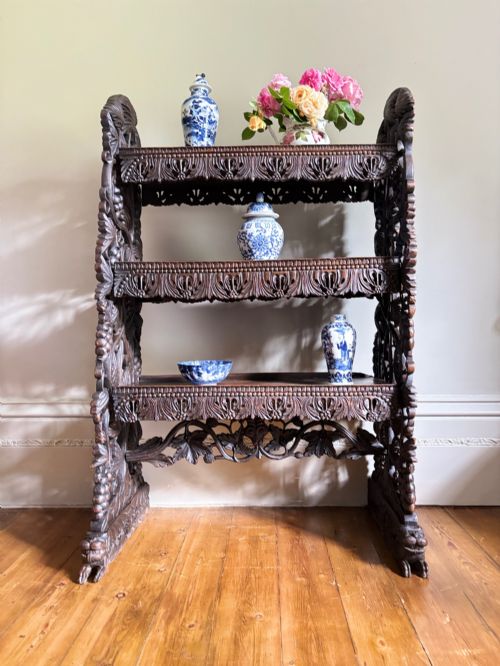
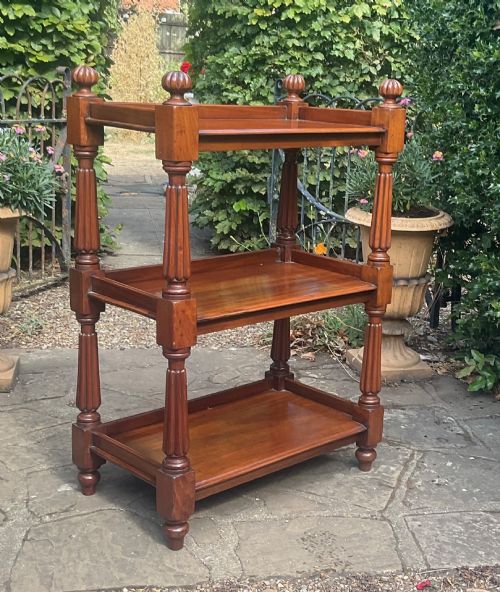
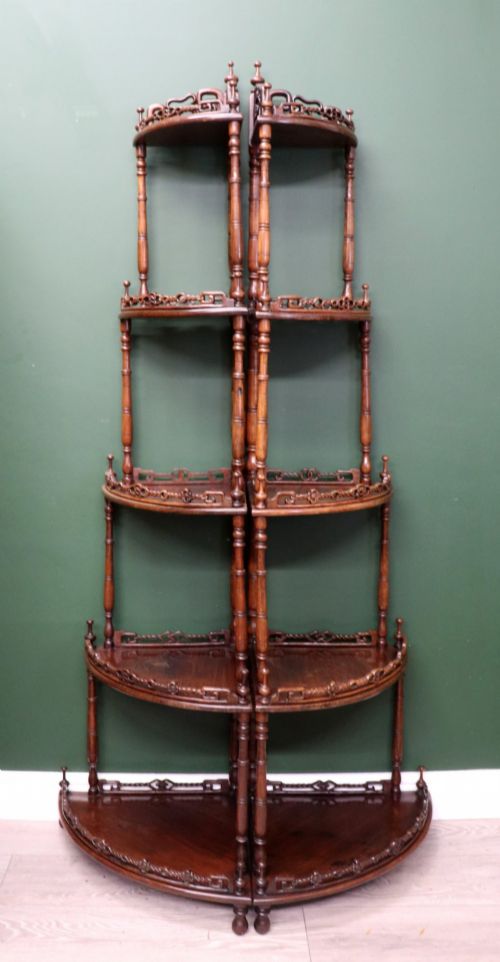
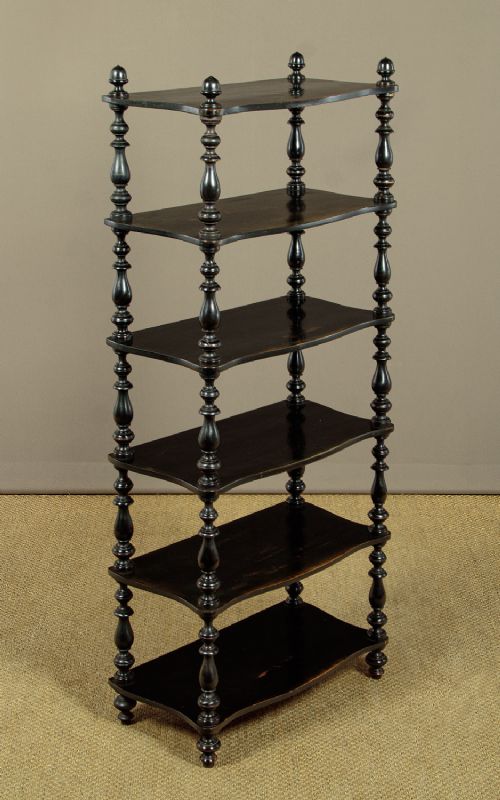
A mid victorian display stand encompasses multi-tiered shelving units, étagères, whatnots, corner shelves, and columns designed to exhibit ornaments and books. These pieces originate primarily from the nineteenth century, including specific dates around eighteen fifty, eighteen sixty, and eighteen seventy.
The most common formats on this page are mahogany and rosewood étagères and whatnots featuring multiple tiers. Buyers also encounter Anglo-Indian padauk pieces, ebonised wood dumb waiters, and French revival styles alongside marble columns.
How they were made
Cabinet makers built these pieces using dense hardwoods such as mahogany, rosewood, walnut, and padauk. Brass mounts and glazing frequently accent the timber frames.
Victorian households loved tiers so much they invented multi-level stands for everything from books to tea cakes.
What varies in quality
Quality differences emerge in the selection of timber and the complexity of the silhouette, ranging from simple mahogany framing to grand walnut proportions or exotic padauk. Finer examples display meticulous brass mounts and balanced proportions across multiple tiers.
Stylistic execution also separates standard production from exceptional pieces, such as those executed in the French manner or detailed Chippendale revival styles.
Holland & Sons
The Mid Victorian Display Stand Glossary
- Étagère
- A piece of furniture consisting of a set of open shelves for displaying small objects. These tiers are supported by slender columns or uprights.
- Whatnot
- A multi-tiered piece of nineteenth-century shelving used for storage and display. It typically stands in a corner or against a wall.
- Padauk
- A heavy tropical hardwood valued for its deep reddish colour and durability. It appears frequently in Anglo-Indian furniture.
- Ebonised wood
- Timber stained or treated to imitate ebony. This dark finish gained popularity during the Victorian era.
- Dumb waiter
- A tiered stand traditionally used for holding tableware or books. In nineteenth-century contexts, it functions similarly to a tall étagère.
Mid Victorian Display Stand: Frequently Asked Questions
What is an etagere?
An étagère is a freestanding piece of furniture featuring multiple open shelves designed specifically for display. These tiers allow light to pass through while holding decorative objects or books.
Originating in France, these pieces became popular in Victorian drawing rooms as a graceful way to utilise vertical space without crowding the room.
Where should I place a whatnot?
A whatnot works well against an empty wall or fitted neatly into a corner depending on its base shape. Their open shelving structure keeps rooms feeling light while providing ample display surfaces.
Keep them away from direct heat sources and strong sunlight to protect nineteenth-century wood finishes and veneers from drying out.
How do I identify a mid nineteenth century display stand?
Look for characteristic nineteenth-century timber choices such as solid mahogany, rosewood, or walnut, often combined with brass mounts or turned upright supports. Construction methods typically involve pegged joints and hand-finished timber surfaces rather than modern adhesives.
Stylistic cues often point to French revival or Anglo-Indian influences, aligning with the design vocabulary of the eighteen fifties and sixties.
How do I care for rosewood and mahogany shelves?
Dust the tiers regularly with a soft, dry cloth to prevent particle buildup on delicate wood grain. Apply a suitable wax polish occasionally to nourish the timber and maintain its natural lustre.
Avoid using modern liquid cleaning sprays, which can damage historic French polish and nineteenth-century finishes.