


Mid Victorian Card Table
A mid victorian card table brings ingenious folding mechanisms and rich burr walnut timber together for nineteenth-century entertaining.
Mid Victorian Card Table
A mid victorian card table is a dedicated piece of furniture designed for parlour games and social evenings, appearing frequently in walnut and rosewood throughout the nineteenth century. These tables typically feature a fold-over top supported by a swivel mechanism or pivoting action, revealing a baize-lined playing surface beneath when opened.
The pieces seen most often on this page date from the middle decades of the nineteenth century, spanning the eighteen-fifties to the eighteen-eighties. Alongside traditional card tables, the selection includes games tables and tea tables sharing similar period forms.
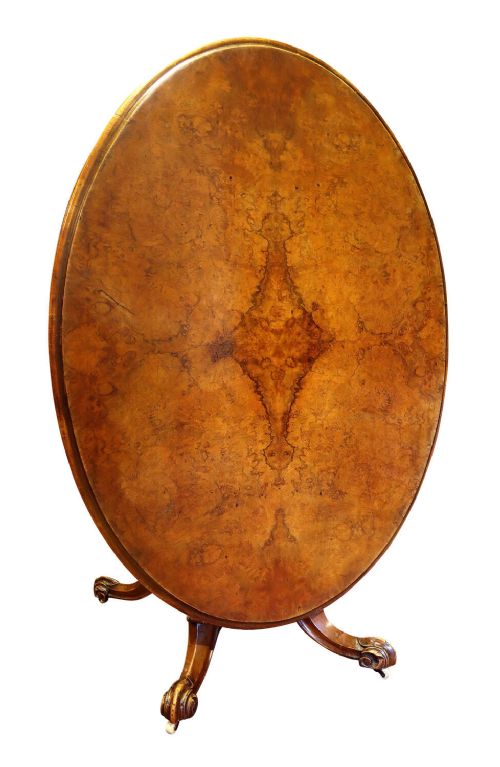
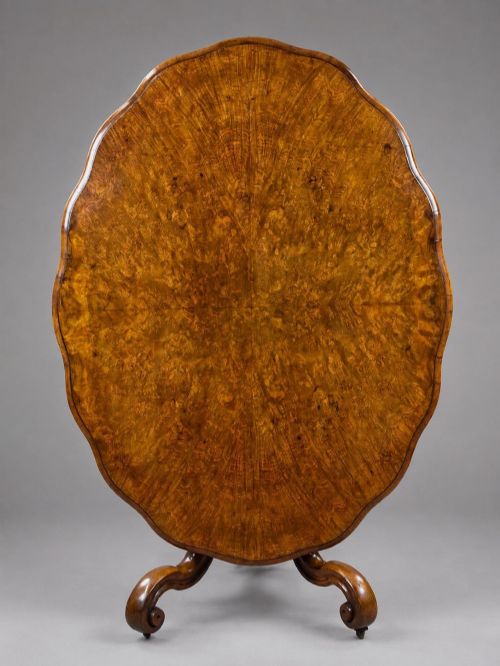
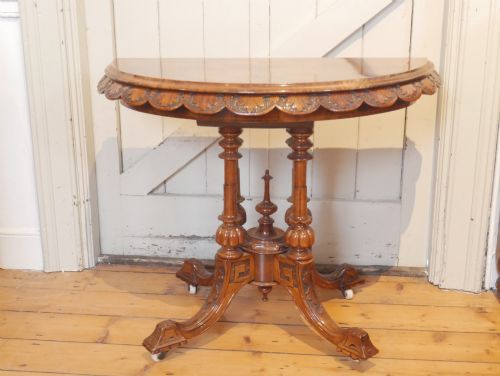
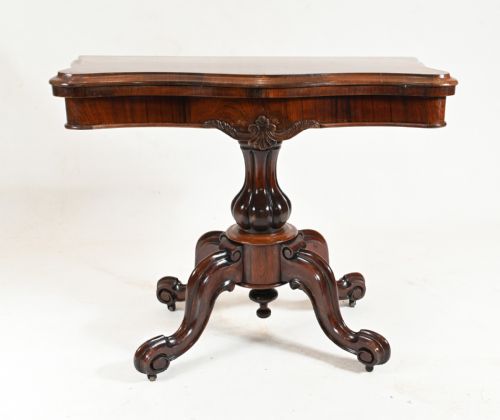
Most examples rely on timber frames finished with burr walnut veneer or rosewood, sometimes accented with carved details and pedestal bases. They function equally well as console tables against a wall when closed and as gaming surfaces when unfolded for guests.
What varies in quality
The choice of veneer and the skill of its application separate standard production from finer work, particularly in the symmetry of burr walnut grain patterns across the folding top. Superior pieces display carefully matched timber leaves that mirror each other when opened.
The solidity of the turning mechanism and the crispness of any carved ornamentation also determine the grade of the piece. Well-engineered hinges and substantial pedestal supports ensure the table remains stable in both its closed console position and its open gaming configuration.
Mid Victorian Card Table Retail Price Guide 2026
Typical asking prices for mid victorian card table among the pieces listed under this phrase on Sellingantiques today, from the lower quarter to the upper quarter. They describe what is for sale here now, not the wider market.
Listings on this page span the Victorian era from eighteen-fifty to eighteen-eighty, showcasing walnut, rosewood, and occasional brass and ceramic details.
The Mid Victorian Card Table Glossary
- Burr walnut
- A highly figured timber taken from walnut tree growths, prized for its swirling grain patterns and rich texture. Cabinet makers frequently used burr walnut veneer on the prominent top surfaces of mid-nineteenth-century tables.
- Fold-over top
- A hinged tabletop design that doubles the surface area when opened out for activities such as card games. This configuration allows a compact console table to transform into a wide playing surface.
- Pedestal base
- A central column support resting on carved feet rather than traditional four-corner legs. This construction provides ample legroom for seated players around the table.
- Demi-lune
- A half-moon shape with a curved front and a flat back edge designed to sit flush against a wall. Many card tables of this period utilise a demi-lune profile when closed.
Mid Victorian Card Table: Frequently Asked Questions
How do I open a mid victorian card table?
The top section typically swivels ninety degrees on its pedestal base before folding backward to rest upon the extended frame. This reveals a lined interior compartment used for storing cards and counters.
Care should be taken to support the weight of the pivoting leaf evenly during the opening movement to protect the internal wooden hinges.
Where should I place a card table at home?
These tables sit comfortably against a hallway or living room wall in their closed position, functioning as decorative console surfaces. Opening them occasionally for dining or games makes the most of their dual-purpose nineteenth-century design.
Keeping them away from direct heat sources protects the timber veneers from drying out.
How do I care for walnut veneer surfaces?
Dusting regularly with a soft, dry cloth helps maintain the polished finish of the burr walnut timber. Avoiding moisture and wax buildup preserves the historical integrity of the polish.
Maintaining a stable room temperature prevents the underlying wood and veneer from expanding or contracting.