




Mid Century Stool
These mid century stool examples bridge functional seating and decorative craft, offering versatile forms from various periods for daily use.
Mid Century Stool
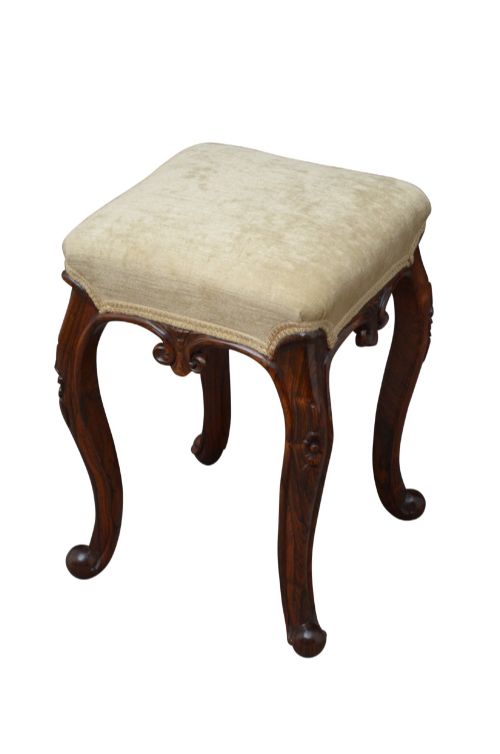
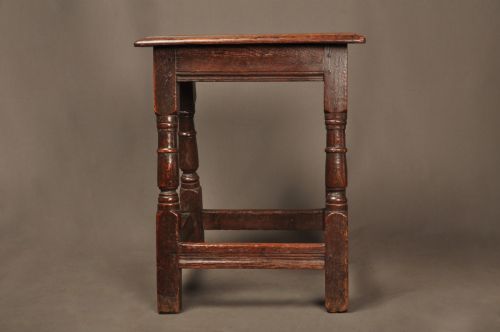
A mid century stool encompasses diverse historical seating forms, ranging from utilitarian dairy and lab stools to formal upholstered window seats and piano stools. Buyers searching for a mid century stool frequently encounter nineteenth-century walnut, mahogany, and rosewood frames alongside seventeenth-century oak joint stools and twentieth-century bentwood designs.
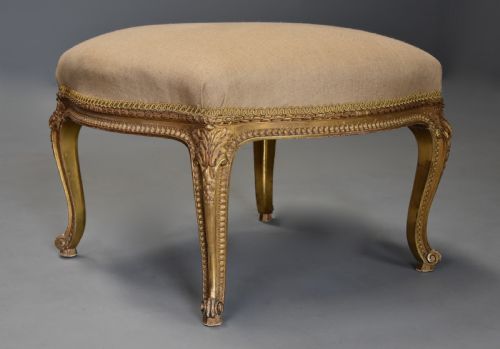
The selection on this page demonstrates broad stylistic influences, including Victorian Rococo Revival, French Rococo Revival, and Reformed Gothic manners. These pieces serve multiple domestic roles as footstools, gout stools, bar stools, and fireside seating.
Origins span English workshops, French makers such as Loidrault Frères Paris, and Swedish birch furniture. Each piece reflects the specific domestic requirements of its period, from dressing table seats to hall benches.
Materials and construction methods
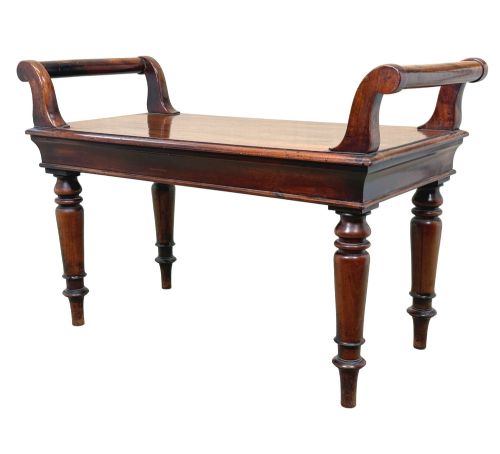
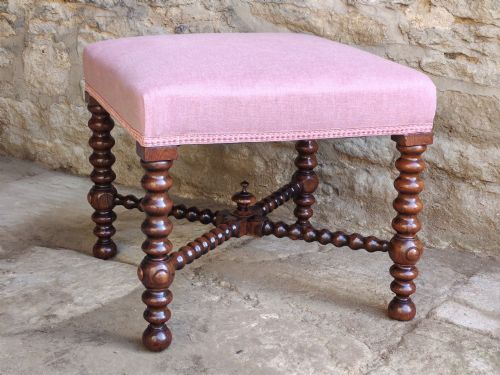
Carpenters utilised robust timbers including oak, mahogany, walnut, beech, birch, and exotic woods like goncalo alves, burr maple, and rosewood. Frames often incorporate carved giltwood, painted surfaces, or structural elements such as x-frames, bobbin legs, and cabriole legs.
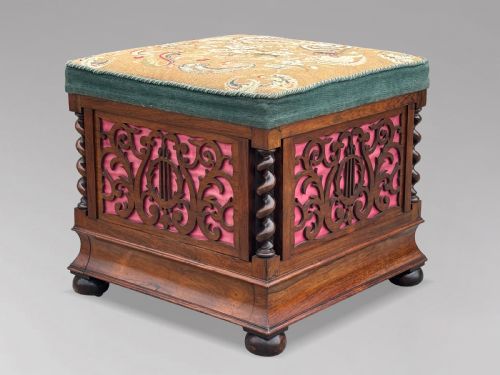
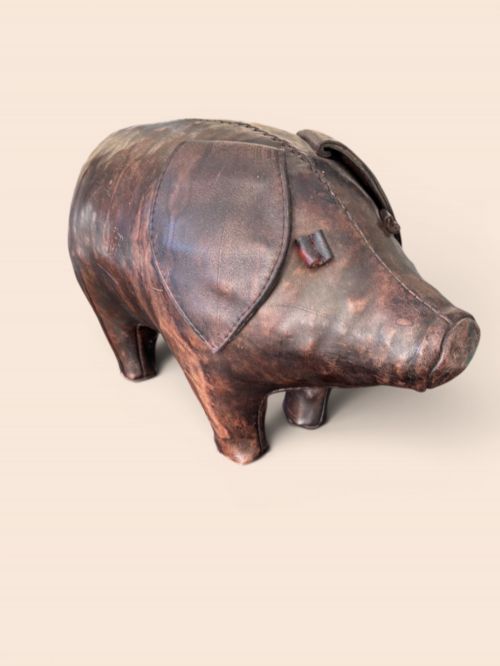
Upholstered variants rely on traditional fabric, velvet, leather, and needlepoint techniques like gros-point. Leather work is also seen in specialised animal-shaped forms like the Omersa Workshop pig footstool.
Mid Century Stool Retail Price Guide 2026
Typical asking prices for mid century stool among the pieces listed under this phrase on Sellingantiques today, from the lower quarter to the upper quarter. They describe what is for sale here now, not the wider market.
Listings feature woods spanning oak, mahogany, walnut, rosewood, beech, birch, and burr maple alongside fabric and leather upholstery.
Factors determining quality
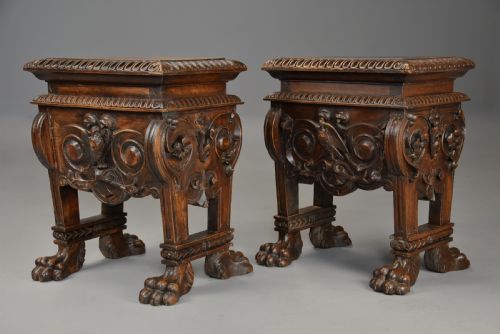
Distinctions in quality rest upon the selection of timber, such as burr maple or figured mahogany, and the crispness of hand-carved details found on walnut and giltwood frames. Original maker stamps, such as those from Parisian workshops, elevate the standing of a piece.
The integrity of original upholstery materials, needlepoint work, and structural joinery, particularly in seventeenth-century joint stools and nineteenth-century frames, dictates the enduring character of the seating.
Loidrault Freres Paris·Omersa Workshop·Liberty's
The Mid Century Stool Glossary
- Joint stool
- A traditional wooden stool constructed with mortise and tenon joints held together by wooden pins. These sturdy seventeenth-century pieces served various household functions.
- Gros-point
- A heavy needlepoint stitch worked on canvas, commonly utilised for durable nineteenth-century ottoman and footstool upholstery. It creates a textured, decorative surface.
- X-frame
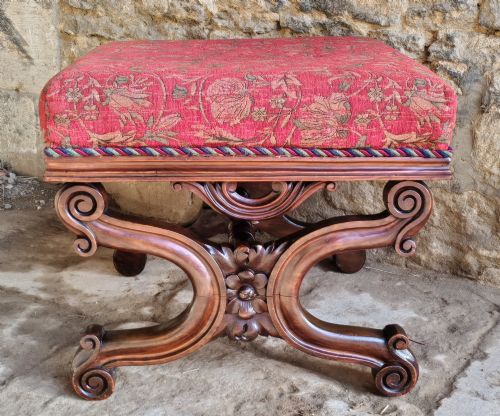
- A structural furniture base formed by intersecting diagonal legs resembling the letter X. This classical support appears on mahogany and walnut stools from the nineteenth century.
- Goncalo alves
- A dense tropical hardwood known for its striking contrasting grain patterns. English cabinet makers utilised this material for decorative Victorian dressing table stools.
- Cabriole leg
- A furniture leg that curves outward and then tapers inward, typically ending in a pad or foot. This design frequently characterises Victorian and revival seating.
Mid Century Stool: Frequently Asked Questions
What is a joint stool?
A joint stool is an early wooden seat built with pegged mortise and tenon joints rather than glue. These sturdy items date back to the seventeenth century and functioned as portable seating or small tables.
Their solid construction allowed them to survive centuries of domestic use. Today they are prized for their honest carpentry and historic oak patination.
How were window seats used?
Window seats were long, bench-like stools placed in large bay windows of substantial homes. They provided comfortable places to sit and read by natural light.
Over time, these forms evolved into decorative hall benches and centre stools. They remain versatile pieces for hallways and living spaces.
What distinguishes a gout stool?
A gout stool is a specialised nineteenth-century footrest featuring an adjustable inclined platform. It was designed to elevate and support the legs of individuals suffering from joint ailments.
Built predominantly in walnut or mahogany, these stools often retain movable ratchets. They offer a unique window into Victorian domestic health care and comfort.
What is bentwood furniture?
Bentwood is a technique where solid wood is steamed and bent into curved structural shapes. This method gained prominence for producing lightweight, durable, and practical stools.
Twentieth-century examples demonstrate clean lines and efficient manufacturing. They offer an accessible entry point into antique seating design.