


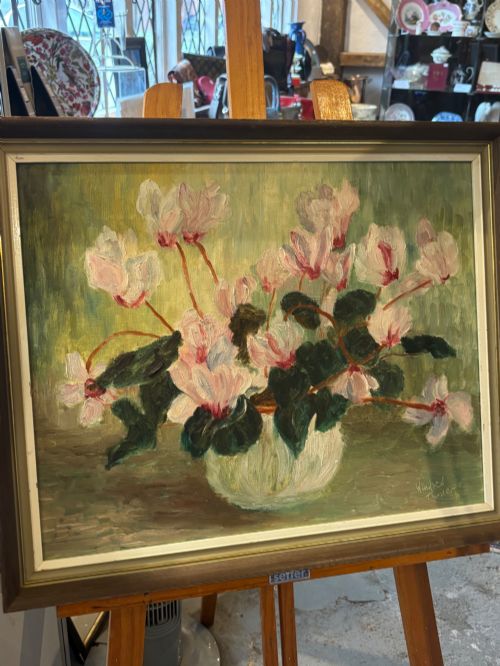


Mid Century Still Life Paintings
Mid century still life paintings capture domestic objects and botanical arrangements through the distinct lens of modernist and impressionist brushwork.
Mid Century Still Life Paintings
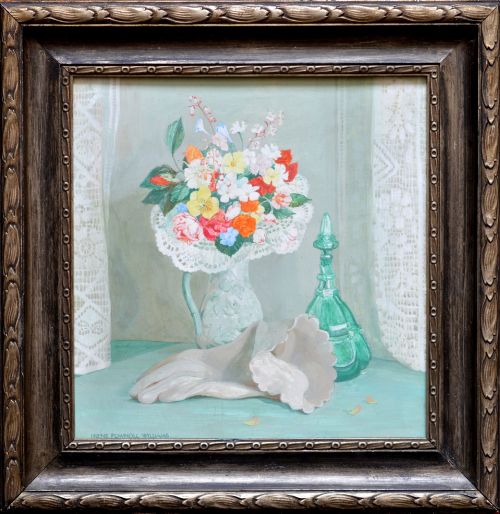
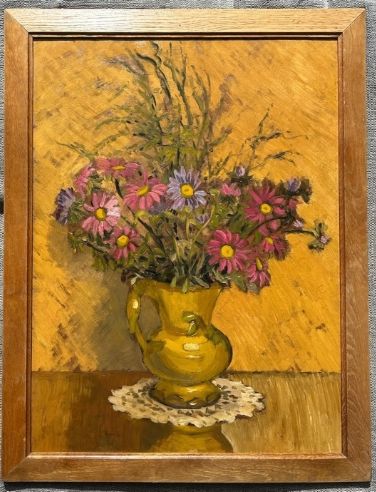
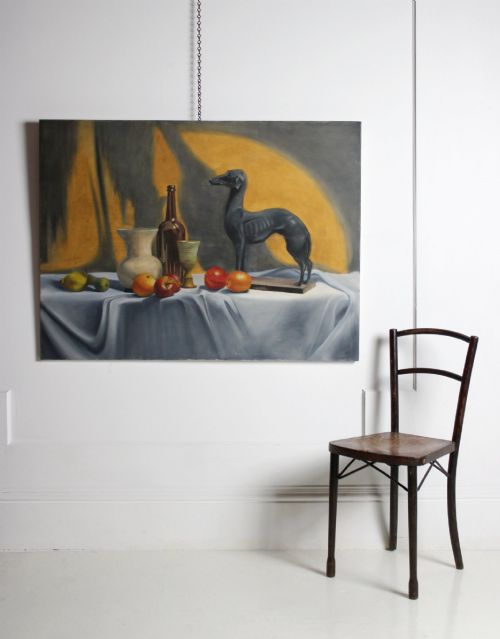
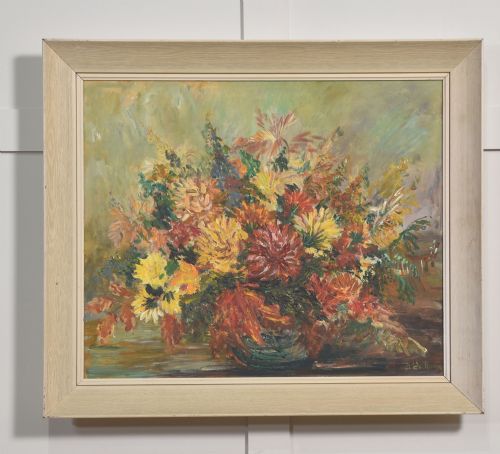
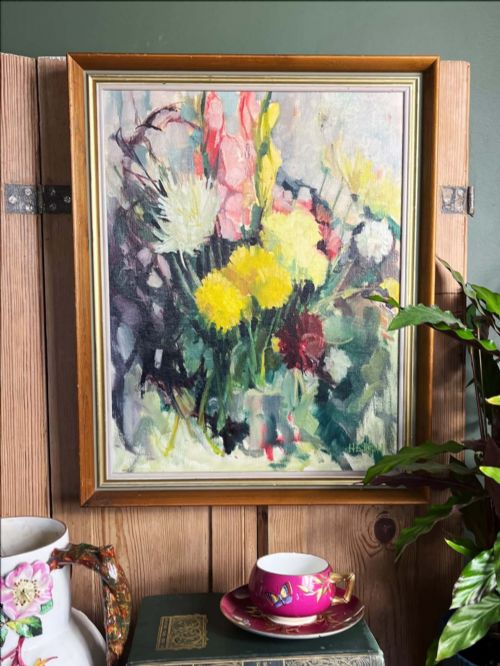
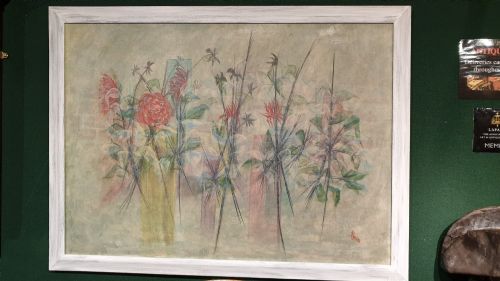
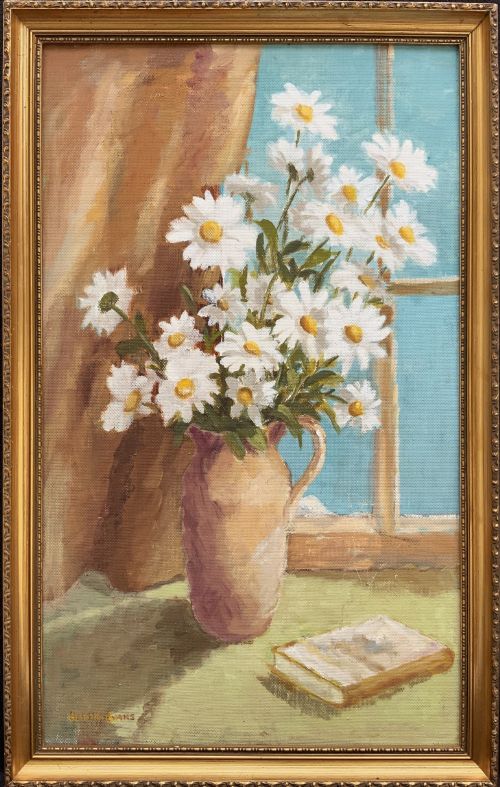
Mid century still life paintings represent a diverse period of interior art, spanning from the nineteen twenties through to nineteen sixty. These works typically depict arrangements of flowers, vessels, fruit, and occasional game rendered in styles ranging from traditional realism to abstraction.
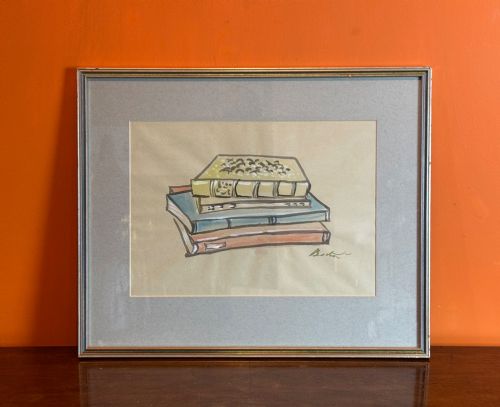
The selections available here lean heavily into mid-century modern, modern British, and European impressionist movements. Collectors encounter everything from delicate watercolour studies on paper to robust oil paintings executed on canvas, board, and panel.
How they were made
Artists of this era applied oil paint, tempera, watercolour, or pastel onto various supports including stretched canvas, wooden board, heavy paper, and panel. Canvases are frequently mounted in wooden frames, sometimes accented with gilt details.
Techniques varied widely, encompassing traditional brushwork alongside experimental approaches like mid-century impressionism, post-impressionism, and light cubist abstraction.
Several canvases capture modest arrangements of fruit and garden flowers, preserving quiet domestic moments from decades past.
What varies in quality
The calibre of a piece rests heavily on the confidence of the brushwork and the clarity of the composition. Masterful handling of light and colour across everyday objects distinguishes superior works from routine decorative studies.
Signatures, provenance, and attribution to known artists or distinct regional schools elevate a piece's standing. The relationship between the painted subject and its support also defines the overall execution.
Irene Christobelle Pownoll Williams·Kenneth Cozens·Denis Mitchell·James Tower·Winifred Turner·Amile Coppieters·A. Nikolokov·Henri Joseph Pauwels·J.Milton·Sir Matthew Smith·Bela Balogh·Robin MacKertich·Stuart Armfield·John Gilbey Bowles·Margaret Laing·Phyllis I Hibbert·Lena M Alexander
The Mid Century Still Life Paintings Glossary
- Oil paint
- A slow-drying medium consisting of pigments suspended in a drying oil, typically linseed. It allows for rich colour blending and textured impasto surfaces.
- Tempera
- A permanent, fast-drying painting medium consisting of coloured pigment mixed with a water-binder agent, often egg yolk. It produces a flat, matte finish prized for precise detail.
- Board
- A rigid substrate used in place of canvas, common for mid-century works. Artists frequently utilised hardboard or millboard for its stable painting surface.
- Impressionism
- An art style characterised by relatively small, thin, yet visible brush strokes and an emphasis on accurate depiction of light. Mid-century variants applied these principles to domestic interior scenes.
- Panel
- A flat wooden board used as a painting support. Panels provide a firm, unyielding surface that resists the sagging associated with aged canvas.
Mid Century Still Life Paintings: Frequently Asked Questions
What subjects do these paintings show?
These works predominantly feature domestic arrangements such as cut flowers in vases, bowls of fruit, pottery jugs, and tabletop items. Some examples extend to botanical studies of leaves and blossoms, alongside occasional depictions of game.
Artists utilised these familiar subjects to explore colour harmonies, light, and modernist abstraction without needing complex narratives.
How do I hang and display them?
Mid century still life paintings suit various domestic interiors, from retro-styled rooms to contemporary minimalist spaces. Ensure they are hung away from direct sunlight to protect pigments, particularly watercolours and pastels on paper.
Most pieces arrive framed, allowing for straightforward wall placement. Matching the frame style to the era of the painting enhances the visual presentation.
How do I tell different periods apart?
Dating relies on stylistic shifts visible in the brushwork and composition, moving from traditional realism in the earlier decades toward abstracted forms by nineteen sixty. Materials also offer clues, as specific board types and canvas preparations align with particular decades.
Signatures, dates inscribed on the reverse, and artist biographies help narrow down the exact year of execution.
What defines modern British style?
Modern British painting reflects a distinct national engagement with European modernism, balancing observed subjects with expressive form and flattened perspective. Artists working within this tradition prioritised atmospheric colour over strict academic representation.
Such works often display a thoughtful economy of line and a restrained palette rooted in mid-century sensibilities.