


Mid Century Sapphire Ring
Discover a mid century sapphire ring for an engagement or cocktail ring, showcasing striking gemstones and period design.
Mid Century Sapphire Ring
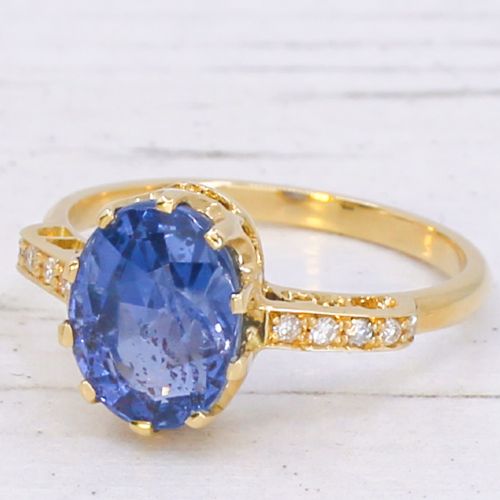
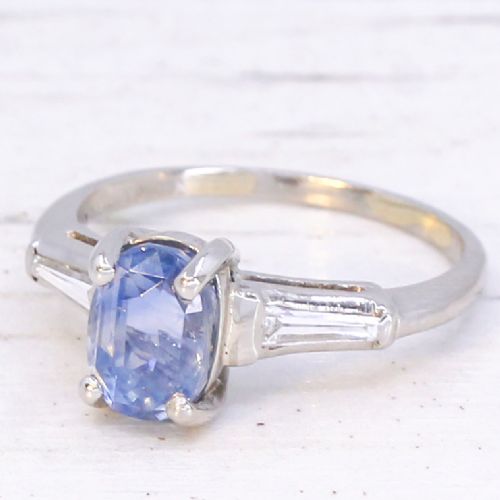
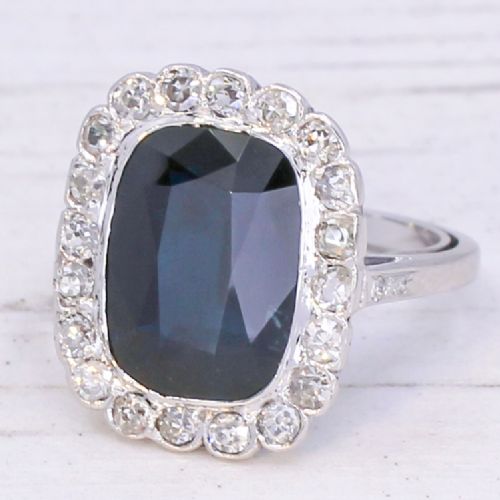
A mid century sapphire ring embodies the bold gemological choices of the 1940s, 1950s, and 1960s. These jewels range from delicate solitaire and trilogy configurations to substantial cocktail and cluster rings.
Makers of the period utilised platinum and gold, including 18ct yellow gold and 18ct white gold. Accompanying diamonds typically include old cut, rose cut, and modern brilliant facets set around central corundum.
How They Were Made
Craftsmen of the mid-century period mounted large central stones in platinum or white gold settings to enhance the optical brightness of the gems. Yellow gold appears frequently in heavier retro mountings and floral or crossover designs.
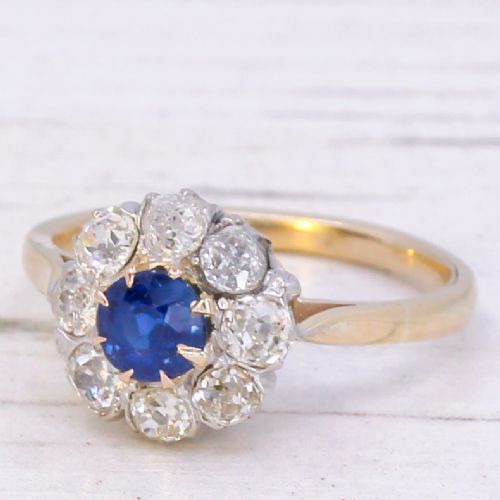
Cluster and target rings incorporate intricate arrangements of small diamonds surrounding the main sapphire. Prong, bezel, and pave techniques secure stones within architectural mountings characteristic of 1950s and 1960s jewellery production.
Mid Century Sapphire Ring Retail Price Guide 2026
Typical asking prices for mid century sapphire ring among the pieces listed under this phrase on Sellingantiques today, from the lower quarter to the upper quarter. They describe what is for sale here now, not the wider market.
Some mid-century designs incorporate clever engineering, allowing the wearer to flip the ring to reveal entirely different gemstones.
What Varies In Quality
Quality rests upon the natural origin, geographic provenance, and thermal treatment status of the sapphire. Stones certified as unheated from specific localities like Ceylon, Kashmir, or Burma command distinct interest among collectors.
The weight, clarity, and cut of the surrounding diamonds influence the overall calibre of the jewel. The harmony between the central corundum and the supporting precious metal framework defines the integrity of each design.
The Mid Century Sapphire Ring Glossary
- Ceylon Sapphire
- A sapphire originating from Sri Lanka, known for vivid colour saturation and high transparency.
- Cluster Ring
- A ring featuring a central gemstone encircled by a cluster of smaller diamonds or secondary stones.
- Cabochon
- A gemstone cut with a smooth, rounded, convex upper surface rather than faceted planes.
- Unheated
- A natural gemstone that has undergone no artificial heat treatment to enhance its colour or clarity.
- Trilogy Ring
- A ring set with three stones, typically representing the past, present, and future.
Mid Century Sapphire Ring: Frequently Asked Questions
What defines a mid century sapphire ring?
These rings originate from the 1940s through the 1960s, combining retro and mid-century modern aesthetics with substantial natural gemstones.
They utilise platinum, yellow gold, and white gold settings to frame sapphires in cluster, solitaire, or cocktail styles.
Are these sapphires treated?
Many stones in this selection are unheated, meaning they retain their natural geological colour without artificial thermal enhancement.
Specific listings note whether stones originate from renowned localities such as Ceylon, Kashmir, or Burma.
How do I wear a cocktail ring daily?
Cocktail and cluster rings feature prominent settings designed for evening wear and special occasions during the mid-century era.
Gentle daily wear requires attention to platinum or gold prongs that secure large centre stones and diamond borders.
What metal types are used?
Makers of the period worked extensively in platinum, 18ct yellow gold, and 18ct white gold.
Combinations frequently feature platinum settings paired with yellow gold shanks to highlight both the diamonds and the central sapphire.