


Mid Century Military Portrait
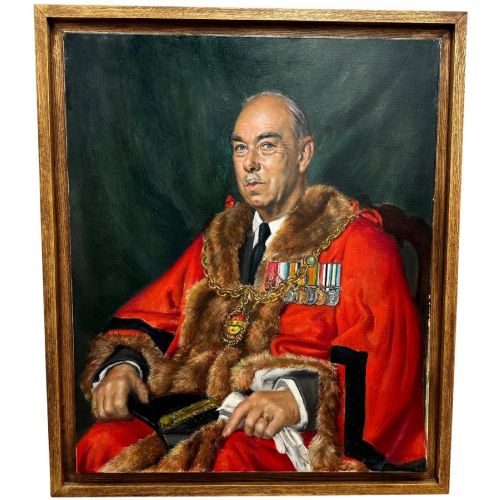
A mid century military portrait captures the gravity of service through the direct gaze of officers, monarchs, and decorated personnel.
Mid Century Military Portrait
When you search for a mid century military portrait, you encounter compelling depictions of armed forces personnel, commanders, and royalty rendered during the turbulent decades of the nineteen forties, fifties, and sixties. These works record identifiable figures such as mayors, marshals, and admirals alongside anonymous servicemen caught in the toll of war.
The pieces appearing on this page span several decades of the twentieth century, bringing together wartime illustration, realism, and mid century expressionism. You will find subjects wearing naval uniforms, regimental dress, and service uniforms, each captured with documentary intent or painterly vigour.
Alongside twentieth century output, the selection occasionally reaches back into earlier stylistic territory, incorporating Georgian sentiment and earlier aristocratic conventions into the mix. This variety ensures that every piece serves as both a historical document and a striking focal point for interior display.
Materials and methods
Artists working on a mid century military portrait primarily utilised oil paint applied to stretched canvas or wooden board, creating durable surfaces that have retained their rich pigment over the decades. This traditional medium allowed painters to build up the heavy braid, medals, and dark wool of military uniforms with considerable depth.
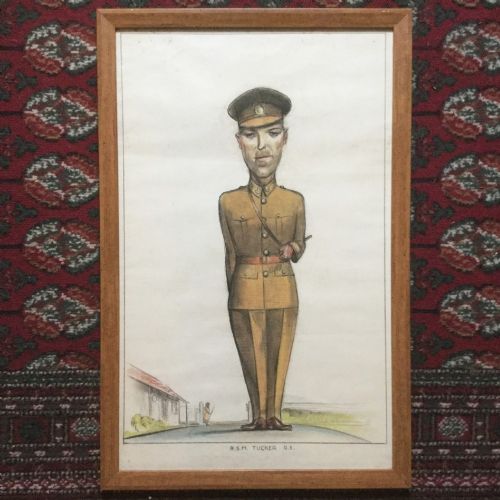
Pastel and gouache also appear frequently in these records, particularly for works executed rapidly during wartime conditions or intimate preparatory sketches. These paper based mediums offered immediate ways to capture likenesses without the drying time of oil paints.
Many of these works retain their original wood frames, which often complement the formal weight of the painted subject. The combination of canvas, pigment, and period framing defines the physical presence of these pieces.
Listings feature works spanning the nineteen forties, fifties, and sixties, alongside Georgian influences and seventeenth century revival styles.
Assessing quality
The distinction between standard works and exceptional examples rests upon the fidelity of the likeness and the confidence of the brushwork. A superior portrait transcends mere record keeping, imbuing the sitter with psychological presence rather than simply cataloguing ribbons and uniform details.
Provenance and documentation heavily influence the standing of a piece, especially when the subject is a named historical commander or royal figure. Signed works by recognised twentieth century artists carry distinct weight compared to anonymous school pieces.
Bernard Hailstone·Baruch Shalom Oskotsky·Aubrey Sykes·John Laviers Wheatley·Maurice Codner
The Mid Century Military Portrait Glossary
- Canvas
- A heavy woven fabric stretched across a wooden frame to form the primary support for oil paintings. It provides a flexible yet resilient surface that holds thick applications of pigment securely.
- Gouache
- An opaque water-based paint that dries to a matte finish, allowing artists to achieve solid blocks of colour and fine illustrative detail on paper. It was frequently deployed for wartime sketches.
- Pastel
- A dry medium made of powdered pigment and a binder, pressed into stick form for direct application to paper. It permits rapid blending of tones and subtle facial modelling.
- Oil on board
- A painting method where pigment is applied directly to a rigid wooden or composition panel rather than woven fabric. This substrate offers a completely stable plane without the bounce of stretched canvas.
- Rococo
- An ornate artistic style originating in the eighteenth century, characterised by asymmetry, scrollwork, and theatrical elegance. Elements of this aesthetic occasionally influence framing or decorative portrait backgrounds.
Mid Century Military Portrait: Frequently Asked Questions
What periods do these portraits cover?
The works on this page primarily date from the nineteen forties, fifties, and sixties, reflecting mid century artistic movements and wartime documentation. Earlier centuries also make occasional appearances through retrospective styles.
This broad chronological spread means you encounter everything from rapid wartime pastels to formal twentieth century oil paintings.
Are all the subjects identified?
Many portraits record specific historical figures, including naval commanders, air vice marshals, and royalty, complete with their service honours. Other pieces capture anonymous servicemen or generic military archetypes.
Both named and unnamed sitters offer equal historical resonance through their depiction of military service.
How should I frame these works?
Most pieces retain their original wood frames, which were selected to complement the formal nature of military portraiture. Preserving these housings maintains the historical integrity of the piece.
If reframing is necessary, choose conservative wood profiles that do not overpower the canvas or paper.
What is the difference between oil and pastel portraits?
Oil paintings on canvas provide a durable, textured surface capable of rich colour depth and long term stability. Pastels on paper offer a more immediate, delicate medium often used for rapid wartime studies.
Both require different conservation approaches, with pastels demanding strict protection behind glass.