
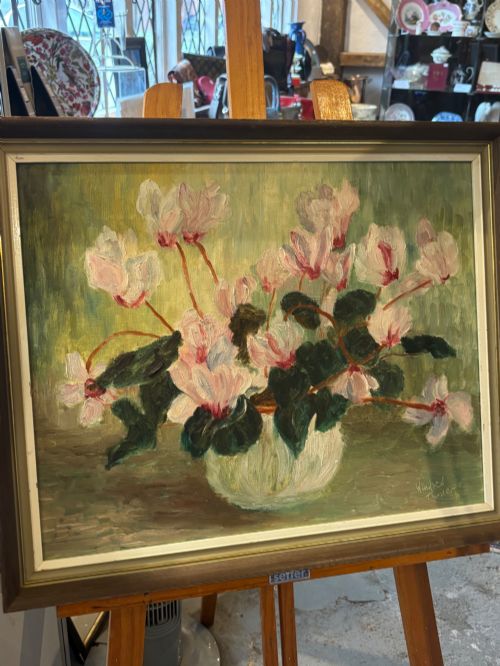


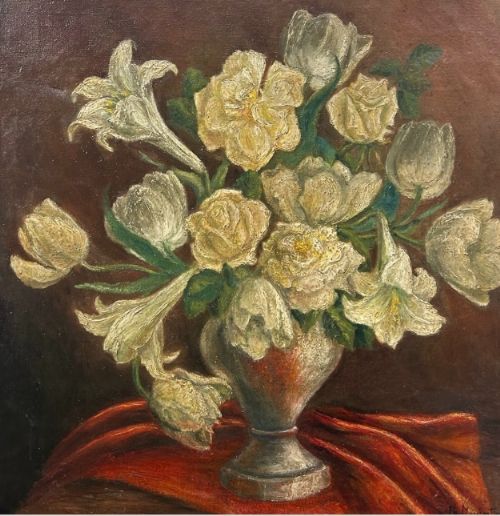


Mid Century Botanical Oil Painting
A mid century botanical oil painting brings vibrant floral studies and impressionist brushwork into interior spaces.
Mid Century Botanical Oil Painting
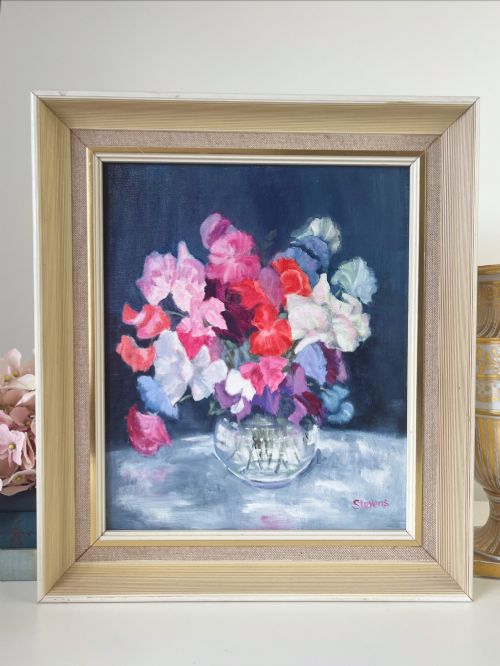
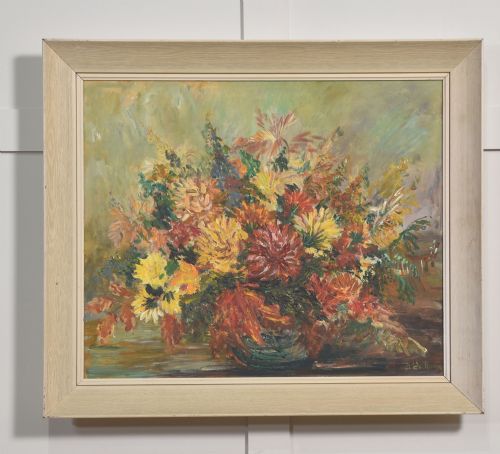
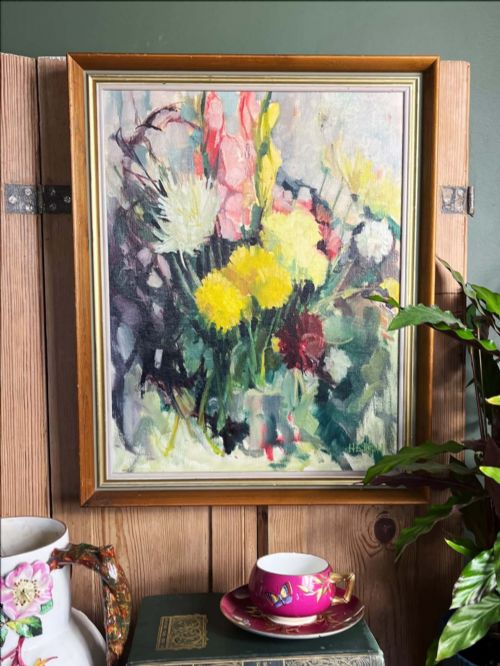
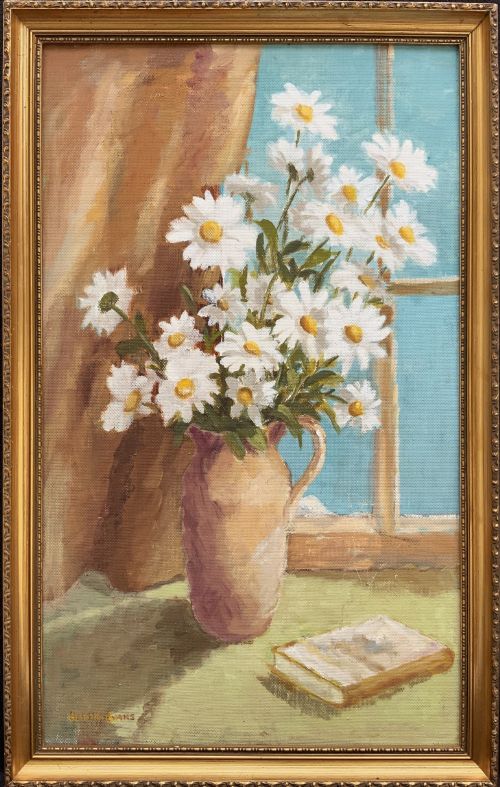
A mid century botanical oil painting captures floral arrangements, vases of spring flowers, and autumn blossoms through the lens of twentieth-century painting traditions. These works range from traditional still life compositions to impressionist studies created across several decades.
The pieces appearing on this page span styles from Mid-Century Modern and Impressionist to Modern British and traditional still life. Buyers frequently encounter framed works depicting daisies, orchids, lilies, and chrysanthemums rendered with varied handling of pigment.
Origins stretch from British studios to continental European workshops in France, Belgium, and Italy. Dates cluster primarily around the mid twentieth century, though examples reach back through the nineteenth century to earlier academic modes.
How They Were Made
Artists painted primarily with oil paint on stretched canvas, wooden board, metal sheets, or paper supports. The medium allowed for both smooth, controlled blending and thick impasto applications that gave physical depth to petals and leaves.
Support frames of wood and gilt moulding completed the presentation, often housing the canvas or board securely behind the painted surface. Painters utilised brushes and palette knives to build up textures and capture the play of light across floral subjects.
Several floral studies incorporate lucky charms and springtime blossoms designed to brighten interiors long after the season ends.
What Varies in Quality
Quality rests upon the confidence of the brushwork and the artist's command of tonal harmony within the floral subject. Stronger examples display deliberate composition and assured handling of light, whereas lesser pieces rely on rigid symmetry or flat colour application.
The preservation of the original paint surface and its housing frame determines the visual impact of the piece. Works retaining stable pigment without extensive touch-ups preserve the intended immediacy of the mid-century painter's vision.
D. L. Williams·Mark Ingram·Amile Coppieters·A. Nikolokov·J.Milton·Sir Matthew Smith·Terence Loudon·Robin MacKertich·Stuart Armfield·Bertoldo Taubert
The Mid Century Botanical Oil Painting Glossary
- Impasto
- Paint applied thickly to a canvas or board, standing out in relief from the surface. This technique adds tactile dimension to floral petals and foliage.
- Still life
- A work of art depicting mostly inanimate subject matter, typically commonplace objects which may be either natural or man-made. Floral arrangements form a central category within this tradition.
- Tempera
- A permanent, fast-drying painting medium consisting of coloured pigment mixed with a water-soluble binder material. It offers a flat, matte surface distinct from oil paint.
- Gilt
- Covered thinly with gold leaf or gold paint. Frames finished in this manner were commonly used to complement mid-century oil paintings.
Mid Century Botanical Oil Painting: Frequently Asked Questions
How should I hang a mid century botanical oil painting?
Position the painting at eye level on a wall with balanced ambient light, avoiding direct sunlight that could degrade oil pigments over time. Ensure the hanging hardware securely supports the weight of the wooden frame.
Pair these floral works with neutral wall colours to let the vibrant tones of the canvas stand out without visual competition from surrounding decor.
What is the difference between canvas and board supports?
Canvas supports consist of woven fabric stretched tightly over a wooden strainer frame, providing slight give under the brush. Board supports offer a rigid, flat foundation that painters often favoured for quicker studies and smaller compositions.
Both formats appear frequently across mid-century painting traditions and require similar environmental conditions to prevent warping or cracking.
How do I identify impressionist styles in these works?
Impressionist pieces focus on visible brushstrokes and the shifting effects of natural light rather than photographic precision. Artists rendered floral subjects through energetic marks and juxtaposed colours rather than hard outlines.
This approach gives mid-century floral studies a sense of immediacy and atmospheric warmth.
How do I care for an oil painting on canvas?
Maintain stable indoor humidity and temperature levels to prevent the canvas or wooden stretcher from expanding and contracting excessively. Dust the surface very gently with a soft, dry brush when needed without applying pressure.
Avoid using liquid cleaners or chemical solvents on the painted surface to preserve the original pigment integrity.