





Metal Trinket Chest
These metal trinket chest pieces are solid boxes shaped for keeping small valuables, built to last and finished with period detail.
Metal Trinket Chest
A metal trinket chest serves as a robust container for keeping small personal valuables, combining functional storage with decorative presence. When searching for a metal trinket chest, a buyer encounters forms ranging from simple lidded boxes to elaborate caskets modelled on medieval coffers.
The pieces on this page span the nineteenth and early twentieth centuries, drawing on Victorian, Gothic Revival, Art Nouveau, and Arts and Crafts styles. French examples and German steel work appear alongside Islamic Southeast Asian pieces and domestic British or continental designs.
Most entries function as jewellery boxes, jewellery caskets, or cigar boxes, offering fitted or open interiors suited to precious items. The materials vary widely, but cast metals and applied decoration dominate the selection.
Materials and construction
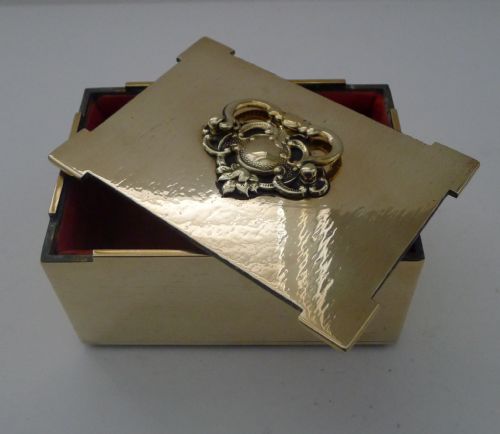
Makers utilised bronze, brass, steel, iron, copper, and silver, often combining them with gilt metal, enamel, or glass. Cast metal forms provide structural weight, visible in heavy coffer designs and cast brass jewellery boxes.
Surface finish is central to the manufacture, with silvering, gilding, and painting applied to enhance the base metal. Inlay work, such as silver wire on bronze, demonstrates specialised surface decoration techniques employed across different regions.
Metal Trinket Chest Retail Price Guide 2026
Typical asking prices for metal trinket chest among the pieces listed under this phrase on Sellingantiques today, from the lower quarter to the upper quarter. They describe what is for sale here now, not the wider market.
One unexpected box even takes the form of a thirteenth-century coffer, shrunk down to hold modern pocket change.
Distinctions in quality
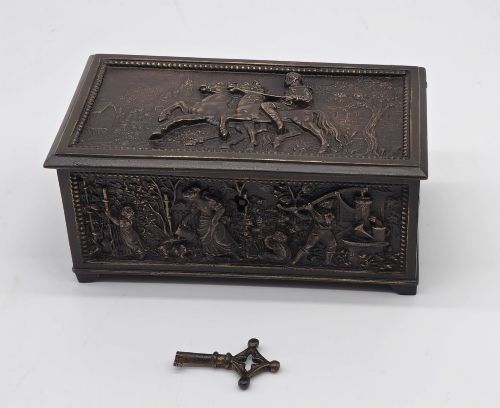
Quality rests in the crispness of the casting and the execution of surface ornament, whether that takes the form of rural scenes or flowing organic lines. Finer items exhibit precise chasing and fitting where the lid meets the body.
The choice of materials and the complexity of the decorative scheme differentiate standard production from finer examples. Integrated details such as original linings, secure hinges, and well-executed metalwork elevate an object's standing.
S Theeman·AB Paris·B Wicker
The Metal Trinket Chest Glossary
- Casket
- A small ornamental box or chest used for holding jewels, letters, or other valuables. These pieces often feature hinged lids and decorative feet.
- Coffer
- A strongbox or chest traditionally used for holding money or valuables, characterised by a heavy rectangular form and reinforced construction.
- Gilt metal
- Metal that has been covered with a thin layer of gold or gold-coloured material. This finish provides the appearance of solid gold while utilising a less expensive base metal.
- Repoussé
- A metalworking technique in which a malleable metal is ornamented or shaped by hammering from the reverse side. This creates low relief designs across the surface of the box.
Metal Trinket Chest: Frequently Asked Questions
What were metal trinket chests used for?
These boxes served to hold personal valuables, jewellery, letters, and small luxury items on a dressing table or desk. Their robust construction kept contents secure from dust and casual handling.
Over time, they evolved from purely utilitarian containers into decorative desk accessories that displayed the owner's taste and wealth.
How do I identify a Victorian metal box?
Victorian pieces often display historic revival styles, incorporating Gothic or classical motifs cast in heavy brass or bronze. Look for deep relief casting and decorative feet.
Makers of this era frequently drew on historical precedents, producing miniature coffers and ornamented caskets with complex surface patination.
Are Art Nouveau metal chests common?
Art Nouveau examples appear frequently, identifiable by flowing organic lines, stylised floral motifs, and sinuous plant forms. These pieces date from the late nineteenth and early twentieth centuries.
They often utilise bronze or copper, sometimes featuring painted panels or domed lids that emphasise the aesthetic movement's focus on natural curves.
How should I clean an antique metal box?
Dust the surface gently with a soft, dry cloth to prevent the accumulation of dirt in recessed ornament. Avoid using harsh chemical polishes that strip away historical patina and age.
If the piece has a gilt or silvered finish, moisture can cause damage, so professional advice should be sought before attempting any wet cleaning.