




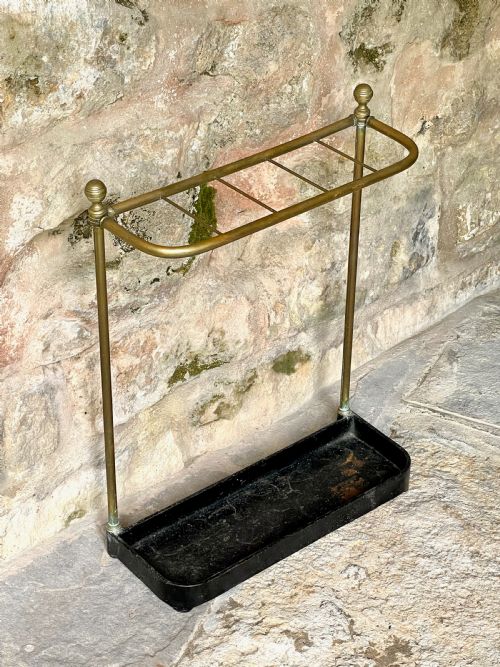
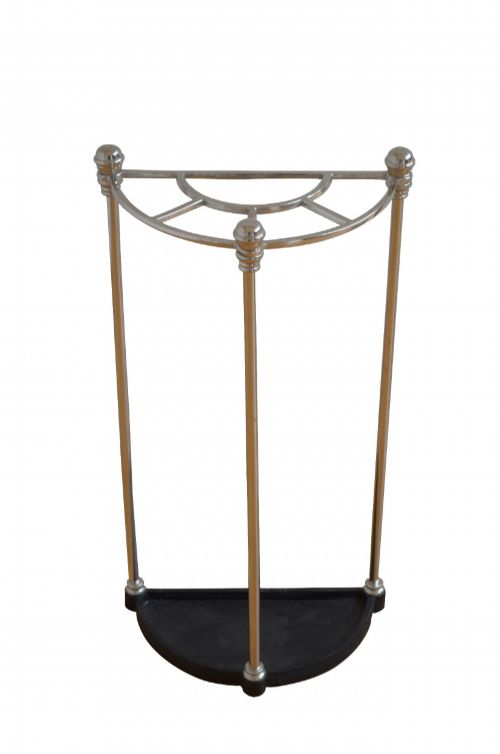

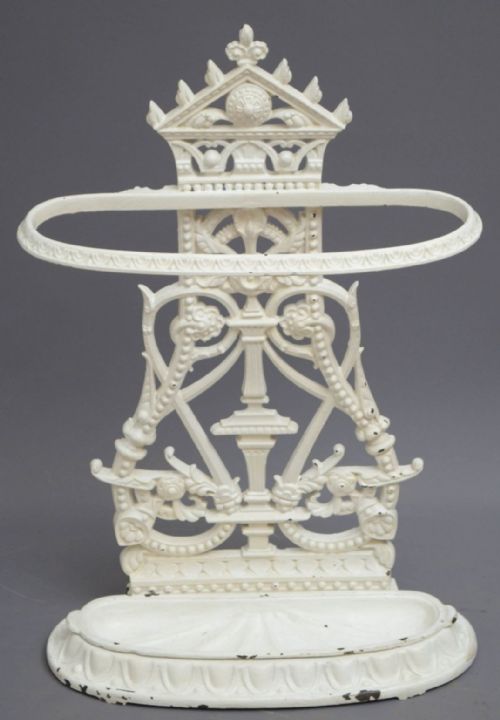
Metal Tray Stick Stand
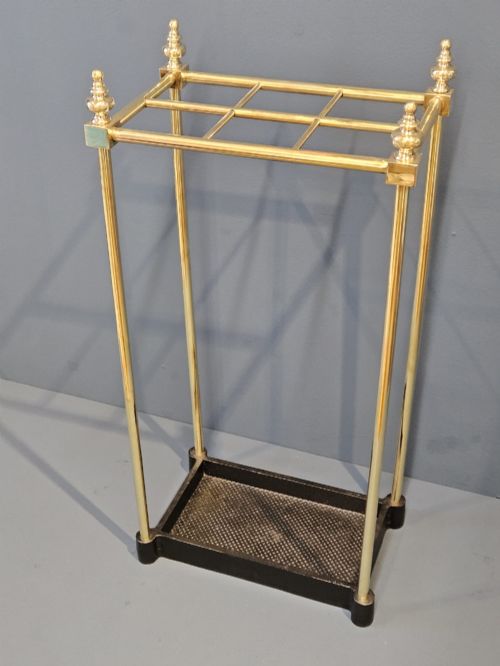
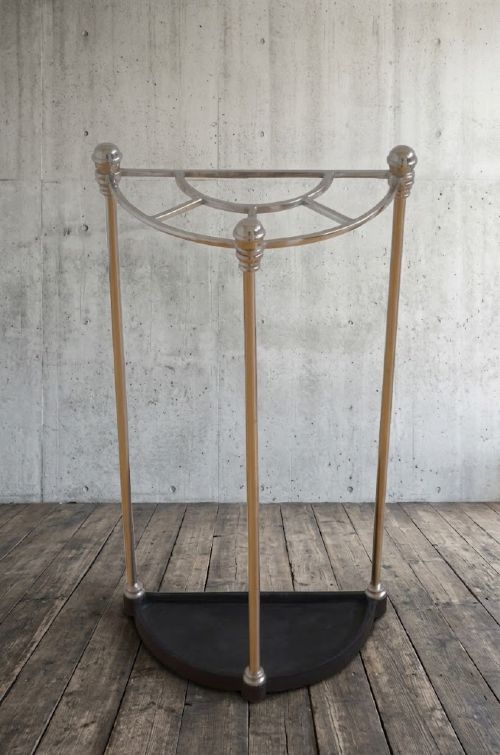
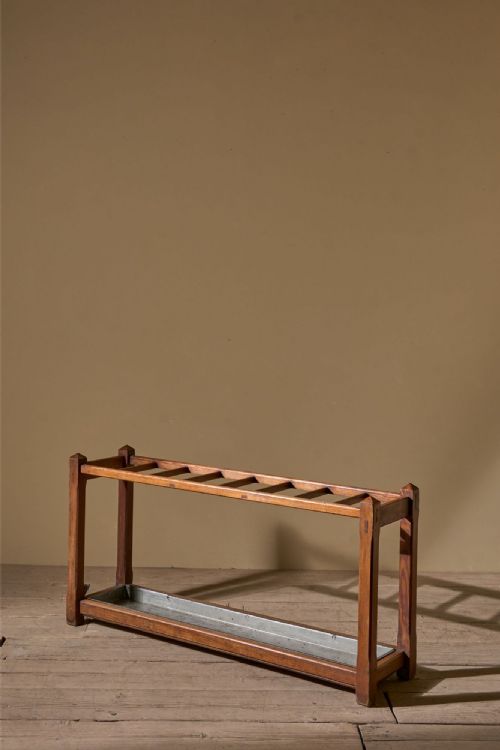
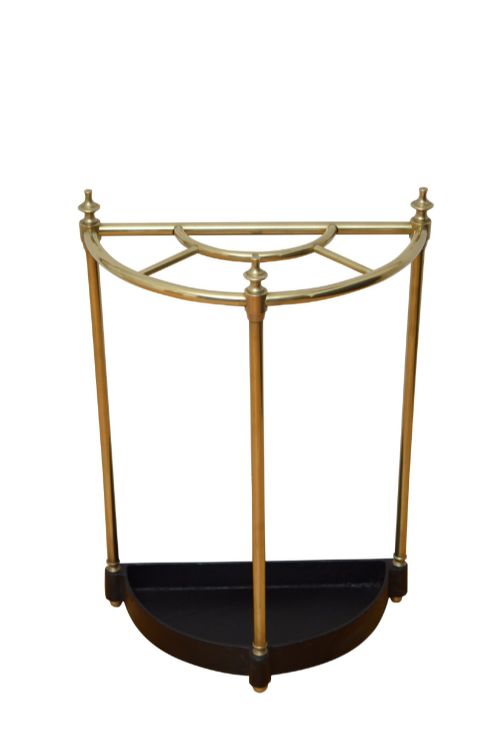
These metal tray stick stand examples keep hallways orderly by holding damp walking sticks and umbrellas.
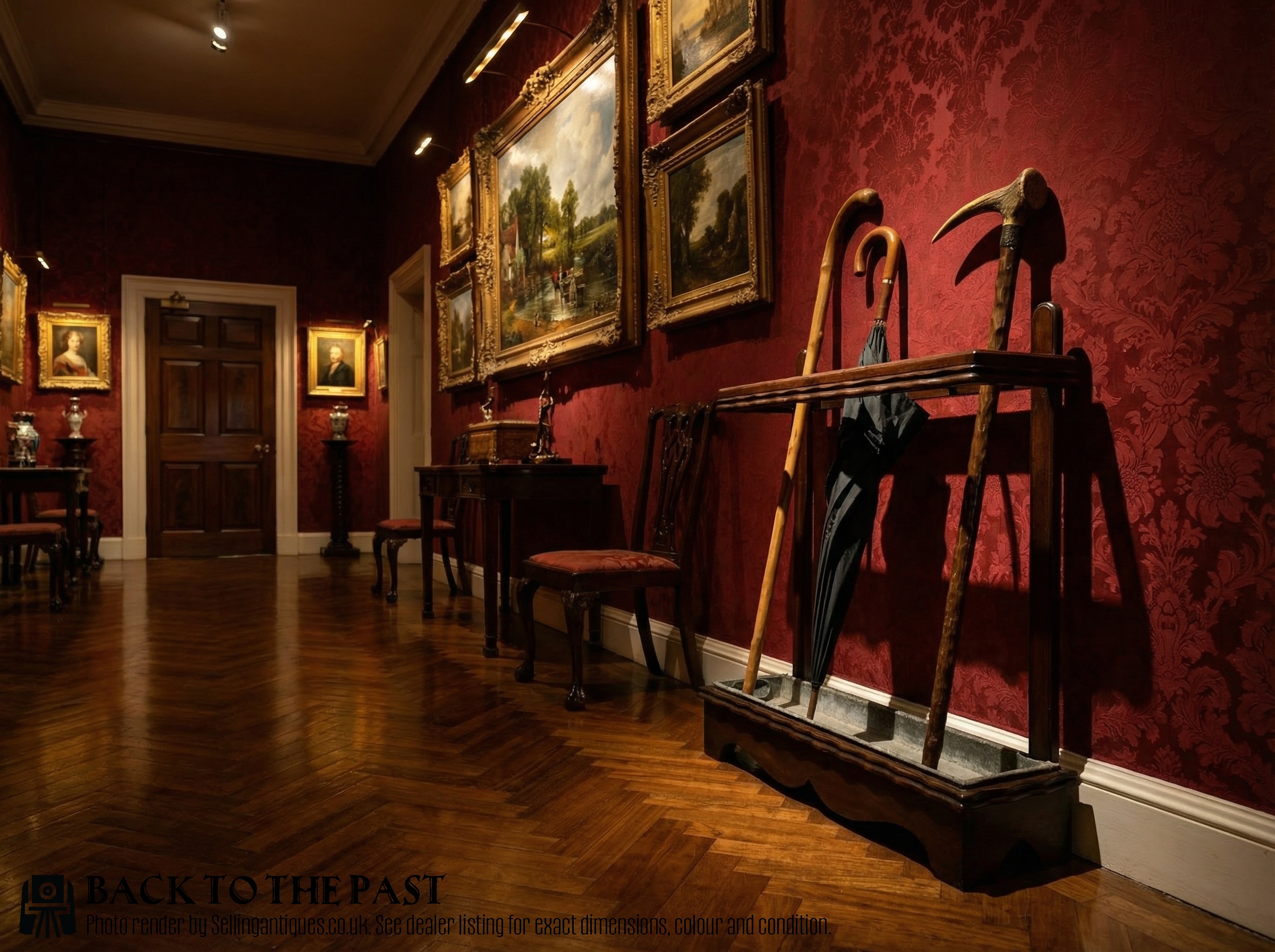
Metal Tray Stick Stand
When you search for a metal tray stick stand, you encounter hall furniture designed to catch rainwater and mud from walking sticks and umbrellas. These pieces appear across the nineteenth century, the Edwardian era, and into the art deco period of nineteen thirty.
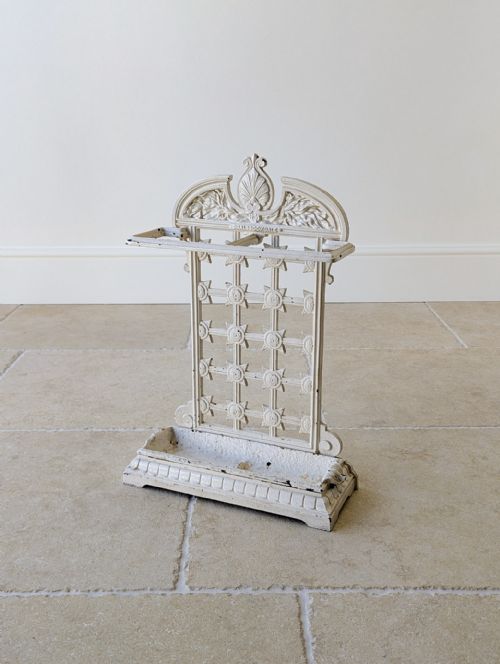
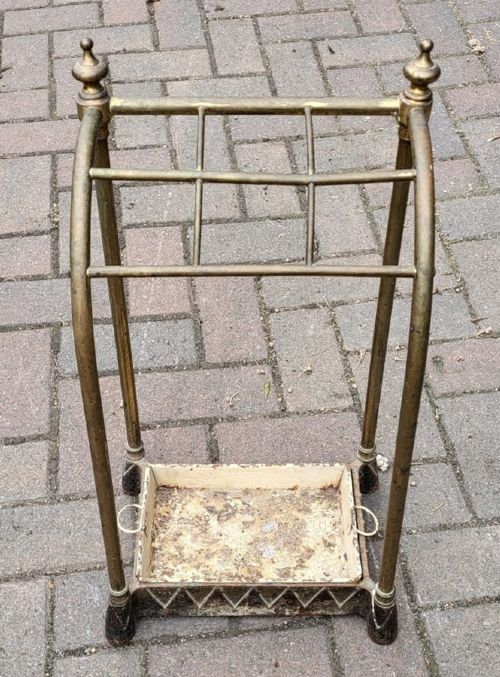
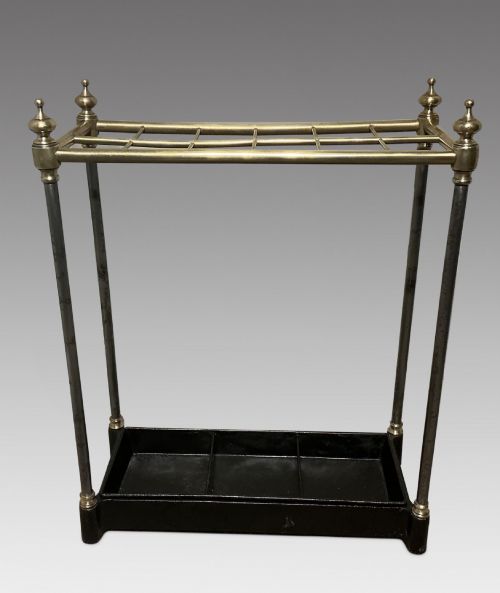
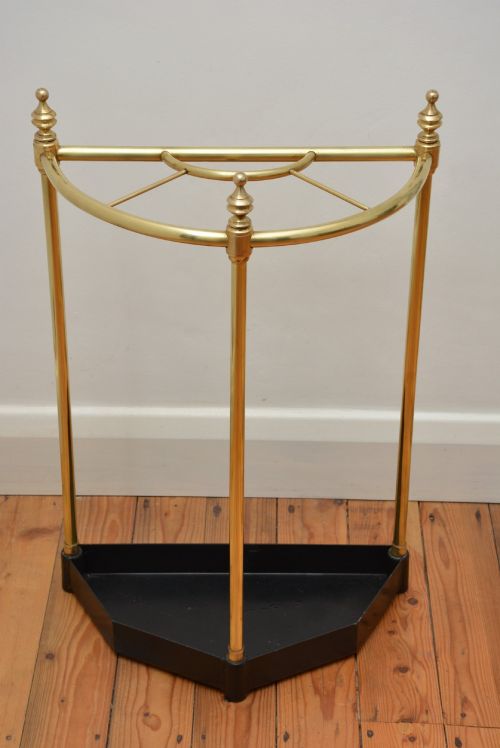
The most common formats on this page combine heavy cast iron or gleaming brass with a built-in metal or zinc drip tray at the base. Many adopt a demi-lune shape to sit flush against hallway walls, while others stand as substantial oval or rectangular hall pieces.
The materials span cast iron, brass, tubular metal, nickel plating, and occasionally oak, walnut, or pine frames fitted with metal trays. Victorian cast iron examples frequently display ornate patterning, whereas later nineteenth century and art deco versions lean towards sleek nickel plating or minimalist demi-lune curves.
Materials and construction methods
Foundry work dominates the manufacturing of these pieces, utilising cast iron poured into decorative moulds to create sturdy frames and intricate openwork grilles. Makers combined these heavy iron bases with sheet metal or zinc trays designed to lift out independently for emptying and cleaning.
Brass elements were cast or rolled into tubular supports and loop dividers, frequently polished to a bright finish or paired with contrasting iron components. Wooden elements in oak, walnut, or pine were turned and joined to form frames that incorporated metal trays at the floor level.
Metal Tray Stick Stand Retail Price Guide 2026
Typical asking prices for metal tray stick stand among the pieces listed under this phrase on Sellingantiques today, from the lower quarter to the upper quarter. They describe what is for sale here now, not the wider market.
Many of these sturdy iron guardians survived decades of muddy boots and dripping brollies without losing their decorative charm.
Distinctions in craftsmanship and design
The calibre of a cast iron piece rests upon the crispness of the casting detail and the complexity of the pattern, such as gothic revival motifs or fern designs associated with makers like Coalbrookdale. Simpler cast frames lack this sculptural depth and rely purely on utilitarian form.
Finishes separate standard production items from finer hallway furnishings, particularly where heavy nickel plating or polished brass meets robust structural division bars. The presence of an original, well-fitted metal tray matching the period of the stand elevates the integrity of the piece.
Coalbrookdale
The Metal Tray Stick Stand Glossary
- Demi-lune
- A half-moon shape designed to stand flat against a hallway wall. This configuration saves valuable floor space in narrow entryways while accommodating multiple walking sticks.
- Cast iron
- An iron-carbon alloy poured into moulds to create rigid, heavy structures. It allows for intricate decorative relief work on nineteenth century hall stands.
- Nickel plating
- A thin protective layer of nickel applied to brass or base metals to provide a silvery, corrosion-resistant finish. This treatment is particularly common on art deco pieces.
- Drip tray
- A removable metal basin seated at the base of the stand to catch water and mud. It protects wooden or stone hallway floors from moisture damage.
Metal Tray Stick Stand: Frequently Asked Questions
How do I clean a cast iron stand?
Dust the surface regularly with a soft brush to prevent dirt buildup in the intricate casting recesses. Avoid harsh chemical cleaners that can strip historic finishes from the iron.
Dry the metal thoroughly if it comes into contact with moisture from wet umbrellas. Apply a light microcrystalline wax to protect the surface from rust.
Are these stands suitable for modern hallways?
Their narrow profiles, especially demi-lune designs, allow them to fit neatly into contemporary corridors and entrance spaces. They offer practical utility for daily use alongside historical character.
The integrated metal tray safely contains dampness from modern umbrellas and walking poles. This protects interior flooring while keeping everyday items organised.
What is the purpose of the ring divisions?
The upper loops and rings keep individual sticks and umbrellas upright and separated. This prevents tall items from tangling or sliding sideways out of the frame.
Heavier Victorian ring arrangements provide structural stability to the entire standing composition. They also distribute weight evenly towards the base tray.
How do I date an iron stand?
Examine the casting quality, fastener types, and stylistic motifs such as gothic revival or art nouveau curves. Victorian examples often feature registration marks or maker attributions cast directly into the metal.
Later Edwardian and nineteen thirty variants display smoother lines, nickel plating, or simpler geometric dividers. The construction of the base tray also reflects period manufacturing techniques.