




Metal Pedestal Lamp
These metal pedestal lamp designs provide sculptural illumination and structural height, uniting utility with decorative character across diverse periods.
Metal Pedestal Lamp
A metal pedestal lamp combines a vertical column or stand with lighting functionality, often appearing alongside related support furniture like lamp tables and plant stands. These objects emerge from periods spanning the eighteenth century through to the art deco era of the 1930s.
The selection ranges from tall floor-standing torcheres and uplighters to compact table designs. Materials frequently incorporate brass, chrome-plated metal, and mixed elements such as marble bases or glass tops.
Stylistic influences vary widely, drawing upon neoclassical vocabulary, French empire details, and Amsterdam school aesthetics. Buyers encounter everything from corinthian columns to twin figure table configurations.
How they were made
Construction relies heavily on durable metals including cast brass, polished white metal, and chrome, paired with structural supports of marble and wood. Metal components are shaped through casting, turning, and plating to achieve rigid vertical pedestals.
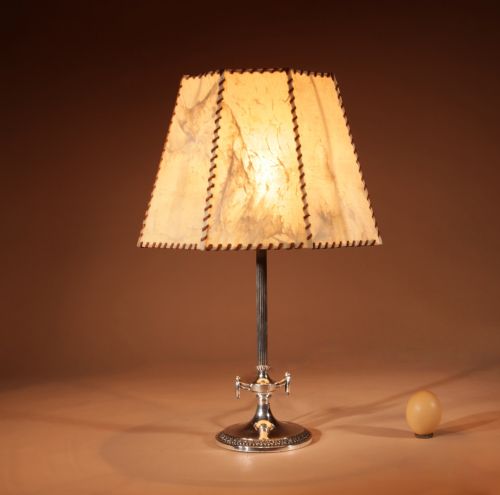
Many examples integrate contrasting elements such as mirrored glass tops, parchment leather accents, and fabric shades. These diverse materials are assembled mechanically to maintain stability across both floor and table heights.
Some nineteenth-century French lamps disguised their practical wiring inside elaborate painted metal foliage.
What varies in quality
Quality depends upon the precision of metal casting, the weight and stability of the pedestal base, and the integrity of mixed materials like marble and brass. Superior examples demonstrate crisp surface detailing and harmonious proportions between the vertical shaft and the light source.
The sophistication of the stylistic execution distinguishes standard utility pieces from more ambitious decorative works. Selection of high-grade finishes, such as polished chrome or gilt bronze mounts, elevates the overall presence of the object.
The Metal Pedestal Lamp Glossary
- Torchere
- A tall standing floor lamp or candle holder designed to direct light upward. These fixtures provide dramatic ambient illumination within a room.
- Corinthian column
- An architectural order featuring ornate capitals decorated with acanthus leaves. This classical motif frequently forms the central shaft of brass table lamps.
- Uplighter
- A floor lamp configuration directing light toward the ceiling. This design produces indirect, diffused illumination across the space.
- Toleware
- Painted or lacquered metalware originating in France. These items display decorative surface finishes applied to metal bodies.
- Amsterdam School
- An architectural and design movement from the early twentieth century. It emphasises expressive brickwork, organic forms, and rich metal detailing.
Metal Pedestal Lamp: Frequently Asked Questions
Where should I place a floor pedestal lamp?
These tall fixtures suit corners or seating groups where vertical emphasis is required. They project ambient light effectively without occupying excessive floor space.
Position them away from heavy foot traffic to protect delicate bases fashioned from marble or polished metal.
How do I identify art deco metal lamps?
Art deco designs from the 1920s and 1930s typically feature geometric lines, stepped forms, and polished chrome surfaces. Figures and streamlined profiles are common.
Look for contrasting materials like parchment leather and mirrored glass alongside the metal structure.
Can these lamps support heavy shades?
Stability depends entirely on the weight and diameter of the pedestal base. Heavy brass and marble foundations provide the necessary counterbalance for substantial fabric or glass shades.
Lighter tubular metal designs require balanced shades to prevent tipping.
What distinguishes neoclassical metal standards?
Neoclassical pieces draw upon ancient Greek and Roman architecture, displaying columns, urn motifs, and symmetrical arrangement. Brass and gilt bronze are frequent mediums.
These designs prioritize formal balance and classical proportions over modernist abstraction.