




Metal Hall Pendant
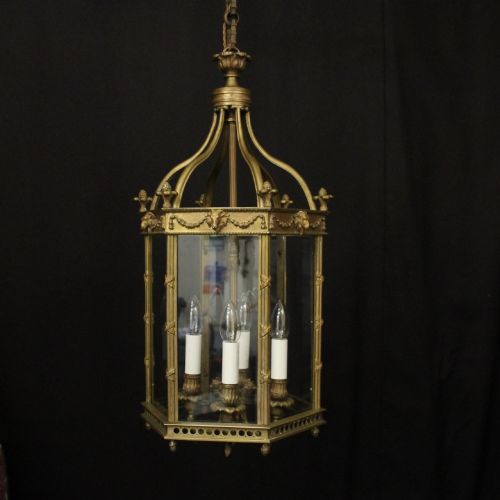
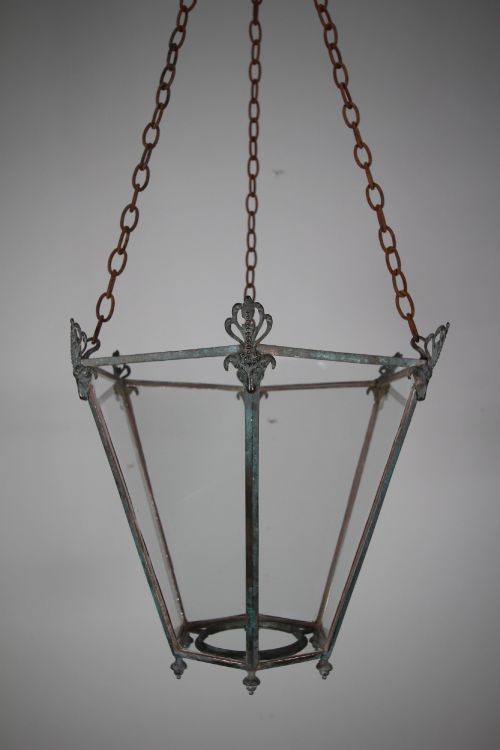
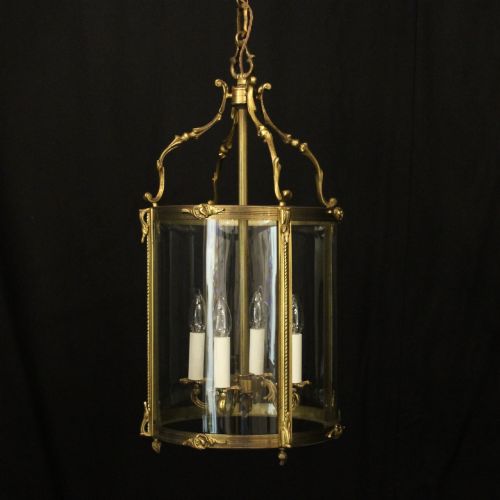
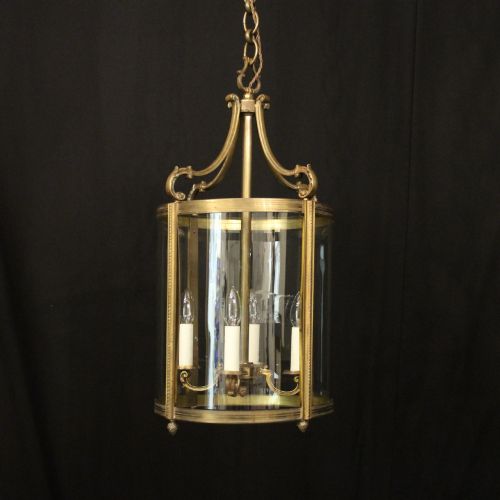
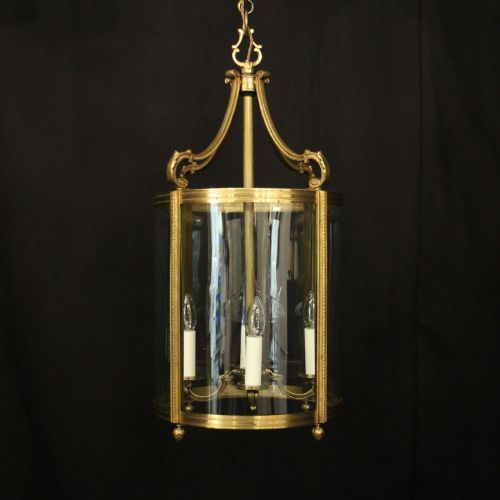
A metal hall pendant sits above the threshold, casting light through glass panels to welcome visitors into the house.
Metal Hall Pendant
A metal hall pendant brings architectural presence and illumination to entranceways, corridors, and stairwells. The selection here spans the nineteenth century through the nineteen-thirties, encompassing hanging lanterns, pendant lights, and ceiling fixtures.
Most examples originate from French workshops, with English and Italian pieces also appearing frequently. Formats range from single-light brass frames to large multi-light gilded bronze lanterns with convex glass panes.
Materials and construction
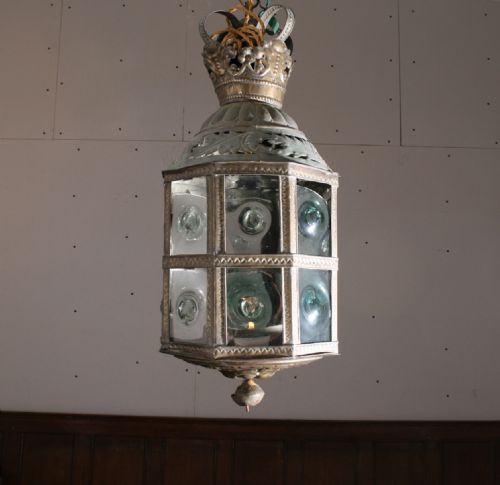
Maker's workshops utilised robust metals including brass, wrought iron, steel, and cast iron, often combining them with gilded bronze or ormolu for decorative effect. Frames were constructed to house glass panels, which include hand-blown bull's-eye panes, bevelled edges, and dimpled coloured glass.
Details such as blacksmith-made joints, shamrock motifs, and green man copper masks demonstrate traditional metalworking techniques. Metal surfaces received finishes ranging from polished silver gilt and polychrome to plain dark iron.
Metal Hall Pendant Retail Price Guide 2026
Typical asking prices for metal hall pendant among the pieces listed under this phrase on Sellingantiques today, from the lower quarter to the upper quarter. They describe what is for sale here now, not the wider market.
Judging the quality
Quality rests upon the weight and fineness of the metalwork, the clarity and thickness of the glass, and the crispness of any cast ornamentation. Pieces modelled after historical prototypes, such as those inspired by Versailles or Gothic revival designs, rely on accurate proportions and detailed chasing.
Scale also dictates character, as oversized examples and matched pairs require substantial framing to support heavy glass panels securely. The integrity of the original hanging loops and internal candle arms further distinguishes superior examples.
The Metal Hall Pendant Glossary
- Convex glass
- Curved glass panels that project outward to diffuse light more widely across a hallway. This type of lens is frequently found on French hall lanterns from the early twentieth century.
- Ormolu
- Finely chased gilded bronze applied to metal frames for decorative enrichment. It was utilised extensively in French neoclassical and nineteenth-century revival lighting.
- Toleware
- Painted or lacquered sheet metal used to form decorative lantern bodies. Polychrome examples introduce colour alongside gilt metalwork.
- Bull's-eye glass
- Thick glass formed with a central circular knot or distortion from the blowing process. It provides texture and obscures direct views of the interior bulb.
- Bevelled glass
- Glass panes with angled edges cut and polished to catch and refract light. This treatment adds subtle optical depth to the lantern sides.
Metal Hall Pendant: Frequently Asked Questions
How do I hang a heavy hall pendant safely?
These fixtures require secure anchoring into ceiling joists or solid masonry using appropriate fixings to support the weight of the metal frame and glass panels.
Electrical wiring must be routed carefully through the original suspension chain or rod without compromising the structural integrity of the hanging loop.
What periods do these metal lanterns represent?
The pieces span from the mid-nineteenth century through the nineteen-thirties, covering Victorian Gothic, Arts and Crafts, and early twentieth-century French designs.
Stylistic cues such as Gothic tracery, neoclassical mounts, or simple wrought iron work help indicate the era of manufacture.
Can these lights be used in modern hallways?
Their architectural scale and warm metal finishes suit contemporary interiors just as well as period entrance halls and high-ceilinged corridors.
They provide a strong focal point overhead while casting functional light across entryways and stairwells.
How do I clean antique glass and metalwork?
Glass panels can be removed carefully for washing with a mild detergent, avoiding harsh abrasives that might damage antique surfaces.
Metal frames benefit from gentle dusting with a soft cloth to preserve patination on brass, bronze, steel, and iron.