

Metal Fireplace Screen
A metal fireplace screen antique provides a physical barrier against sparks while framing an unlit hearth with brass, iron, or copper.
Metal Fireplace Screen
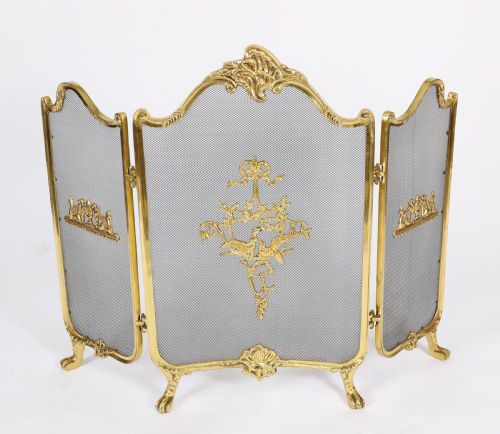
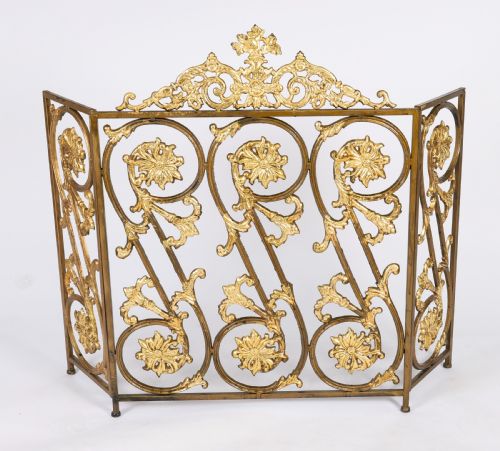
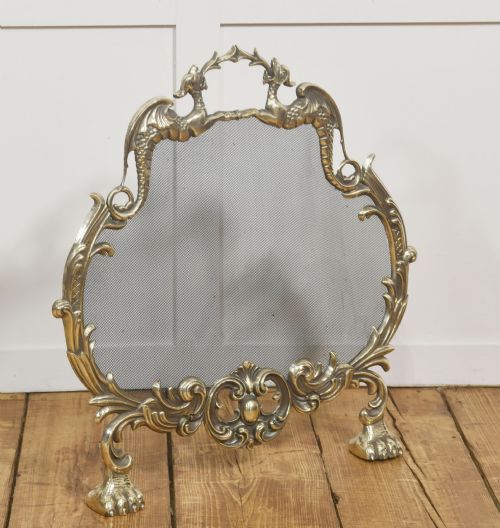
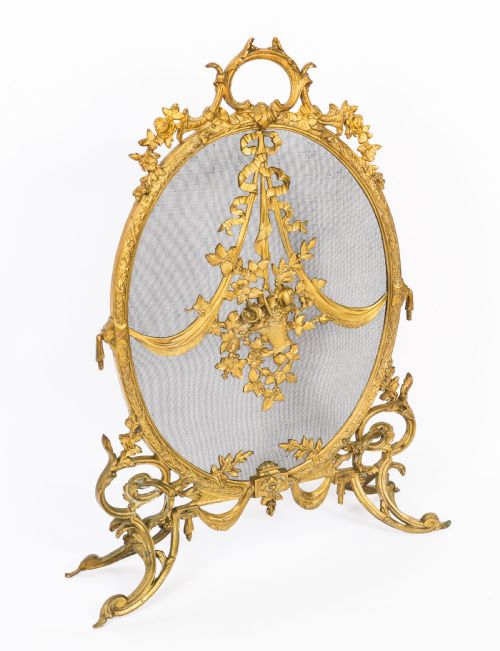
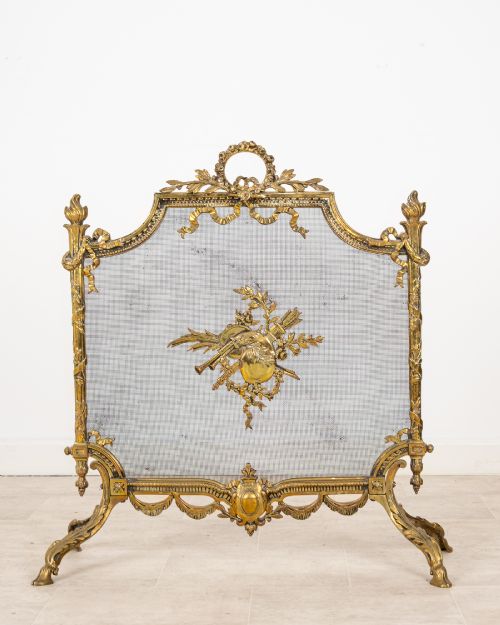
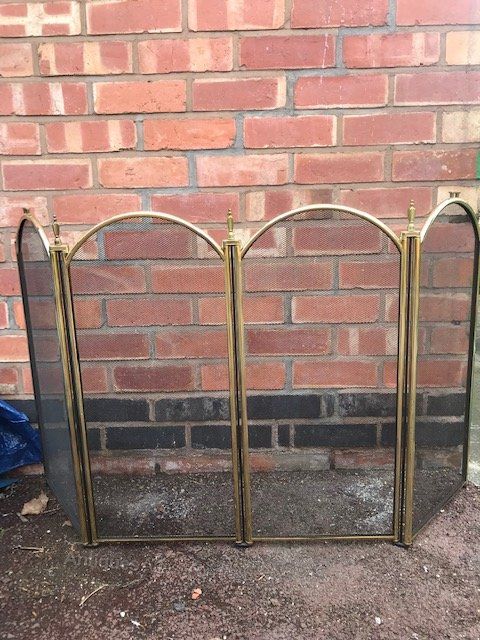
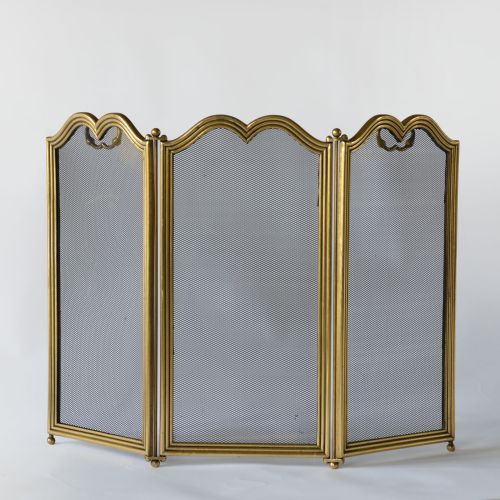
A metal fireplace screen antique serves as a functional hearth accessory designed to contain embers and sparks within the grate. These pieces take the form of flat guards, tripartite folding frames, and expanding fan designs that catch the eye before a dead hearth.
The selections span the nineteenth century and early twentieth century, incorporating Victorian, Edwardian, and revival aesthetics. Buyers frequently encounter polished brass and wrought iron constructions, alongside copper panels shaped by Art Nouveau and Arts and Crafts principles.
Materials and Construction
Foundry workers shaped brass, gilt bronze, and copper into ornate frames through casting, piercing, and embossing. Smiths hammered wrought iron and steel into rigid supports, integrating wire mesh to catch stray embers without blocking radiant heat.
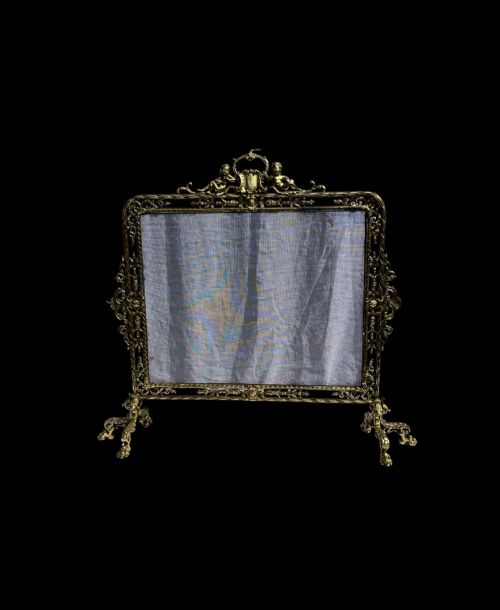
Artisans applied chased details, applied coats of arms, and incorporated bevelled mirrors or silk panels into the metallic frameworks. Hinges joined multiple folding sections together, allowing screens to adjust around different hearth openings.
Listings feature periods spanning the Victorian era through the early twentieth century, utilising brass, copper, wrought iron, and wire mesh.
Assessing Craftsmanship
Quality rests upon the weight of the metal, the crispness of chased or embossed details, and the structural integrity of the joints. Heavy cast bronze and thick brass maintain stability under heat, whereas thin wirework bends easily.
The refinement of the decorative vocabulary distinguishes standard production from exceptional work. Hand-hammered copper surfaces and intricate openwork grill screens display greater artisan involvement than plain pressed sheet metal.
The Metal Fireplace Screen Glossary
- Spark guard
- A protective barrier of wire mesh or metal grille placed before an open fire to catch spitting embers. It protects floor coverings and furnishings from stray sparks.
- Peacock fan
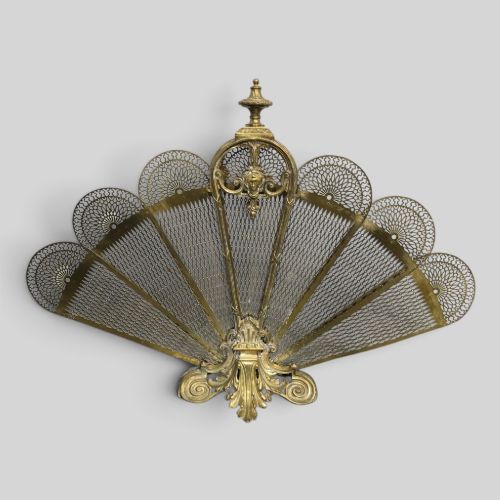
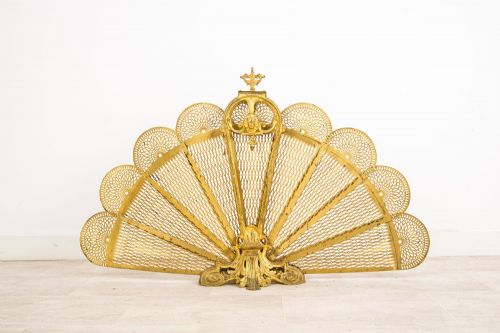
- A folding screen composed of overlapping metal blades that spread outward like a tail. This design expands to cover the opening and collapses inward when the hearth is in use.
- Repoussé
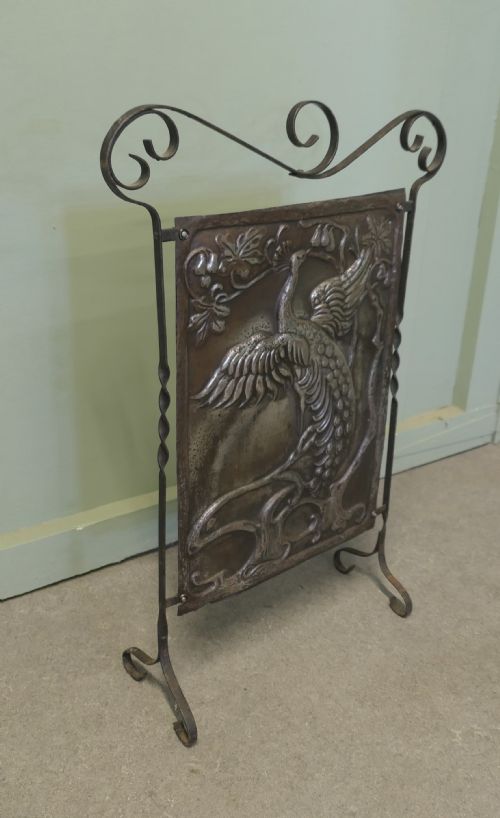
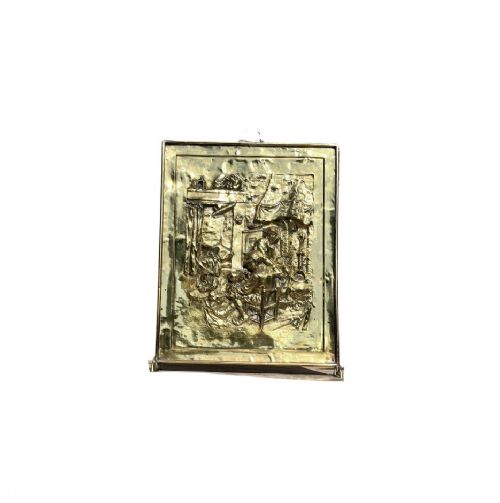
- A metalworking technique where an artisan hammers a design from the reverse side to create a raised relief on the front. This method frequently decorates copper and brass panels.
- Ormolu
- Gilt bronze mounted or cast onto decorative objects, particularly French frames. The finish provides a bright golden appearance that resists tarnishing.
- Nursery fender
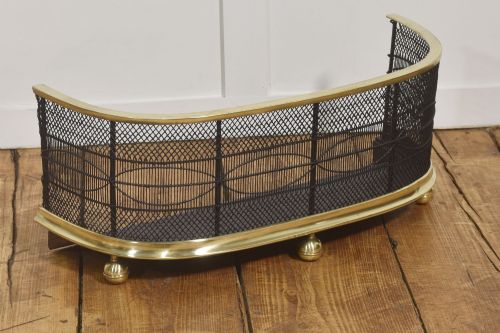
- A low metal barrier enclosing the hearth to keep children and infants at a safe distance from the fire. Some examples include an integrated rail for airing clothes.
Metal Fireplace Screen: Frequently Asked Questions
How do I clean an old metal screen?
Dust the wire mesh and metal surfaces with a soft brush to remove soot and ash accumulation. Avoid abrasive chemical dips that strip historic patinas from brass and copper.
Apply a gentle microcrystalline wax to polished bronze or brass frames if protection against oxidation is desired. Keep moisture away from any incorporated mirrors or fabric elements.
Can I use these screens with a real fire?
Many historic screens include tight wire mesh designed specifically to catch sparks from burning logs. Heavy iron and brass frames withstand hearth heat without structural warping.
Ensure that folding panels are securely balanced on the hearth floor before lighting a fire. Inspect antique hinges for stability so the guard remains firmly in place.
What styles are most common?
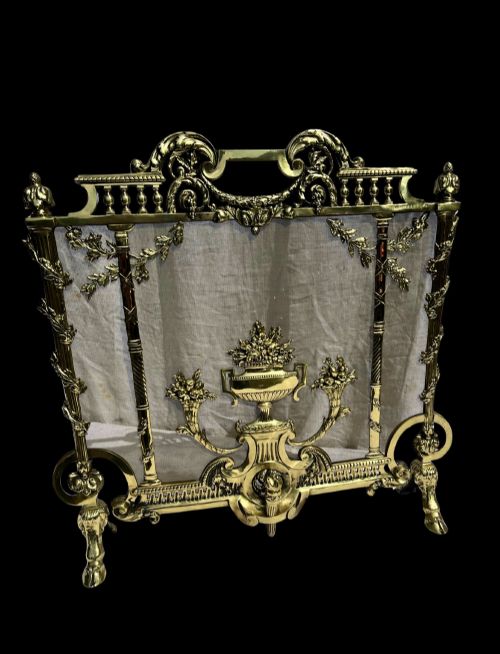
French Rococo and Louis revival designs dominate the brass and gilt bronze selections, featuring C-scrolls, floral motifs, and asymmetrical framing. Arts and Crafts and Art Nouveau examples emphasise hammered copper surfaces and natural plant lines.
Plain wire mesh spark guards and heavy Gothic wrought iron screens represent more utilitarian domestic styles. Victorian peacock fans offer an adjustable option that mimics plumage.
How do I tell Victorian from Edwardian pieces?
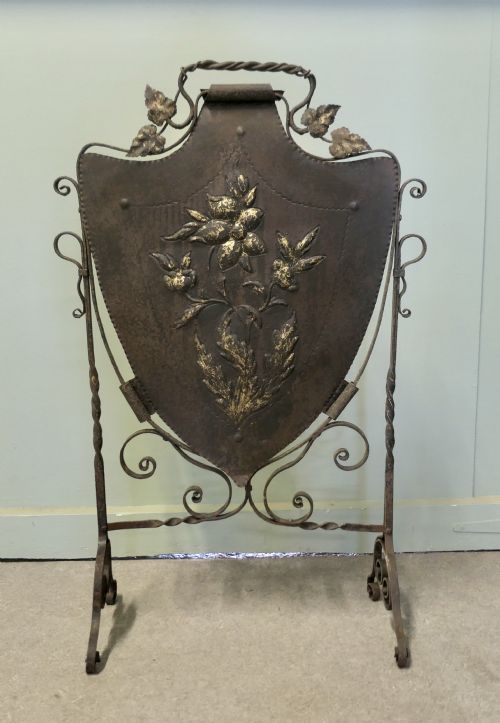
Victorian screens frequently lean toward heavy ornamentation, including elaborate Rococo Revival brass castings, Gothic shields, and ornate cast iron. They often display deep patinas and dense surface decoration.
Edwardian examples often shift toward lighter wire mesh constructions and simpler nursery fenders. The lines become somewhat more restrained while maintaining practical hearth utility.