
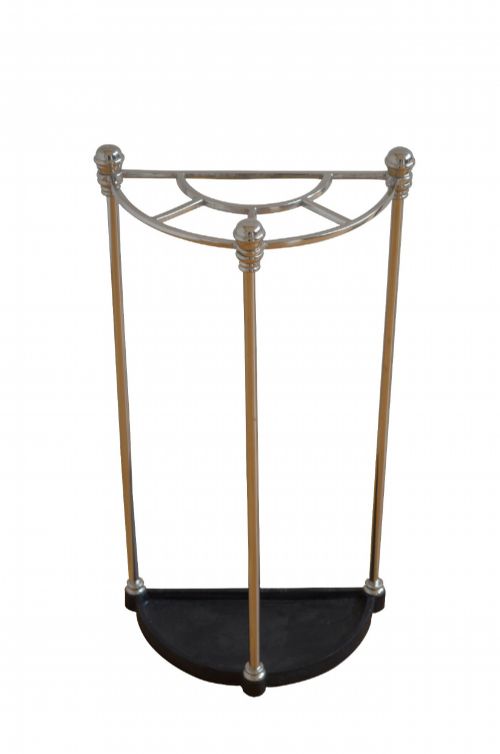


Metal Cane Stand
A metal cane stand anchors a hallway by holding walking sticks and umbrellas in cast iron, brass, or copper.

Metal Cane Stand
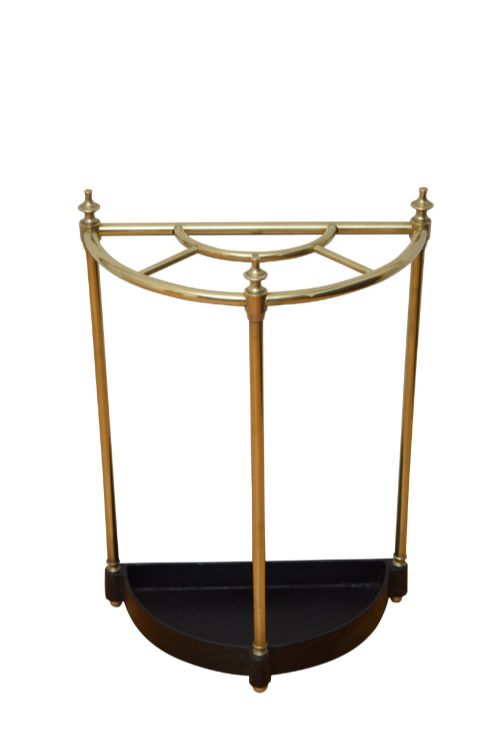
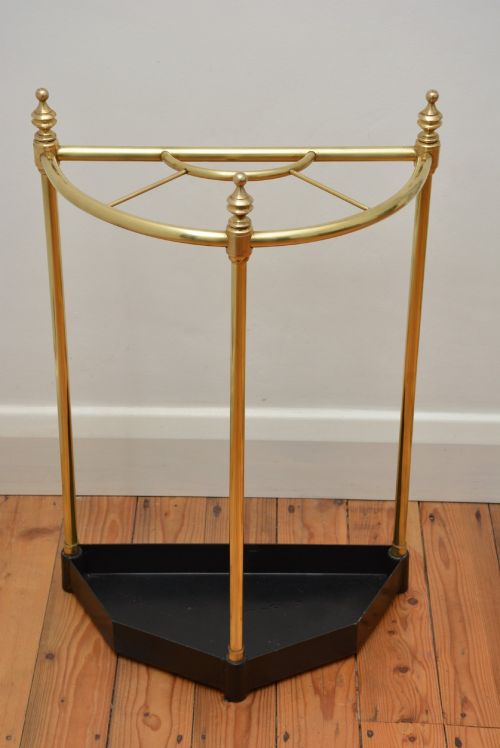
A metal cane stand serves hallways and entryways by keeping walking sticks, umbrellas, and parasols organised in heavy frames. When you search for a metal cane stand, you encounter pieces spanning the nineteenth century through the Edwardian era and the Art Deco period, including Victorian cast iron examples and brass demi-lune designs.
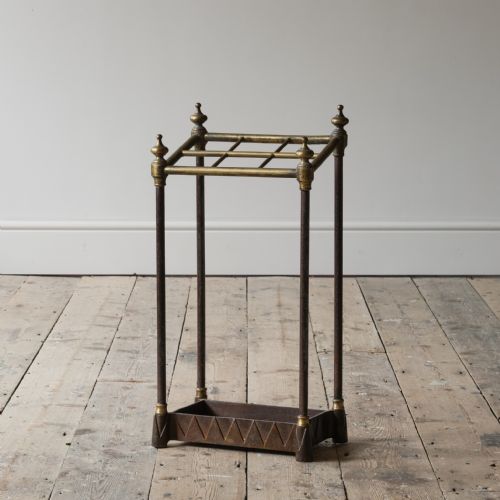
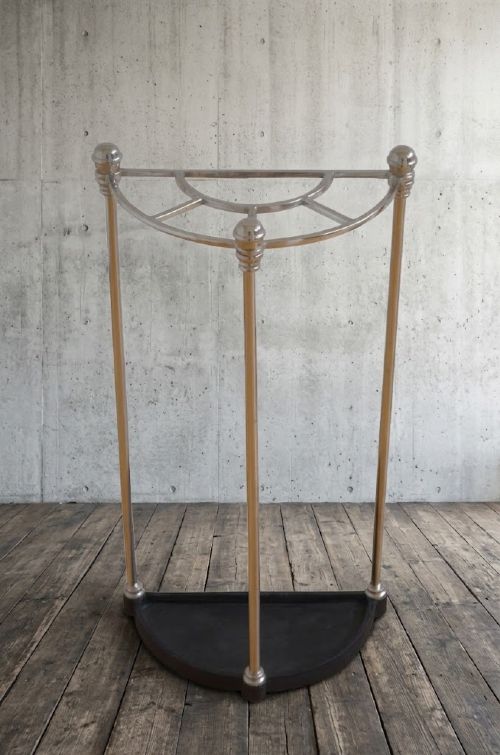
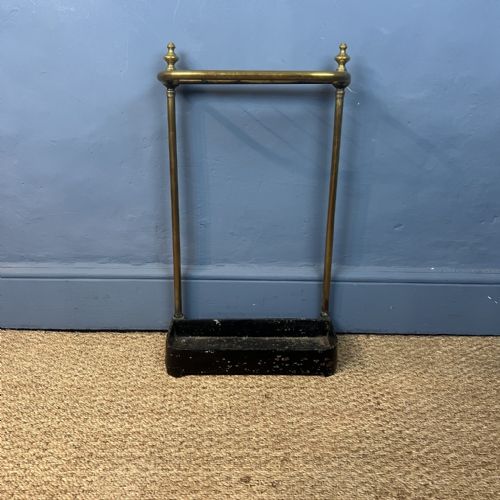
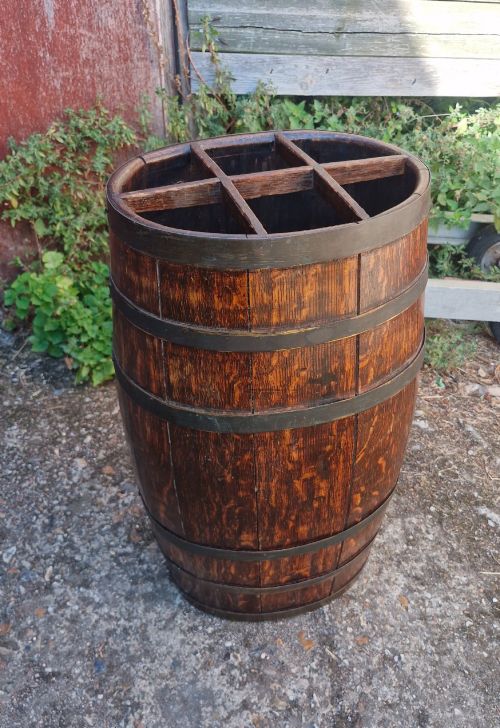
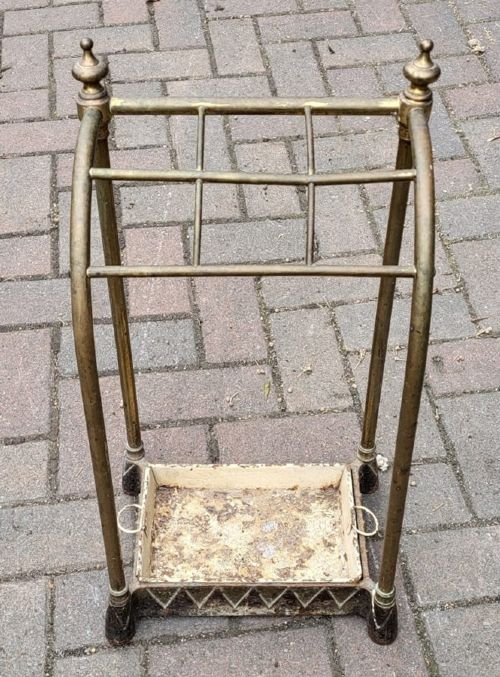
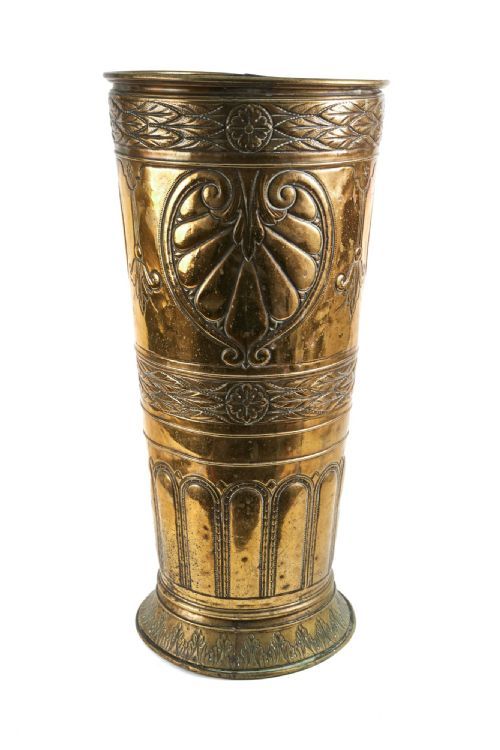
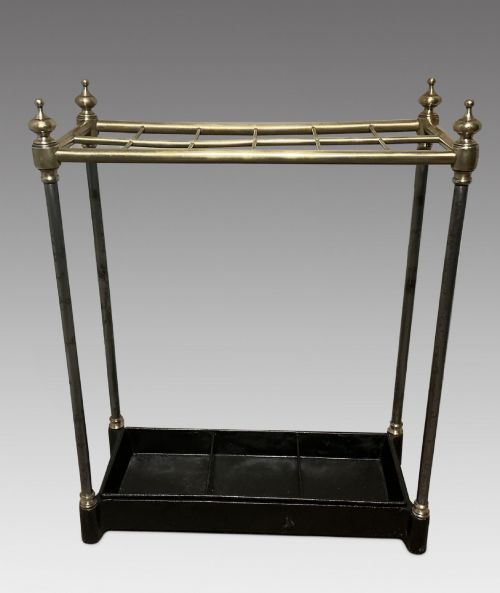
The objects take various shapes, from half-moon umbrella loops to barrel-shaped holders and upright rectangular frames. Many include original metal drip trays at the base to catch rainwater from wet umbrellas.
Makers and foundries from England, France, and Belgium produced these hall furnishings using durable metals combined occasionally with oak or pine. You find heavy Victorian cast iron stands alongside lighter brass and copper variations from later decades.
Materials and construction
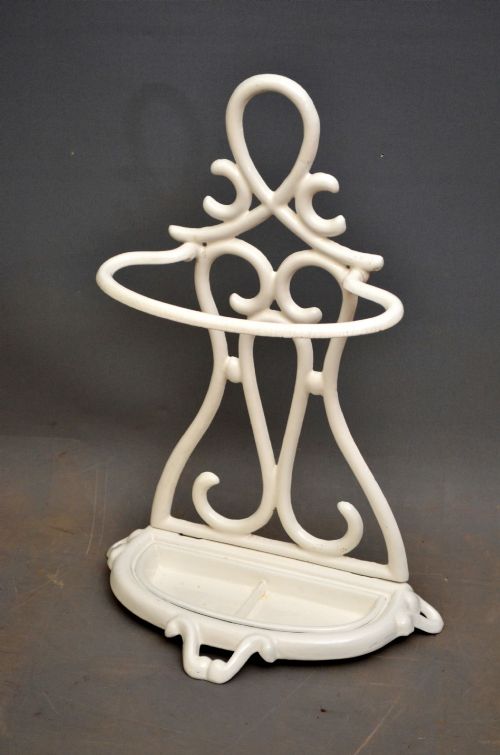
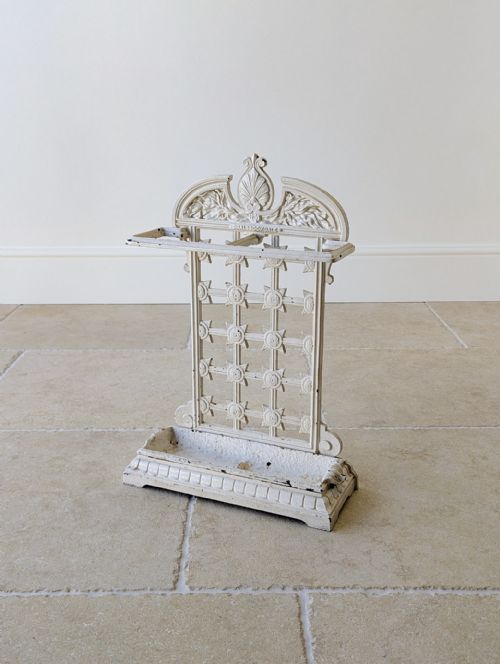
Foundries utilised cast iron poured into intricate moulds to create rigid openwork frames, often finished with black paint or white enamel. Brass and copper sheets were beaten, rolled, and joined to form half-lune and cylindrical bodies, sometimes supported by iron bands.
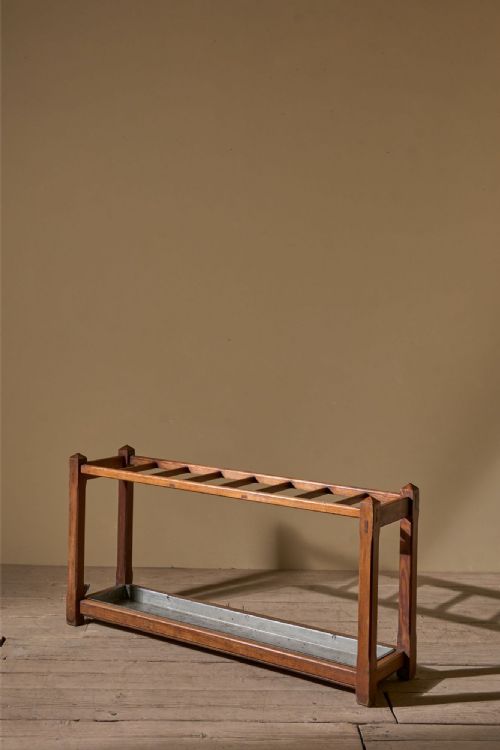
Makers integrated structural timber such as oak or pine in certain designs, pairing wooden staves with metal hoops or internal divisions. Removable zinc or metal drip trays were fitted beneath the frames to protect hallway floors from moisture.
Listings feature cast iron, brass, copper, and oak materials spanning the Victorian, Edwardian, and Art Deco periods.
Assessing quality and craftsmanship
Quality rests in the crispness of the cast iron detail and the weight of the brass or copper used in the construction. Pieces displaying intricate moulding, distinct stylistic motifs from the Art Nouveau or Gothic Revival movements, and robust structural integrity represent the upper tier.
The presence of an original manufacturer mark or foundry stamp alongside an intact, matching metal drip tray elevates a piece. Simpler utilitarian designs or replacements of internal components sit lower down the scale.
Coalbrookdale·Falkirk Ironworks·Christopher Dresser
The Metal Cane Stand Glossary
- Demi-lune
- Half-moon shape designed to sit flush against a hallway wall. This configuration saves floor space while accommodating multiple walking sticks and umbrellas.
- Drip tray
- A removable metal basin placed at the bottom of a stand to catch water from wet umbrellas. It protects the floor beneath the frame.
- Cast iron
- An iron-carbon alloy poured into moulds to create rigid decorative objects. It provides the heavy weight necessary to prevent tipping.
- Art Deco
- A design style from the early twentieth century featuring sleek lines and geometric forms. Nickel plating often appears on pieces from this period.
- Aesthetic Movement
- A late nineteenth-century design current emphasising visual beauty over narrative content. Copper and brass items from this style exhibit distinct artistic finishes.
Metal Cane Stand: Frequently Asked Questions
Where should a metal cane stand be placed?
These stands belong in hallways, entrance passages, and porches where household members and visitors deposit wet weather gear upon entry.
Positioning the piece near the main entrance provides immediate access for walking sticks and umbrellas before moving further into the house.
How do I care for cast iron and brass stands?
Maintain cast iron frames by dusting regularly and keeping the surface dry to prevent rust formation in damp environments.
Polish brass and copper components gently with a suitable metal cleaner only if you prefer a bright finish over aged patination.
Are drip trays usually original to the stand?
Many surviving pieces retain their fitted metal or zinc trays, though some replacements occur due to corrosion over decades of use.
An original tray matches the wear and material composition of the upper frame.