




Arts Crafts Cane Holder
These arts crafts cane holder pieces combine honest materials and utility for the hallway.
Arts Crafts Cane Holder
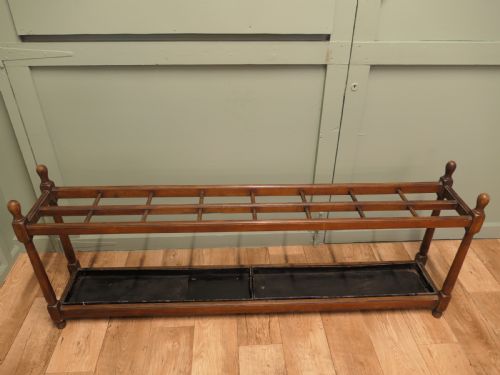
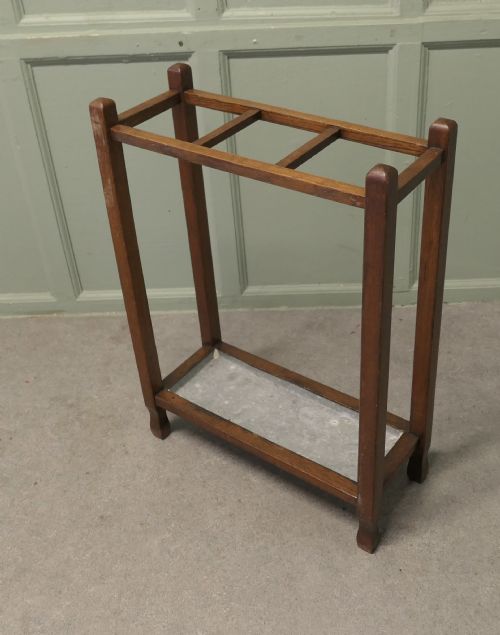
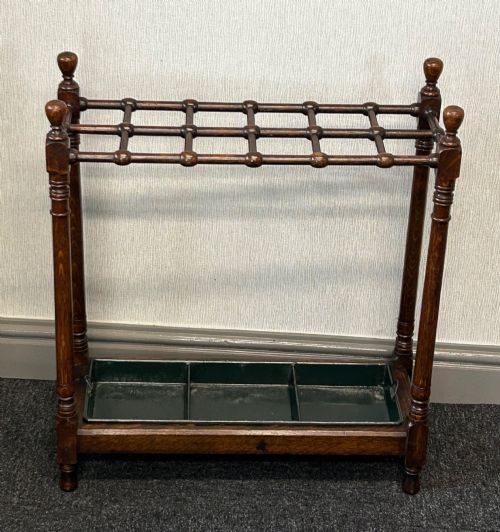
When you search for arts crafts cane holder, you are looking at hallway furniture designed to organise walking sticks, umbrellas and canes. The forms seen here range from simple wooden frames to substantial corner stands intended for a reception hall.
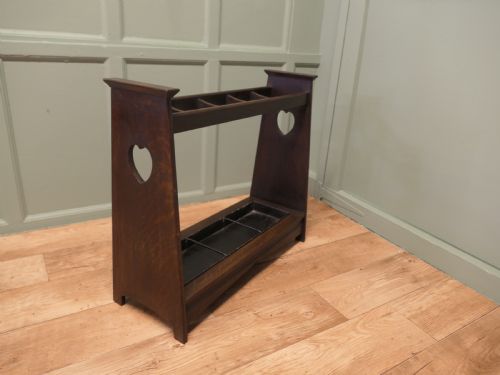
The version you are most likely to meet on this page is an oak stick stand or umbrella stand from the period around nineteen hundred. These pieces often show the plain construction and structural honesty typical of the Arts and Crafts movement.
Makers and designers from the late nineteenth century onwards produced these items in various woods and metals. Examples span from standard domestic hall furniture to distinct pieces associated with Liberty or Heals of London.
How they were made
Oak and mahogany provide the primary wooden framework for many of these stick stands. Carpenters utilised solid timbers, sometimes with iron or brass bindings to reinforce the base and catch drips from wet umbrellas.
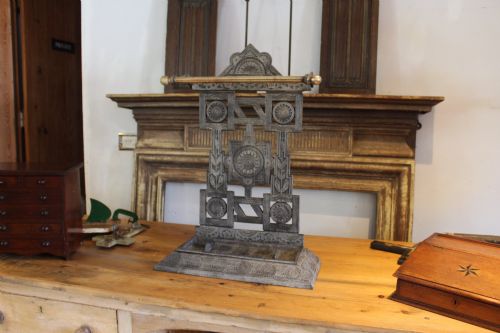
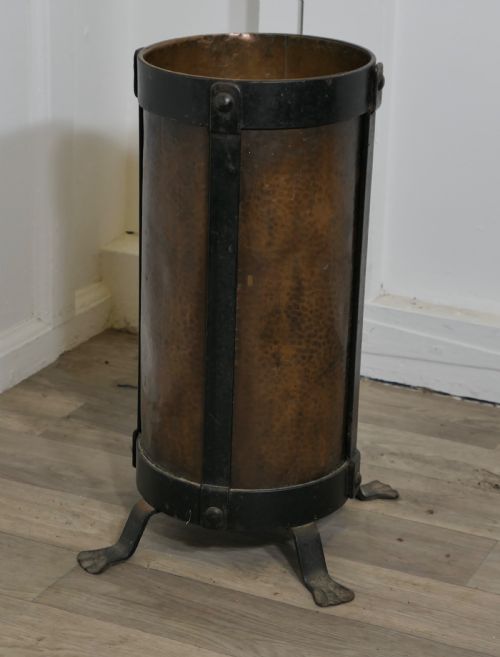
Metalwork forms another major group, using copper, cast iron and brass. Techniques involved beaten copper panels and heavy casting, particularly seen in works associated with designers like Thomas Jeckyll.
Ceramic elements appear through studio pottery, Burmantofts Faience and art pottery inserts. These glazed earthenware components served as liners or decorative bodies within the metal and wooden frames.
Some copper stands retain the subtle thumbprint marks of the artisan who hammered the metal into shape.
What varies in quality
The choice of timber and metal determines the initial standard of the piece. Golden oak, rich mahogany and heavy gauge copper represent superior material selection compared to simpler commercial woods.
Construction methods show the hand of the maker through pegged joints, dovetailing and hand-beaten metal surfaces. Details such as original drip trays and specific maker attributions elevate the standing of an individual stand.
Thomas Jeckyll·Heals of London·Burmantofts·Liberty
The Arts Crafts Cane Holder Glossary
- Arts and Crafts
- A design movement valuing traditional craftsmanship, simple forms and natural materials over mass production. This style influences the structure and decoration of many hallway stands.
- Burmantofts Faience
- A type of architectural terracotta and art pottery produced in Leeds during the late nineteenth and early twentieth centuries. Pieces often feature distinct glazes used for decorative panels or stands.
- Stick Stand
- A piece of furniture designed to hold walking sticks, canes and umbrellas upright in a hallway. They incorporate a frame at the top and a waterproof tray at the base.
- Cast Iron
- Molten iron poured into a mould to create rigid structural or decorative shapes. This material provides heavy stability for umbrella stands.
Arts Crafts Cane Holder: Frequently Asked Questions
Where did they put stick stands?
These items stood in the entrance hall or reception hall of a home. They provided a designated place for guests and family to leave walking canes and wet umbrellas upon entering.
Peculiar to the hallway, their proximity to the front door meant they faced heavy daily use and exposure to moisture from the weather.
How do I clean a copper stand?
Copper surfaces require gentle dusting and occasional cleaning with appropriate metal care products. Harsh abrasives will strip the natural patina accumulated over decades.
Maintaining the metal preserves the visual depth of the hand-beaten texture characteristic of the period.
Are these stands waterproof?
Many examples include an original metal or ceramic tray at the base to catch water from umbrellas. These liners protect the wooden floor and the lower frame from rot.
Buyers should check whether the interior liner remains intact to ensure proper function in daily use.
What wood was used mostly?
Oak is the predominant timber found in these listings, often finished in a golden tone or plain polish. Mahogany also appears among the more refined hall furniture examples.
These hardwoods provided the structural strength necessary to support heavy walking sticks and damp umbrellas.