




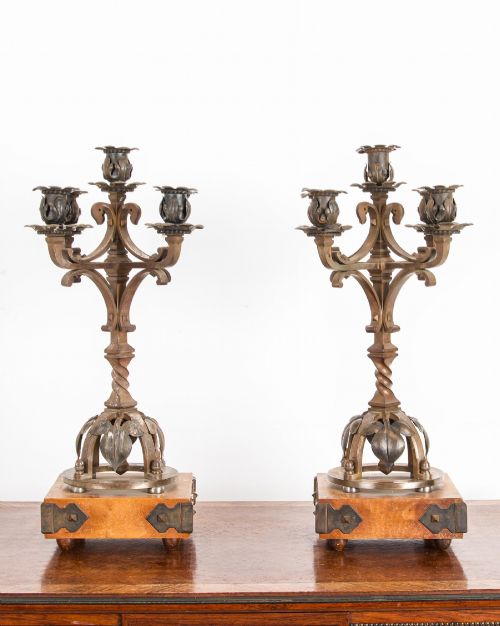


Metal Candelabra Light
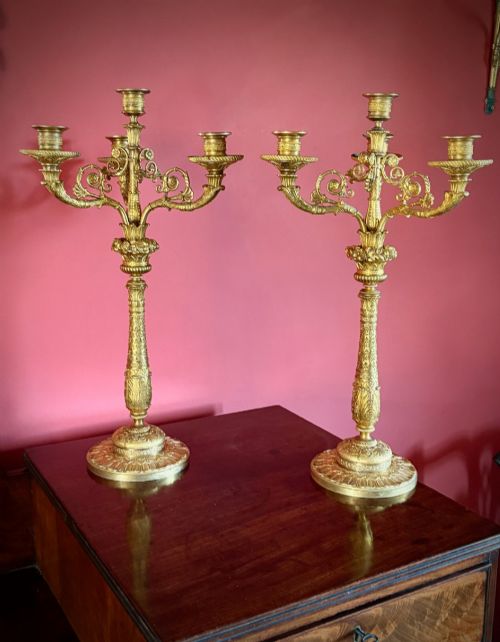
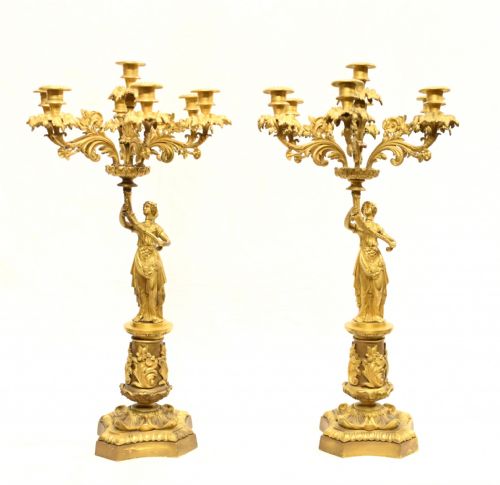
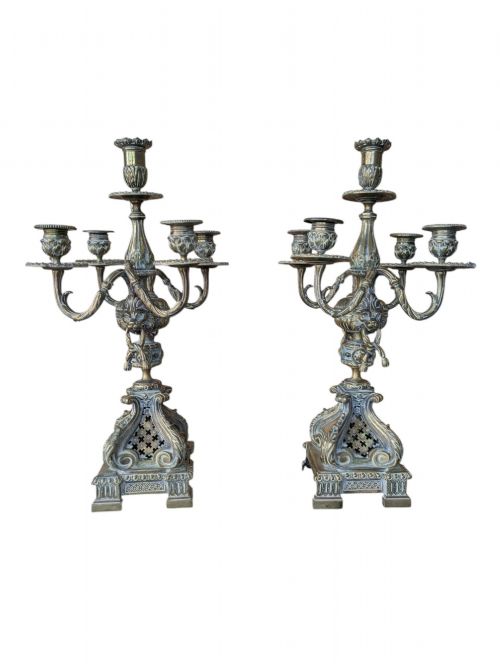
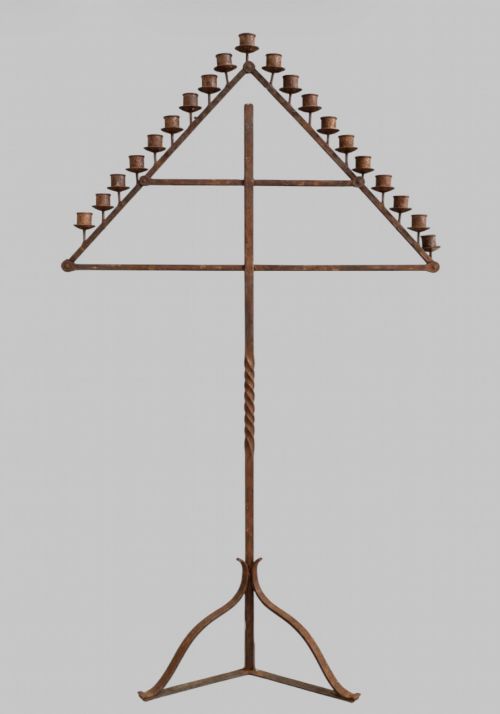
These metal candelabra light pieces combine structural metalwork with branching candleholders, offering historical illumination for tables and walls.
Metal Candelabra Light
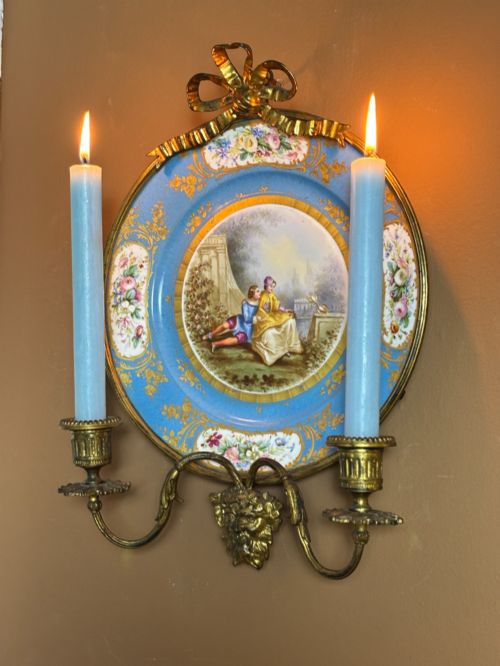
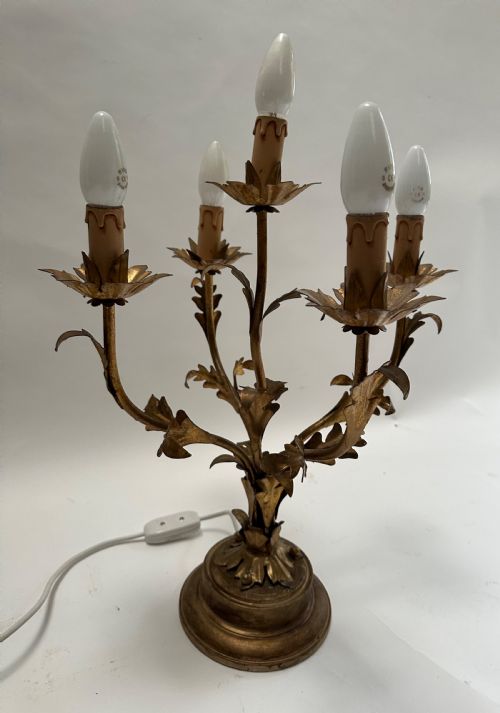
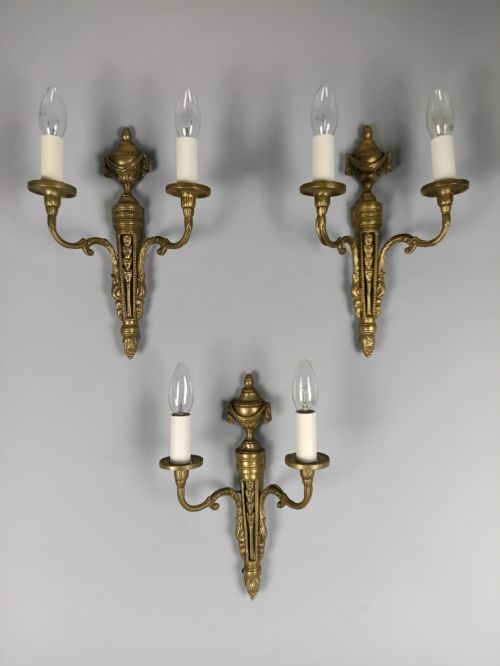
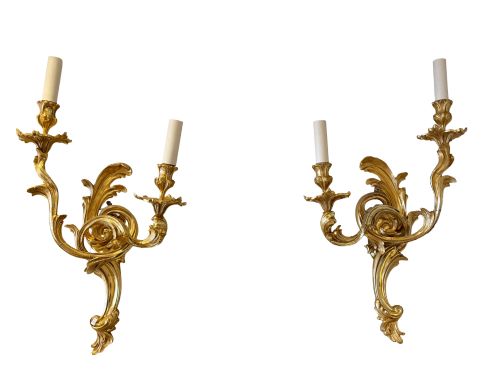
Buyers seeking a metal candelabra light encounter objects designed to hold multiple candles, often adapted across the nineteenth and early twentieth centuries into table lamps or wall sconces. The selection spans standard table models, floor-standing architectural pieces, and paired wall fixtures originating from French, British, and Italian workshops.
The inventory leans heavily towards matched pairs featuring branching arms, with styles crossing from French Rococo Revival and Regency through Gothic Revival, Art Nouveau, and Art Deco. Common formats include multi-arm table candelabras, cherub-supported torchères, and wall-mounted sconces.
Dated examples place the majority of these decorative objects in the nineteenth century, extending into the nineteen-thirties with cast iron, spelter, and nickel-plated iterations. Buyers select these pieces to anchor a room with period metalwork that frequently bridges functional candle use and electrical conversion.
Materials and Construction Techniques
Foundry work dominates the construction, utilising cast bronze, brass, and gilt metal shaped through traditional moulding processes. Ormolu finish appears frequently, applying gold to bronze through mercury amalgamation or electroplating to achieve a lasting metallic lustre.
Secondary materials provide contrast and structural weight, with white marble, slate, and porcelain integrated into bases and stems. Wrought iron and cast iron serve heavier floor candelabra and architectural pieces, while silver plating and nickel coating finish finer table and wall lighting.
Metal Candelabra Light Retail Price Guide 2026
Typical asking prices for metal candelabra light among the pieces listed under this phrase on Sellingantiques today, from the lower quarter to the upper quarter. They describe what is for sale here now, not the wider market.
Materials span gilt bronze, ormolu, brass, wrought iron, silver plate, and marble across nineteenth and early twentieth-century periods.
Distinctions in Quality and Craftsmanship
Execution of cast detail defines the upper tier of these pieces, where chasing and chiselling refine the faces of figures, foliage, and scrollwork after the metal leaves the mould. Lesser examples rely on unrefined casts with softer contours and minimal hand-finishing.
The integrity of the structural joints and the weight of the base separate superior examples from lighter production. Heavier bronze and ormolu assemblies maintain straight, rigid branches, whereas inferior metal alloys bend easily and display uneven plating.
Blagden, Hodgson And Co·WMF
The Metal Candelabra Light Glossary
- Ormolu
- Gilded bronze produced by applying a gold amalgam to a bronze base. This technique creates a rich golden surface characteristic of fine nineteenth-century French metalwork.
- Torchère
- A tall ornamental stand or candelabrum designed to hold lights. These pieces often feature figurative supports like cherubs or maidens.
- Sconce
- A wall-mounted lighting fixture with multiple branches. These items secure directly to vertical surfaces to project candlelight or electric light into a room.
- Spelter
- An alloy of zinc and lead used as a cheaper alternative to bronze. Makers employed this material particularly during the Art Deco period for figures and decorative bases.
- Champlevé
- An enamelling technique where troughs are dug into a metal surface and filled with vitreous enamel. This method appears on nineteenth-century Arabic style decorative metalwork.
Metal Candelabra Light: Frequently Asked Questions
What periods do these pieces date from?
The pieces span the nineteenth and early twentieth centuries, with significant representation from the Regency, Victorian, and Edwardian eras. Later items extend into the Art Deco period of the nineteen-thirties.
Specific manufacturing dates cluster around eighteen-eighty to nineteen-twenty, incorporating earlier styles such as French Empire and Rococo Revival.
Were these candelabra converted to electricity?
Many surviving examples have undergone conversion to table lamps or wall lights over time. This adaptation allowed historic metalwork to continue functioning safely in modern domestic settings.
Original candle-holding configurations also remain common, retaining their drip pans and bobeches for wax candles.
How do I identify French ormolu?
French ormolu displays a deep golden hue achieved through mercury gilding or early electroplating on a heavy bronze substrate. Close inspection reveals hand-chased details that sharpen the cast ornamentation.
Lighter gilt metals lack the warmth and weight associated with nineteenth-century French ormolu castings.
What is the difference between a candelabrum and a sconce?
A candelabrum is a freestanding or table-mounted object featuring multiple branching arms for candles. These pieces can be moved between surfaces.
A sconce is specifically designed to be affixed permanently to a wall. Both formats utilise similar metal casting techniques and period decorative styles.