



Meiji Period Desk
A meiji period desk brings together fine hardwood joinery and intricate Japanese craftsmanship to create a practical workspace.
Meiji Period Desk
A meiji period desk places the traditional Japanese workspace within nineteenth and early twentieth century furniture forms. The pieces available combine hardwood construction with writing surfaces, occasionally incorporating cylinder mechanisms or specialised writing boxes.
The objects stem from a period spanning the late nineteenth century into the early decades of the twentieth. Examples range from exhibition quality cylinder desks to straightforward hardwood writing tables.
How they were made
Makers utilised dense hardwoods alongside lacquer, bamboo and bronze fittings to construct these items. Joinery relied on precise traditional woodworking techniques rather than modern mechanical fasteners.
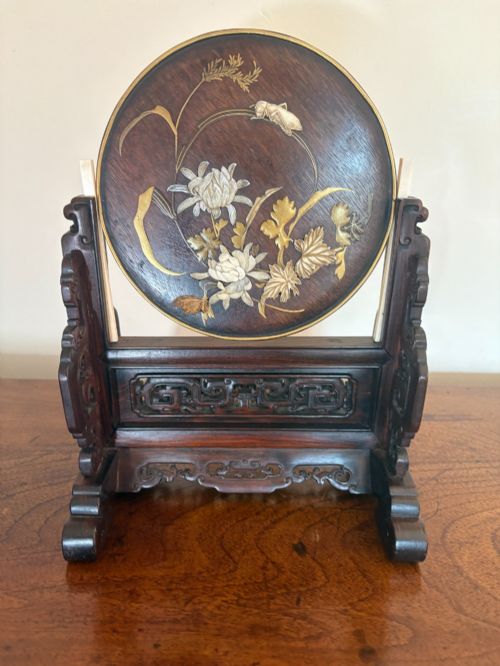
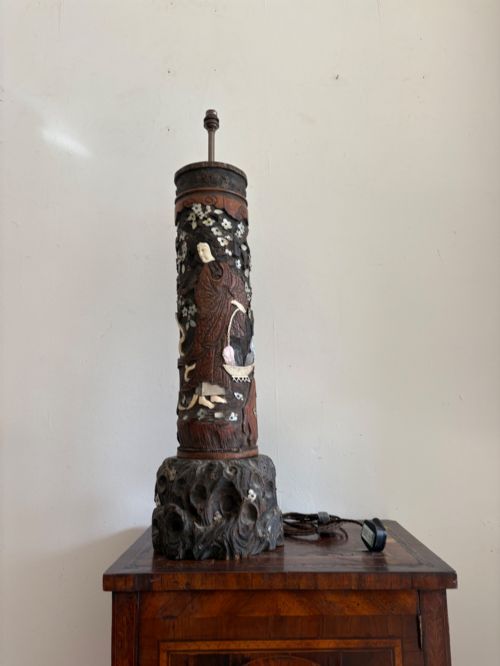
Surface decoration frequently involved intricate carving, inlay work such as mother of pearl, or detailed metalwork. These decorative elements were integrated directly into the structural wooden framework.
Monkeys steal the moon across multiple nineteenth-century carvings, reminding us that Japanese artisans brought considerable humour to their work.
What varies in quality
The standard of a meiji period desk rests upon the complexity of its construction and the precision of its decorative details. Superior examples display exceptional mastery in specialised marquetry like Yosegi or refined cylinder mechanisms.
Material selection divides the range, with dense hardwoods and carefully applied lacquer finishes marking out the higher tier of production. Simpler regional pieces utilise basic timber construction with minimal ornamentation.
The Meiji Period Desk Glossary
- Yosegi
- A traditional Japanese wood mosaic technique utilising different natural wood colours to create geometric patterns. This method appears on fine cylinder desks.
- Lacquer
- A durable glossy finish derived from tree sap applied in multiple layers to wood surfaces. It provides both protection and a deep decorative sheen.
- Cylinder desk
- A writing table featuring a curved rolling wooden shutter that conceals the writing surface and pigeonholes. It requires sophisticated joinery to operate smoothly.
- Okimono
- A small Japanese decorative carving intended for display on a shelf or desk. These figures often depict animals or subjects from nature in wood or ivory.
- Hardwood
- Dense timber such as rosewood or similar heavy species chosen for structural stability and fine grain. It forms the primary body of quality writing furniture.
Meiji Period Desk: Frequently Asked Questions
What is a meiji period desk?
A meiji period desk is a writing table or cabinet produced in Japan during the Meiji era, spanning from eighteen sixty-eight to nineteen twelve. These pieces combine traditional Japanese decorative arts with practical Western furniture forms.
Examples range from elaborate cylinder desks employing complex wood mosaics to simpler hardwood writing tables used for calligraphy and correspondence.
How do I date a meiji desk?
Dating relies on examining the construction methods, timber types, and decorative motifs characteristic of the late nineteenth and early twentieth centuries. Makers during this era blended indigenous craft traditions with imported Western furniture requirements.
Signatures, carver marks, and specific regional styles also assist in narrowing down the production period within the broader Meiji timeframe.
How do I care for wooden desks?
Maintain these surfaces by keeping them away from direct sunlight and fluctuating heat sources that can dry out the timber or lacquer. Dust gently with a soft dry cloth and avoid harsh chemical polishes.
Conditioning the wood occasionally with appropriate specialist wax helps preserve the finish and prevents the historic joinery from splitting.