



Meiji Period Cloisonne Urn
These meiji period cloisonne urn pieces bring intricate wirework enamel and cast bronze into the home, prized for their exceptional decorative presence.
Meiji Period Cloisonne Urn
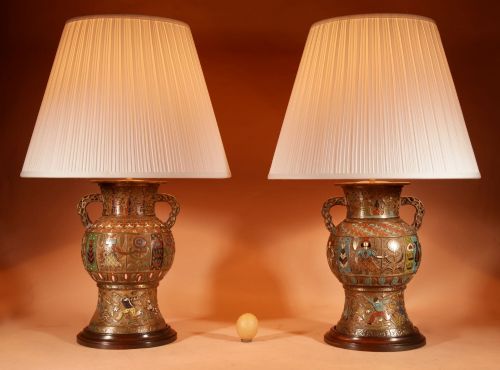
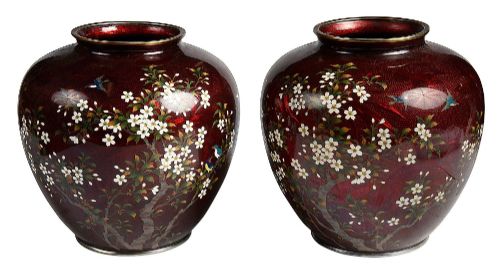
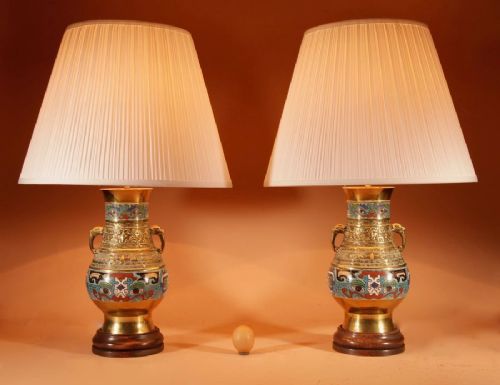
When searching for a meiji period cloisonne urn, collectors encounter various forms such as large temple water dispensers, decorative jars, and vases dating from the nineteenth century. Many examples reflect the Japanese Meiji period aesthetic, alongside related champleve bronze table lamps and sugar bowls.
The objects span periods from eighteen eighty to nineteen ten, including pieces associated with Victorian and Edwardian cataloguing. Vases and vessels dominate the selection, often appearing in pairs or as substantial single statement items.
Materials and construction
Maker workshops utilised copper, brass, and bronze as foundational metal bodies for enamel application. Thin metal wires formed the cellular boundaries on the surface, creating compartments that held coloured enamel pastes before firing.
Silver foil frequently undersailed translucent enamel layers to catch the light, while alternative techniques like totai shippo omitted a rigid body entirely. Artisans then polished the hardened enamel and metal surface until smooth and lustrous.
Keep an eye out for hidden koi fish swimming across enamel surfaces and dragons guarding tree bark patterns.
Assessing quality in enamelled vessels
Quality rests upon the precision of the wirework and the absolute smoothness of the polished enamel surface. Finer pieces display exceptionally tight, uniform cell patterns and rich colour depth without pitting or cloudiness.
The weight and casting quality of the underlying bronze or brass body also signal superior execution. Signed works or those utilising complex silver foil underlays generally represent the upper tier of craftsmanship.
The Meiji Period Cloisonne Urn Glossary
- Cloisonne enamel
- A decorative metalwork technique where thin metal wires are soldered to a base to create cells filled with enamel paste. These compartments hold the coloured glass paste before the object is fired and polished.
- Champleve
- An enamelling method where troughs or cavities are cast or carved directly into the metal surface to hold the enamel. This technique differs from wirework by sinking the design into the body itself.
- Totai shippo
- A fragile type of cloisonne where the underlying body is removed or omitted, leaving a translucent enamel shell. It requires immense skill to construct without structural support.
- Meiji period
- The era in Japanese history spanning from eighteen sixty-eight to nineteen twelve, marked by intense artistic production for international export. Pieces from this time show remarkable technical refinement.
- Temple water dispenser
- A large ceremonial vessel designed for ritual use, often cast in bronze with extensive enamel decoration. These monumental objects stand out for their sheer scale and commanding presence.
Meiji Period Cloisonne Urn: Frequently Asked Questions
How do I date a cloisonne piece?
Dating relies on stylistic markers, materials, and historical production eras such as the nineteenth century or the Meiji period. Examining the underlying metal and wiring style helps narrow down the decade.
Cataloguing terms from Victorian or Edwardian periods also provide clues regarding when the item reached British collections.
What is the difference between cloisonne and champleve?
Cloisonne uses thin metal wires soldered onto the surface to outline the design cells. Champleve involves gouging or casting troughs directly into the bronze to hold the enamel paste.
Both techniques appear frequently across Japanese decorative metalwork from the nineteenth century.
How should I clean my enamel vase?
Dust the surface gently with a soft, dry cloth to remove everyday particles. Avoid chemical cleaners, abrasives, or immersion in water, which can discolour the metal or weaken the enamel.
Professional conservation advice is recommended for pieces showing significant grime or structural wear.