



Meiji Inlaid Bronze
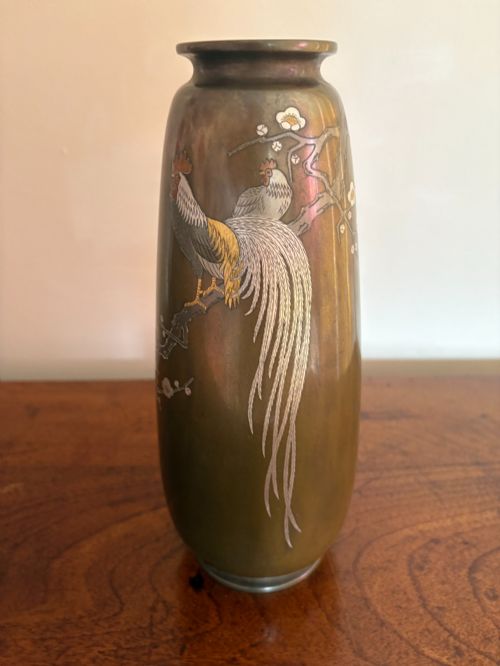
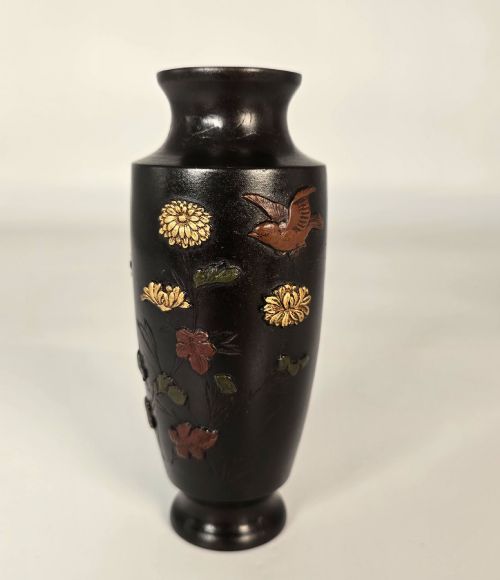
Meiji inlaid bronze brings together master metalwork and delicate metal inlay, offering striking sculptural forms for the collector.
Meiji Inlaid Bronze
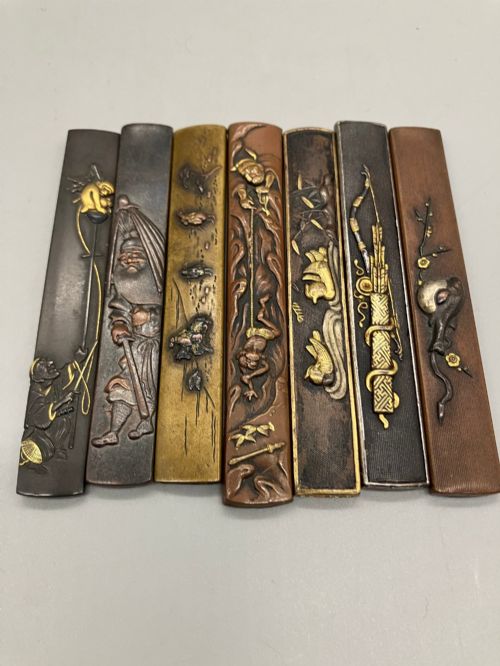
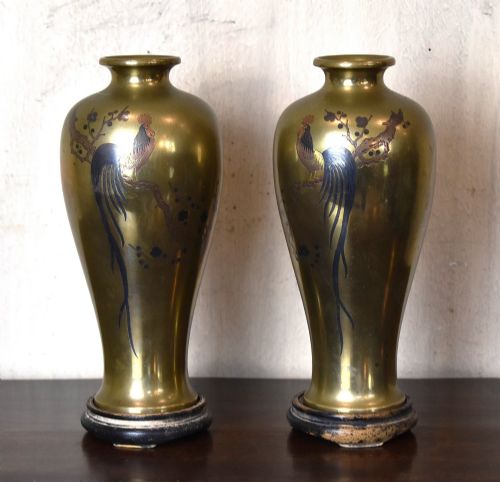
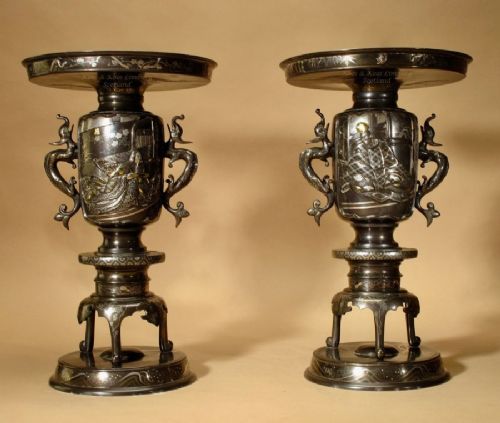
Meiji inlaid bronze pieces take several forms, most frequently appearing as vases, decorative dishes, chargers, brush pots, and small personal cases.
The objects stem from the Japanese Meiji period, spanning the late nineteenth century and the early twentieth century.
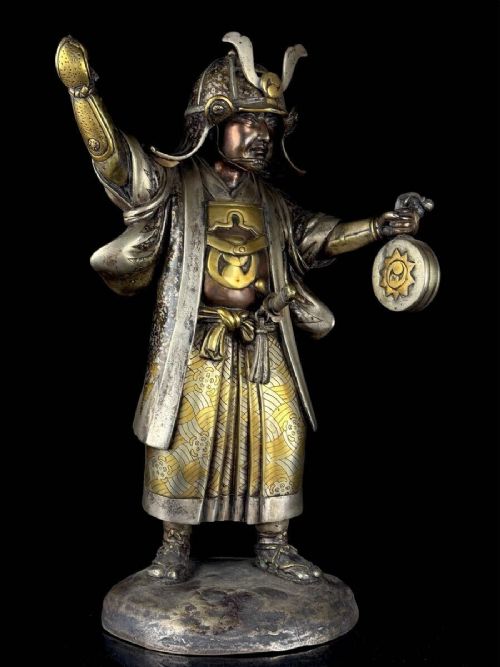
Vases and mixed-metal dishes dominate the selections, alongside sculptural okimono and plaques worked with gold and silver.
Materials and construction
Artisans built these works primarily using bronze, brass, and copper, often combining them as mixed metals.
Decoration relied on precise inlay work utilising gold, silver, and other contrasting metals to render figures, landscapes, and motifs.
Signatures, applied plates, and surface patination completed the manufacture of vessels, boxes, and wall plaques.
Meiji Inlaid Bronze Retail Price Guide 2026
Typical asking prices for meiji inlaid bronze among the pieces listed under this phrase on Sellingantiques today, from the lower quarter to the upper quarter. They describe what is for sale here now, not the wider market.
Listings feature bronze, brass, copper, and mixed metals, with decorative applications of gold and silver inlay.
Judging the work
Quality rests on the crispness of the casting and the precision of the gold and silver inlay embedded into the bronze surface.
Works bearing clear signatures from known makers or workshops typically demonstrate superior control of mixed-metal detailing.
The weight, proportion, and complexity of the pictorial subject matter separate standard decorative items from masterworks.
KANASAWA·Unno Shomin·GENRYUSAI SEIYA·Inoue of Kyoto
The Meiji Inlaid Bronze Glossary
- Meiji Period
- The era in Japanese history lasting from 1868 to 1912, characterised by opening trade and exceptional metal arts production.
- Mixed Metals
- The practice of fusing copper, brass, bronze, gold, and silver within a single design to create contrasting colours.
- Okimono
- A Japanese ornamental freestanding sculpture made for display on a shelf or in a tokonoma alcove.
- Koro
- A traditional Japanese incense burner, frequently cast in bronze and fitted with a pierced lid.
- Tsuba
- A guard at the end of the grip of a Japanese sword, often finely worked in bronze and precious metals.
Meiji Inlaid Bronze: Frequently Asked Questions
How do I display these bronzes?
Place vases and brush pots on sturdy wooden surfaces where natural light highlights the metallic patination and inlay.
Keep them away from direct heat sources and moisture to preserve the delicate gold and silver surface details.
What are mixed metals?
Mixed metals refer to the combination of contrasting alloys and precious metals like copper, brass, gold, and silver.
Craftspeople hammered or inlaid these materials into the bronze base to create polychrome pictorial scenes.
Are these pieces signed?
Many fine examples carry artist signatures, seals, or workshop marks inscribed directly into the bronze or applied on metal plaques.
Signed works usually indicate higher craftsmanship from established Meiji period metalworkers.
How do I clean bronze?
Dust the surface gently with a soft, dry cloth to remove accumulated particles without disturbing the patina.
Avoid chemical polishes, water, or abrasive cleaners which can strip away the antique finish and damage the inlay.