







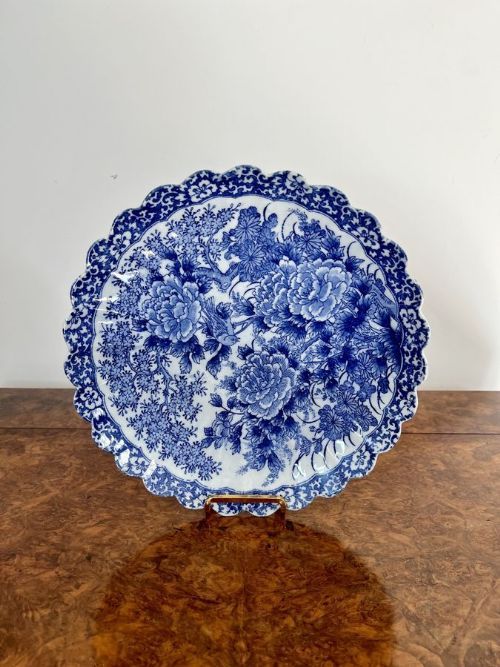


Meiji Imari Floral Platter
A meiji imari floral platter brings rich cobalt underglaze, enamel, and gold leaf into a room, offering striking Japanese porcelain forms for display.
Meiji Imari Floral Platter
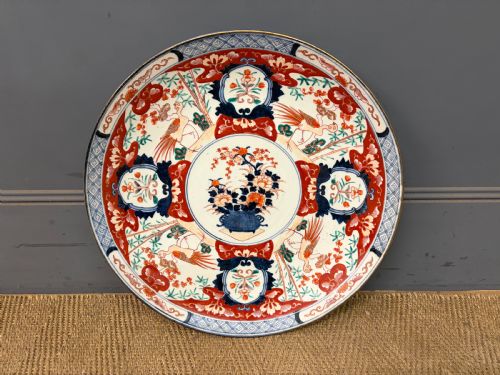
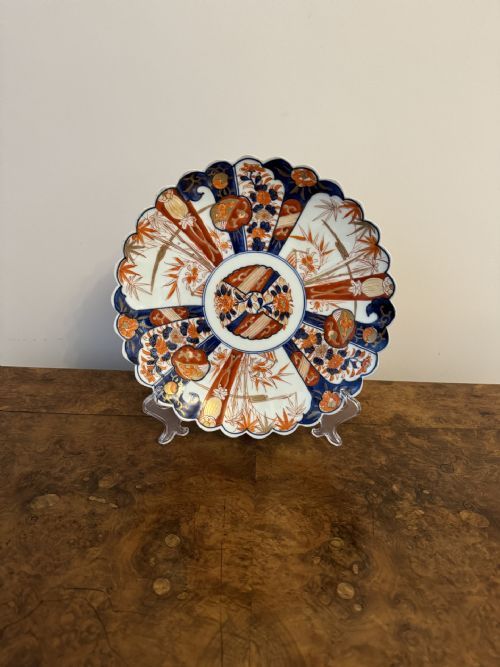
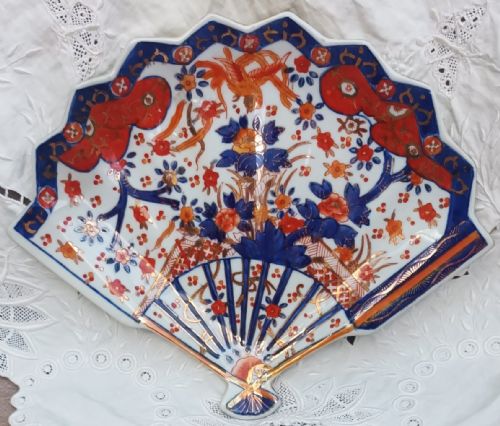
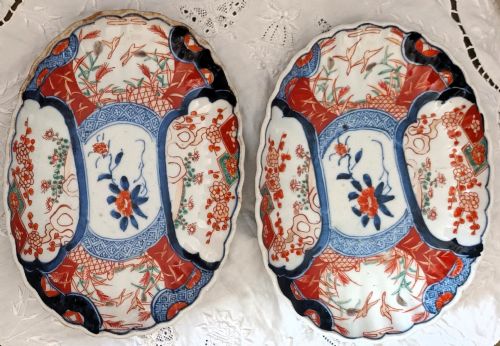
A meiji imari floral platter is a ceramic form created during the Meiji period, often taking the shape of a large charger, decorative dish, or scalloped plate. These pieces originate from Japan, specifically associated with Arita traditions, and arrived in European homes during the Victorian and Edwardian eras.
The most common formats found here are large chargers and circular or square plates designed for wall hanging or fruit display. They span dates from the late nineteenth century through to the early decades of the twentieth century.
Materials and construction methods
These items are constructed from porcelain and ceramic, shaped into heavy chargers and wide plates. Artisans utilised cobalt underglaze to establish the primary blue tones across the ceramic body.
Details were applied using enamel and finished with gold leaf, gilt, or gilding to accentuate the painted surfaces. Hand painting forms the core of the design work, visible in the floral and bird patterns.
Meiji Imari Floral Platter Retail Price Guide 2026
Typical asking prices for meiji imari floral platter among the pieces listed under this phrase on Sellingantiques today, from the lower quarter to the upper quarter. They describe what is for sale here now, not the wider market.
Listings span the Meiji period, Victorian era, and Edwardian times, using porcelain, cobalt underglaze, enamel, and gold leaf.
Differentiating quality across the range
The distinction between standard items and superior examples lies in the precision of the hand-painted floral and bird designs. Finer pieces demonstrate intricate brushwork and careful application of enamel alongside gold leaf.
Overall condition, symmetry of scalloped or square edges, and the depth of the cobalt underglaze also define the upper tier of these Japanese porcelains.
The Meiji Imari Floral Platter Glossary
- Charger
- A large decorative plate intended primarily for display on a wall or a sideboard rather than for service at the dining table.
- Cobalt Underglaze
- A blue pigment applied directly to the raw ceramic body before firing and glazing, ensuring the colour remains permanent and protected beneath a glossy finish.
- Gilding
- The application of gold leaf or gilt powder to the surface of the porcelain to highlight specific motifs and patterns.
- Meiji Period
- The era in Japanese history spanning from 1868 to 1912, characterised by extensive trade with Western nations and distinctive artistic production.
Meiji Imari Floral Platter: Frequently Asked Questions
How do I hang a large charger?
Large chargers require robust, specialised wall fixings designed to support the weight of heavy porcelain safely without gripping the edges too tightly.
Ensure the wall bracket distributes the load evenly across the underside of the platter to protect the ceramic body.
Are these plates meant for food use?
These platters function primarily as decorative chargers, wall plates, or fruit display dishes rather than functional tableware.
Using them for heavy or wet food service is discouraged to preserve the delicate enamel and gold leaf decorations.
How do I date a Meiji piece?
Dating relies on stylistic markers, typical colour palettes, and records from the late nineteenth and early twentieth centuries.
Pieces originating from this era often bridge traditional Japanese Arita techniques with designs tailored for Western Victorian and Edwardian markets.
What does a scalloped edge indicate?
A scalloped edge denotes a shaped border on a plate or charger, providing an alternative to simple circular profiles.
This shaping required additional skill during the initial forming of the porcelain before firing and glazing.