




Meiji Era Vases
Meiji era vases bring incredible Japanese craftsmanship into a room, offering rich Satsuma earthenware, Imari porcelain, and bronze work.
Meiji Era Vases
Meiji era vases represent a transformative period of Japanese artistry spanning from the late nineteenth century into the early twentieth century. When searching for meiji era vases, buyers encounter a diverse array of forms including large floor vases, decorative vessels, and delicate stem vases.
The pieces appearing on this page showcase distinct regional styles and traditions from Japan, produced during an era of immense artistic output. Earthenware, porcelain, and bronze dominate the forms, reflecting both traditional domestic aesthetics and items created for export.
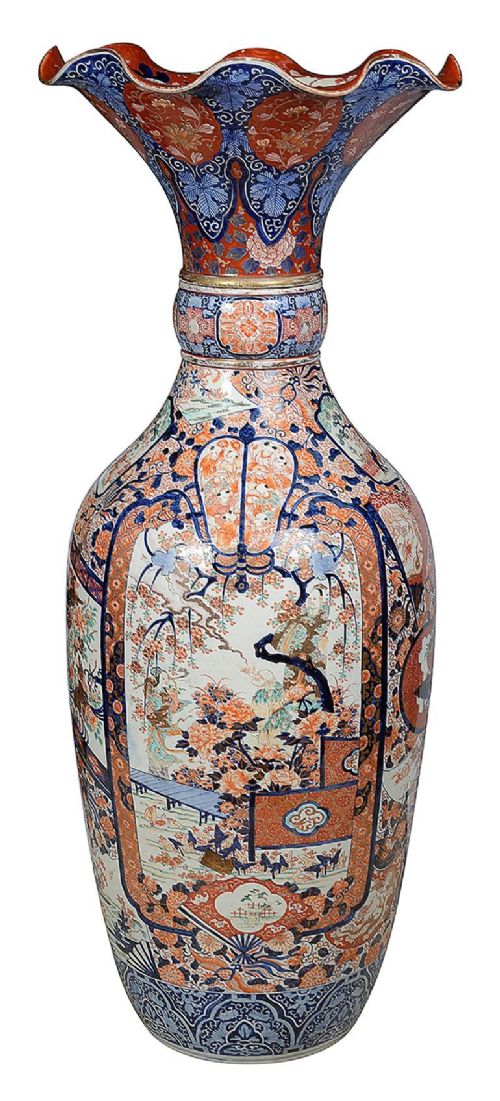
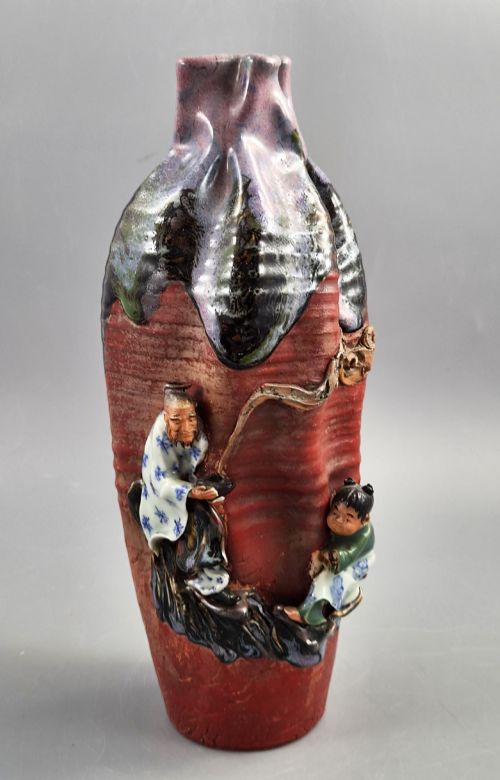
Imari and Satsuma wares feature prominently among the selections, alongside sculptural Sumida Gawa pottery and mixed metal brush pots. Buyers frequently meet pairs and garnitures that demonstrate the symmetrical display preferences of the period.
How they were made
Potters and artisans utilised ceramic materials such as porcelain and earthenware as the foundational bodies for hand-painted and glazed decoration. Artisans applied intricate enamel, gold leaf, and lacquer over black paint to achieve rich surface textures and detailed figurative scenes.
Metalworkers cast bronze and mixed metals to create sculptural vessels, incorporating patination and applied decorative elements. Cloisonné techniques, including wire-inlaid enamel on bases like tree bark textures, display a high degree of technical precision.
Meiji Era Vases Retail Price Guide 2026
Typical asking prices for meiji era vases among the pieces listed under this phrase on Sellingantiques today, from the lower quarter to the upper quarter. They describe what is for sale here now, not the wider market.
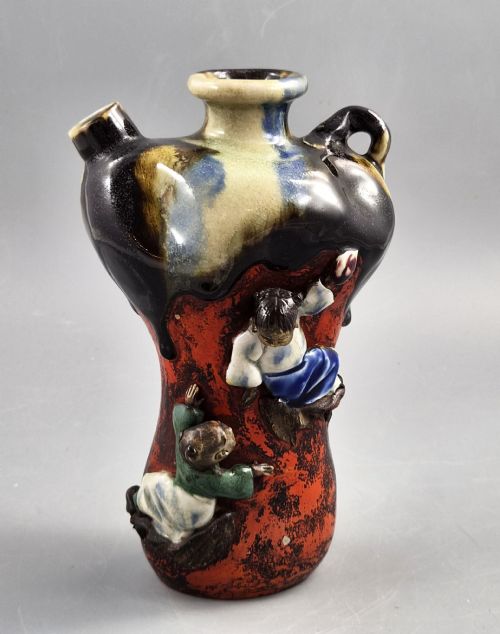
Karako children climbing across Sumida Gawa vases remind us that nineteenth-century potters appreciated a touch of playful mischief.
What varies in quality
The refinement of the hand-painted brushwork separates standard production pieces from masterworks, particularly in figurative Satsuma scenes depicting samurai or sages. Precision in the application of gold leaf and enamel detail dictates the overall depth and visual impact of the surface.
The structural ambition of the form, such as complex bamboo-handle shapes, garlic head profiles, or large bronze casting proportions, indicates the skill of the workshop. Signed pieces by notable makers generally reflect a higher standard of artistic execution.
Ban-ni·Inoue Ryosai·Kinkozan
The Meiji Era Vases Glossary
- Satsuma
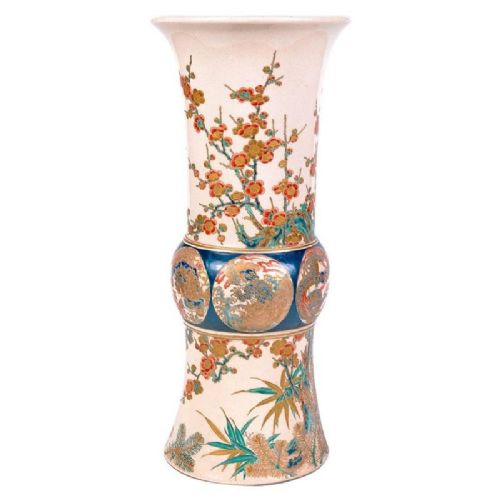
- A type of Japanese earthenware featuring a crackled ivory glaze decorated with polychrome enamels and gilding. These pieces frequently depict historical figures, samurai, and elaborate floral motifs.
- Imari
- A traditional style of Japanese porcelain characterised by underglaze blue and overglaze red, gold, and green colours. The style originated in Arita and became immensely popular in the West during the nineteenth century.
- Sumida Gawa
- A distinct type of Japanese pottery originating from workshops near Tokyo, known for heavy, dripping flambé glazes and applied sculptural figures in high relief. Pieces often bear signatures of makers such as Ban-ni or Inoue Ryosai.
- Cloisonné
- A metalwork technique where thin wire creates compartments on a vessel body, which are then filled with enamel paste and fired. Totai shippo represents a variation where enamel is applied over a translucent or translucent-backed base.
- Kutani
- A style of Japanese porcelain noted for bold colour palettes, particularly iron red and green, depicting birds, flowers, and landscapes. These wares were widely produced for export during the late nineteenth century.
Meiji Era Vases: Frequently Asked Questions
How do I identify Satsuma ware?
Satsuma ware is recognised by its distinctive cream-coloured earthenware body covered in a finely crackled transparent glaze. Artisans decorated these surfaces densely with hand-painted enamel and raised gold leaf.
Most pieces feature figural scenes of samurai, court figures, or landscapes. The base often bears a signature or workshop mark associated with regions like Kyoto or Satsuma province.
Where were these vases made?
These vases were manufactured in various pottery centres across Japan during the Meiji period, including Kyoto, Arita, and Tokyo. Many workshops produced wares specifically for international export to Western markets.
Regional styles developed distinct characteristics based on local materials and traditional firing techniques. Major production hubs supplied both everyday decorative items and exhibition-quality masterworks.
How should I display large floor vases?
Large floor vases require stable placement on level flooring away from high-traffic areas to prevent accidental tipping. Pairing matching vessels on either side of a fireplace or in an entryway follows traditional display methods.
Consider the lighting in the room to highlight the intricate gold leaf and enamel details on the surface. Heavy bronze or ceramic forms do not require water when used purely for decorative display.
What is the difference between porcelain and earthenware?
Porcelain is fired at much higher temperatures using kaolin clay, resulting in a dense, non-porous white body that rings when struck. Earthenware is fired at lower temperatures, producing a softer, porous ceramic body that requires a glaze for waterproofing.
Satsuma vases utilise earthenware bodies with characteristic crackled glazes, while Imari vessels typically employ durable porcelain.